View methods side by side.
Choose up to four methods. Add them using the search and share the comparison by copying its link.
| Criterion | 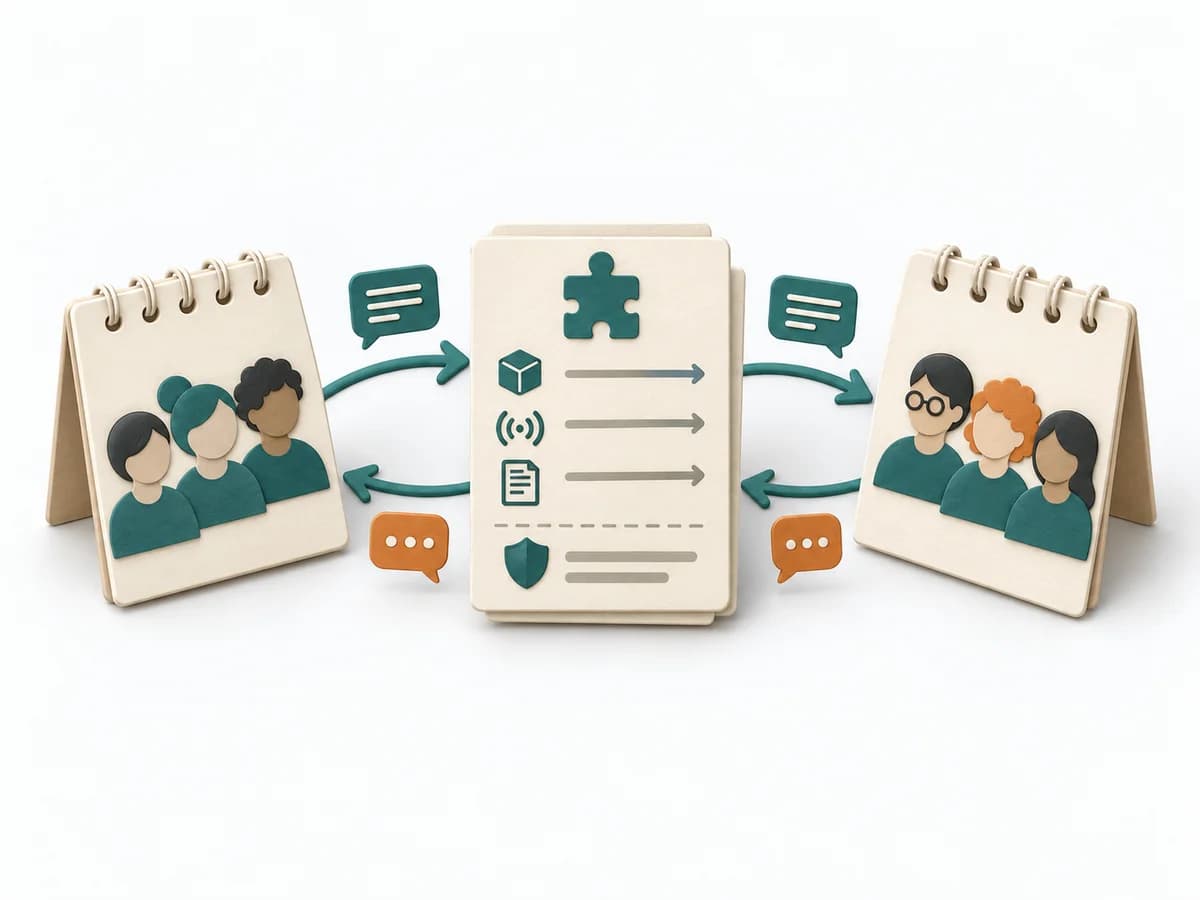 Team Design Team API |  Growth Hooked Model | 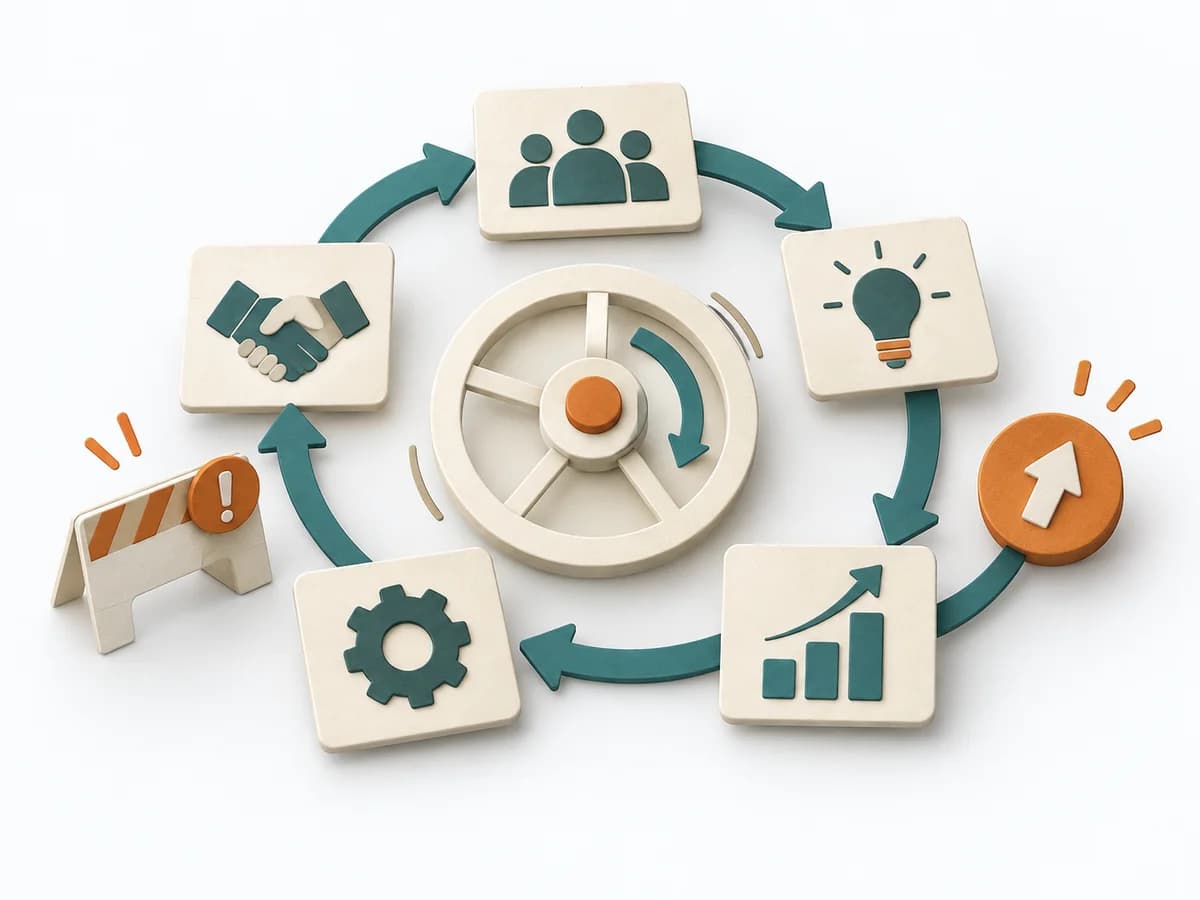 Growth Flywheel | 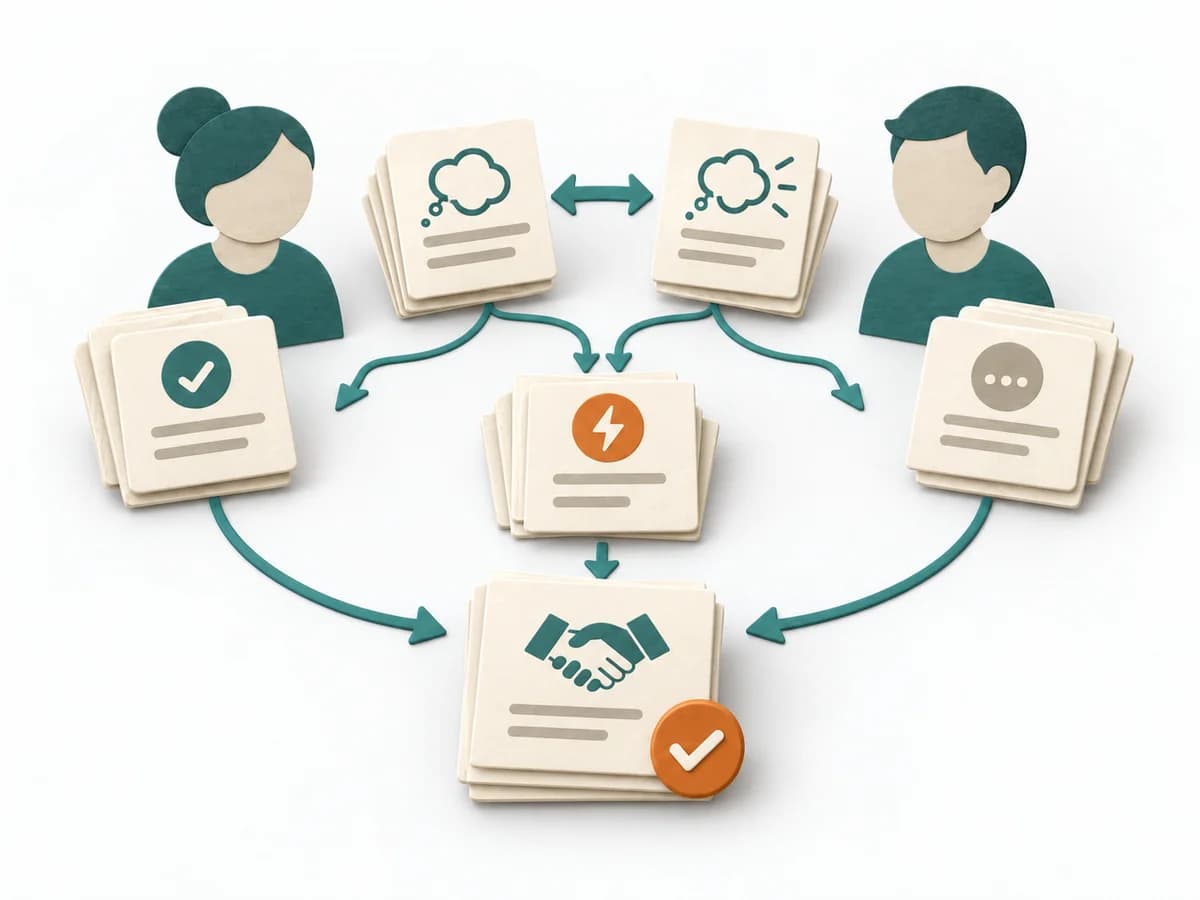 Facilitation Expectation Mapping |
|---|---|---|---|---|
Purposedifferent | When expectations between teams stay fuzzy, it describes how a team can be reached, used, and held accountable. It clarifies responsibility, interaction, and load between teams. The result is captured as a Team API document. | The Hooked Model helps clarify engagement loops, user behavior, and experiments. It makes repeat behavior measurable and captures the result as a hooked loop, trigger map, and reward design. | Growth often breaks down where a reinforcing mechanism builds up too much friction. A Flywheel shows the cycle of value, repetition, and reinforcement meant to sustain growth. | When roles, interfaces, or projects fail because of differing expectations, Expectation Mapping surfaces these differences. It shows what each side takes for granted and where the pictures diverge. |
Complexitydifferent | Low | Medium | Medium | Low |
Timedifferent | Half day initial, dann laufend | Multiple workshops over several weeks | 60-120 min | 45-90 min |
Participantsdifferent | Ein Team plus Stakeholder | 2-8 | 3-8 | 3-12 |
Formatdifferent | Workshop + async | Workshop + async | Workshop | Workshop |
Outputdifferent | Team API Document | Hooked loop, Trigger map, Reward design, Ethics check | Flywheel Map, Friction Points, Growth Levers, Experiment Backlog | Expectation Map, Alignment Notes, Agreements |
Tagsno overlap | TeamAlignmentCommunicationService | GrowthBehaviorRetention | GrowthRetentionConversion | AlignmentStakeholdersTeam |