View methods side by side.
Choose up to four methods. Add them using the search and share the comparison by copying its link.
| Criterion | 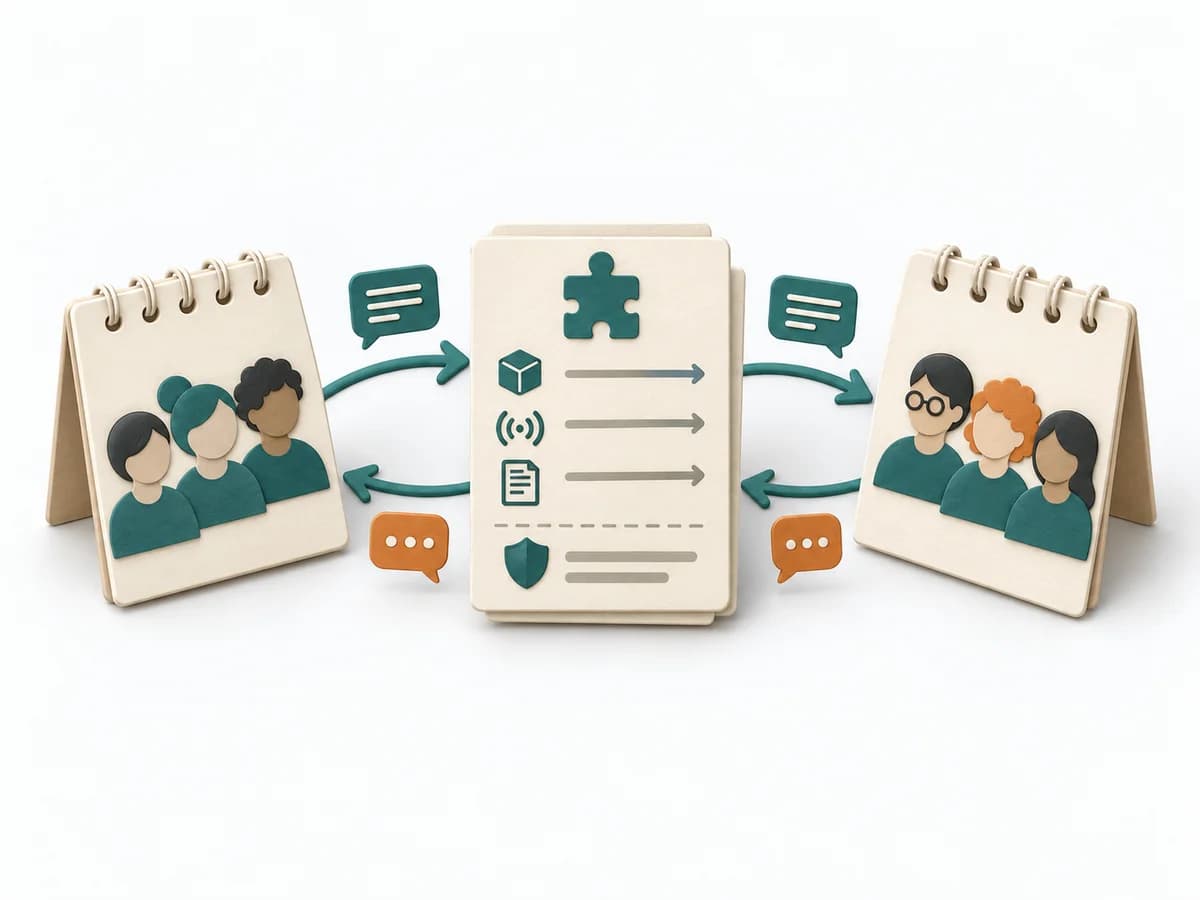 Team Design Team API |  Facilitation Delegation Poker |  Facilitation Power Interest Grid | 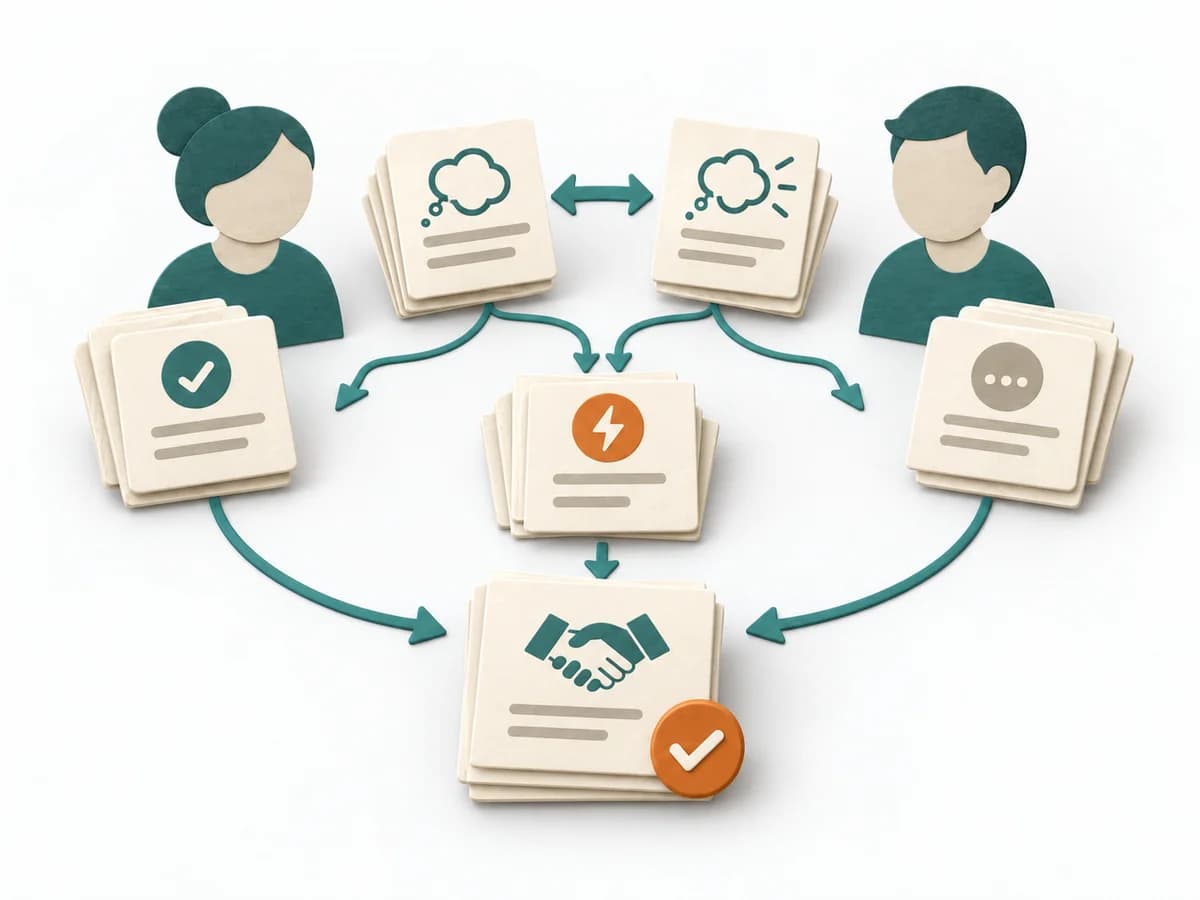 Facilitation Expectation Mapping |
|---|---|---|---|---|
Purposedifferent | When expectations between teams stay fuzzy, it describes how a team can be reached, used, and held accountable. It clarifies responsibility, interaction, and load between teams. The result is captured as a Team API document. | When decisions get stuck between leadership and team, Delegation Poker clarifies the desired scope of autonomy. It shows how much decision-making latitude a role should actually get in practice. | When many stakeholders compete for attention at once, the Power Interest Grid sorts them by influence and stake. It turns individual contributions into a visible selection. The result is captured as a Power Interest Grid and a stakeholder-specific strategy. | When roles, interfaces, or projects fail because of differing expectations, Expectation Mapping surfaces these differences. It shows what each side takes for granted and where the pictures diverge. |
Complexitysame | Low | Low | Low | Low |
Timedifferent | Half day initial, dann laufend | 45-90 min | 30-60 min | 45-90 min |
Participantsdifferent | Ein Team plus Stakeholder | 3-10 | 2-8 | 3-12 |
Formatdifferent | Workshop + async | Workshop | Workshop | Workshop |
Outputdifferent | Team API Document | Delegation Board, Decision Boundaries, Role Agreements | Power Interest Grid, Strategy per Stakeholder | Expectation Map, Alignment Notes, Agreements |
Tagsno overlap | TeamAlignmentCommunicationService | AutonomyRolesTeam | StakeholdersFacilitationAlignmentPlanning | AlignmentStakeholdersTeam |