View methods side by side.
Choose up to four methods. Add them using the search and share the comparison by copying its link.
| Criterion | 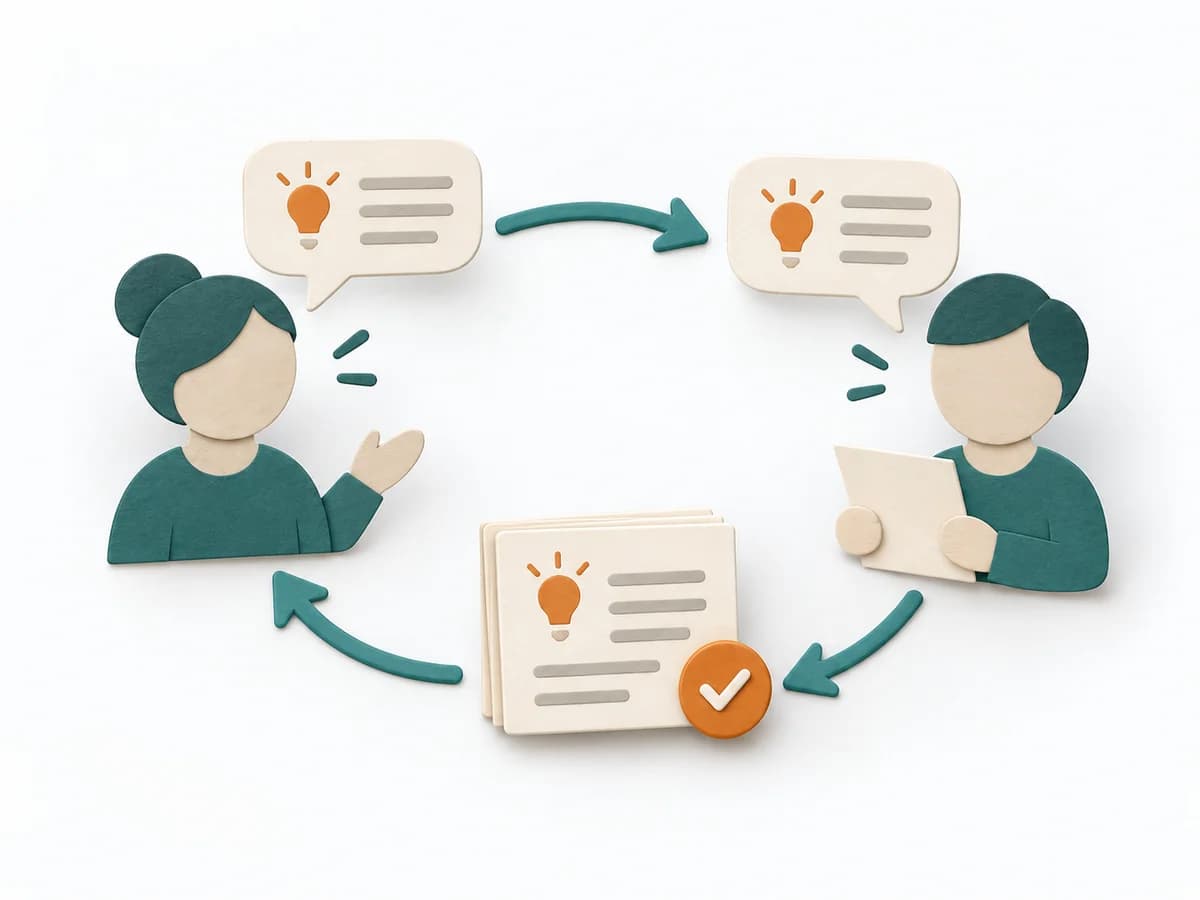 Knowledge Modeling Teach-back |  Systems Thinking Leverage Points |  Decision Making Delphi Method |  Knowledge Modeling Feynman Technique |
|---|---|---|---|---|
Purposedifferent | Teach-back checks whether an explanation actually got through to the other person. The method makes misunderstandings visible early and strengthens shared understanding in advisory and learning situations. | Leverage Points show exactly where interventions in a system produce a disproportionate effect. It draws relationships, patterns, and feedback loops. The result is captured as a leverage map and action strategy. | When knowledge is distributed and direct dominance should be avoided, groups quickly fall under the sway of their opinion leaders. The Delphi Method gathers assessments iteratively and gradually brings expert judgments closer together. | The Feynman Technique checks understanding by explaining a topic so that it stays easy for others to understand. It makes knowledge gaps visible before they become costly in everyday work. |
Complexitydifferent | Low | High | High | Low |
Timedifferent | 5-20 min | Half day | 1-4 Wochen | 20-60 min |
Participantsdifferent | 2-8 | 3-12 | 6-30 Experten | 1 |
Formatdifferent | Workshop + async | Workshop | Async | Async |
Outputdifferent | Understanding Check, Clarification Notes, Learning Gaps | Leverage Map, Action Strategy | Expert Forecast, Consensus Range, Assumption Notes | Plain-language Explanation, Knowledge Gaps, Study Notes |
Tagsno overlap | LearningUnderstandingCommunication | Systems thinkingChangeStrategy | ForecastingExpertsDecisionStrategy | LearningKnowledgeUnderstanding |