View methods side by side.
Choose up to four methods. Add them using the search and share the comparison by copying its link.
| Criterion |  Knowledge Modeling Teach-back | 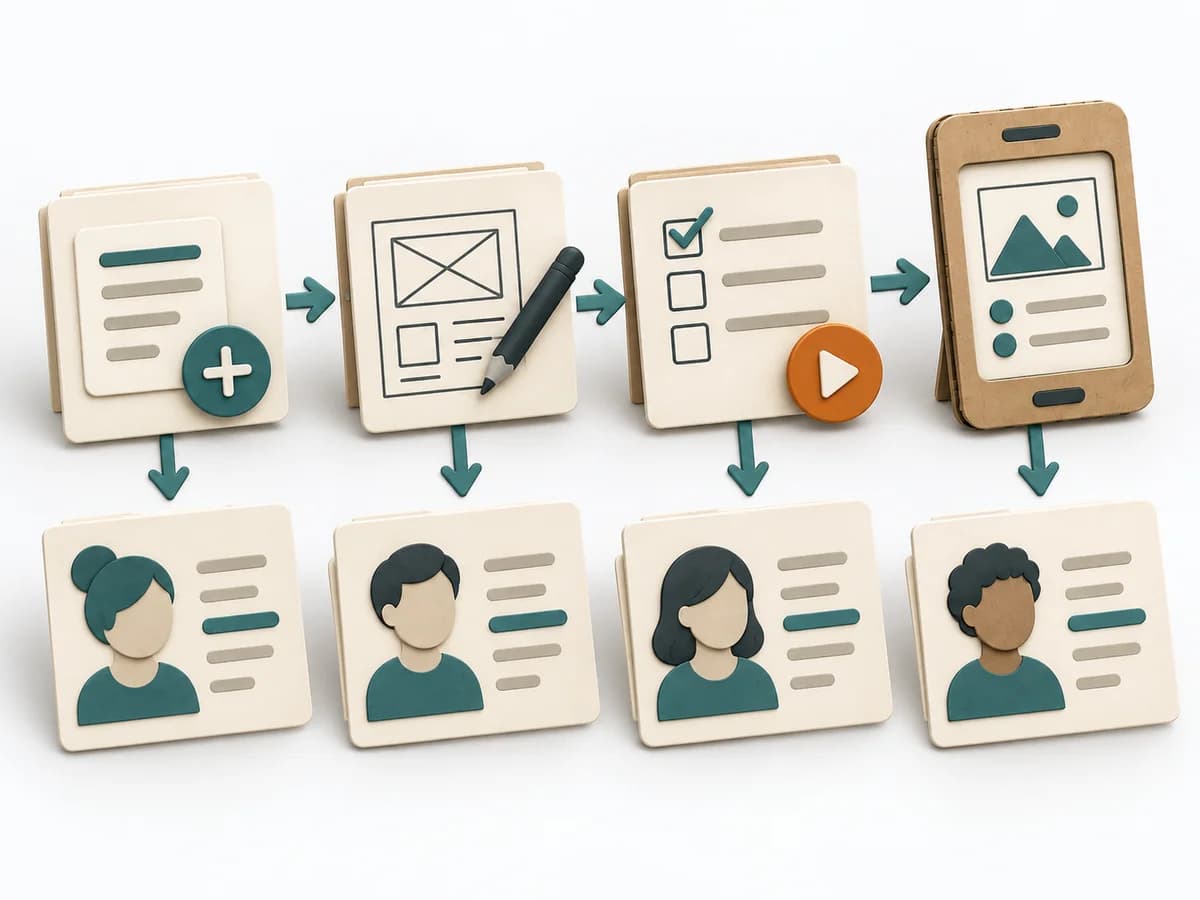 Knowledge Modeling Event Modeling |  Agile 4Ls Retrospective |  Domain Modeling EventStorming |
|---|---|---|---|---|
Purposedifferent | Teach-back checks whether an explanation actually got through to the other person. The method makes misunderstandings visible early and strengthens shared understanding in advisory and learning situations. | Event Modeling connects business workflows with commands, events, and views into one coherent mental model. It helps design behavior, UI, and technical slices from the same underlying logic. | When a sprint should not only be assessed but also learned from, it captures experience in clear learning categories. It records what worked, what's missing, and what should run differently next time. | When a domain consists of many events, rules, and states, it creates a shared modeling space for the team. It bundles language, flows, and boundaries before domain knowledge fragments into siloed views. |
Complexitydifferent | Low | Medium | Low | Medium |
Timedifferent | 5-20 min | 2-6 h | 45–75 min | 2-8 h |
Participantsdifferent | 2-8 | 2-8 | Team members involved | 5-12 |
Formatdifferent | Workshop + async | Workshop + async | Workshop | Workshop |
Outputdifferent | Understanding Check, Clarification Notes, Learning Gaps | Event Model, UI Flow, Commands, Read Models | 4Ls Board, Learning Themes, Improvement Actions | Event Timeline, Ubiquitous Language, Boundaries, Open Questions |
Tagsno overlap | LearningUnderstandingCommunication | EventsBlueprintDomain-Driven DesignBehavior | RetrospectiveLearningReflectionTeam | Domain-Driven DesignEventsDiscoveryWorkshop |