View methods side by side.
Choose up to four methods. Add them using the search and share the comparison by copying its link.
| Criterion | 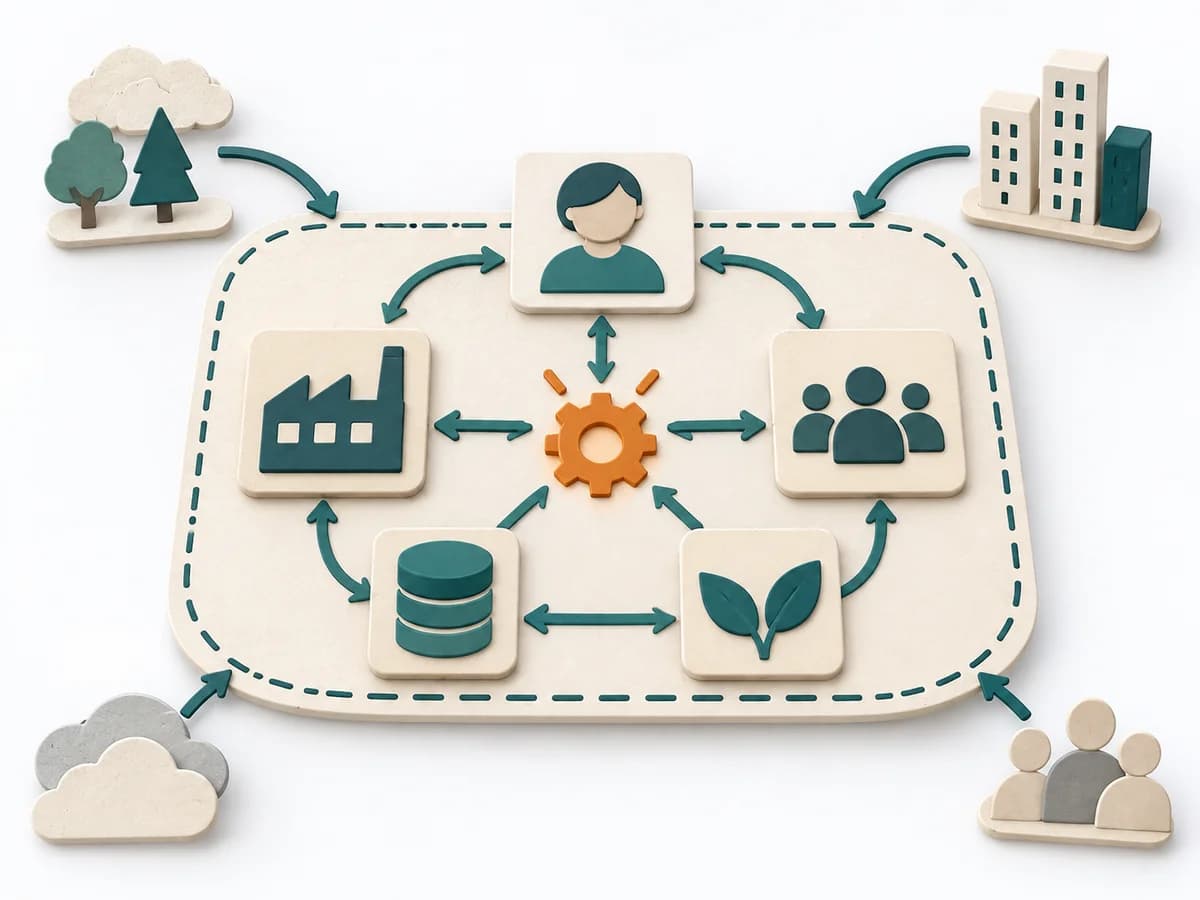 Systems Thinking Systems Mapping |  Facilitation Mind Mapping |  Knowledge Modeling Concept Mapping | 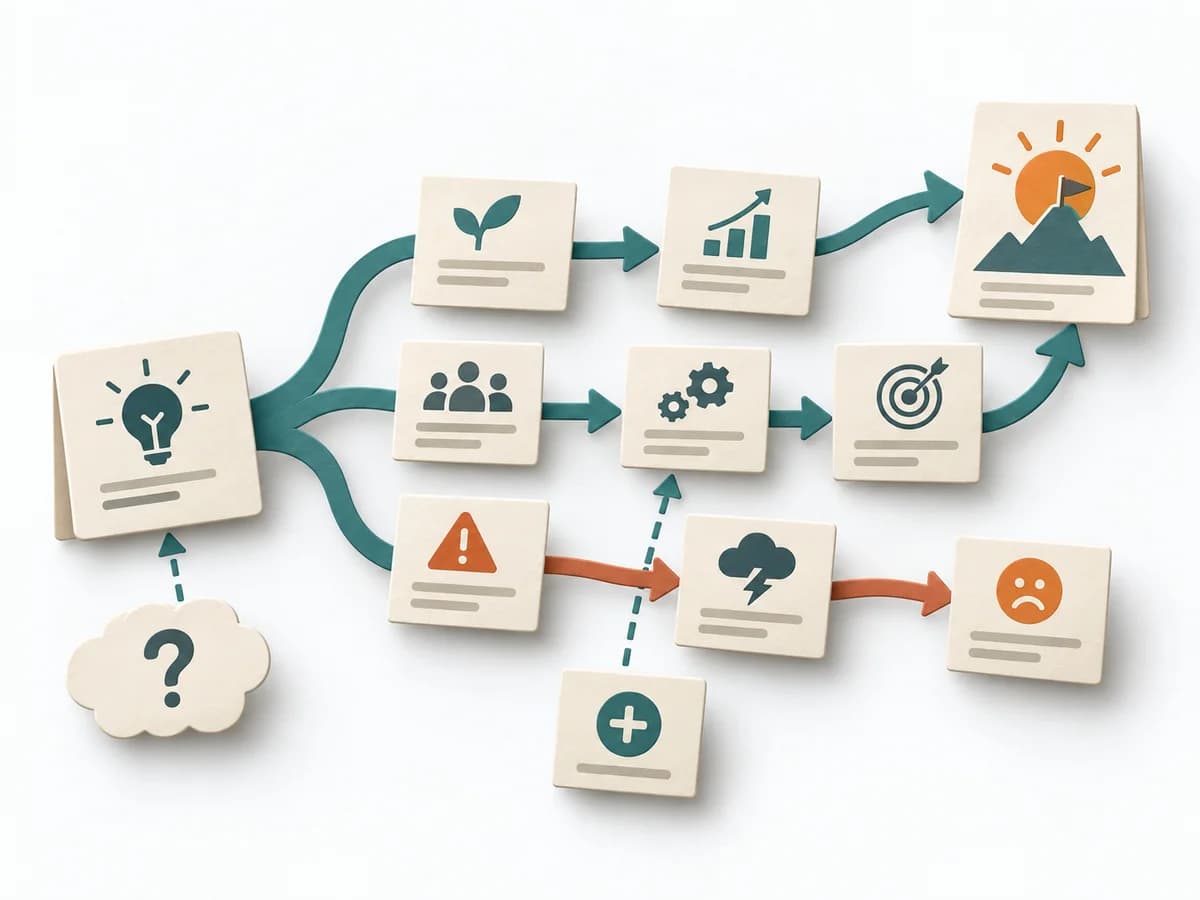 Systems Thinking Future Reality Tree |
|---|---|---|---|---|
Purposedifferent | Systems Mapping arranges elements, relationships, and boundaries so a complex field becomes legible at a glance. The overview stabilizes the overall picture before detail work or steering begins. | When a topic is still unclear and too many thoughts surface at once, Mind Mapping creates an open surface for ordering them. It makes connections, subtopics, and starting points visible without fixing them too early. | Concept Mapping arranges terms and relationships in a network that makes subject-matter connections tangible. It fits when a topic needs to be understood structurally rather than linearly. | A Future Reality Tree shows how desired actions are meant to lead to a better system state. The method checks whether a path of change holds together logically before time flows into implementation. |
Complexitydifferent | Medium | Low | Medium | High |
Timedifferent | 1-3 h | 15-45 min | 1-2 h | 2-4 h |
Participantsdifferent | 3-12 | 1-10 | 1-8 | 3-8 |
Formatdifferent | Workshop + async | Workshop + async | Workshop + async | Workshop |
Outputdifferent | System Map, Dependencies, Leverage Points | Mind Map, Topic Clusters, Open Questions | Concept Map, Relationship Labels, Knowledge Gaps | Future Reality Tree, Negative Branches, Assumption List, Improved Injections |
Tagsno overlap | Systems thinkingMappingBoundariesChange | BrainstormingIdeasMappingStructureFacilitation | KnowledgeConceptsMappingSensemaking | Theory of ConstraintsSystems thinkingChange |