View methods side by side.
Choose up to four methods. Add them using the search and share the comparison by copying its link.
| Criterion |  Systems Thinking Systems Mapping |  Systems Thinking Intervention Mapping | 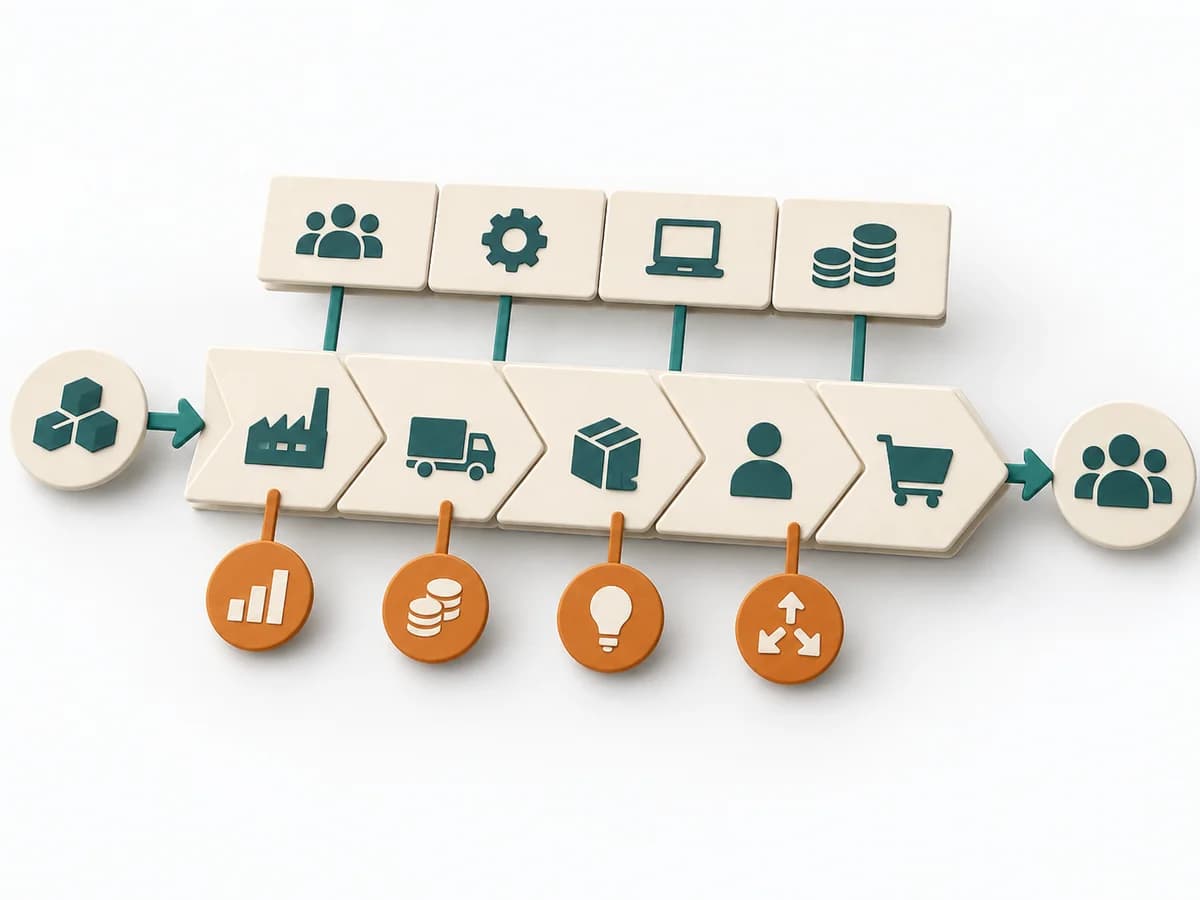 Business Strategy Value Chain Analysis |  Systems Thinking Leverage Points |
|---|---|---|---|---|
Purposedifferent | Systems Mapping arranges elements, relationships, and boundaries so a complex field becomes legible at a glance. The overview stabilizes the overall picture before detail work or steering begins. | Intervention Mapping translates a need for change into a planned, evaluable program. The method connects target group, determinants, actions, and measurement into a traceable chain. | Value Chain Analysis shows where value is created, costs accrue, and differentiation becomes possible along the process. It compares strengths, risks, market logic, and courses of action. The result is captured as a value-chain map and lever list. | Leverage Points show exactly where interventions in a system produce a disproportionate effect. It draws relationships, patterns, and feedback loops. The result is captured as a leverage map and action strategy. |
Complexitydifferent | Medium | High | High | High |
Timedifferent | 1-3 h | 1-5 Tage | Half day | Half day |
Participantsdifferent | 3-12 | 4-12 | 3-8 | 3-12 |
Formatdifferent | Workshop + async | Workshop + async | Workshop | Workshop |
Outputdifferent | System Map, Dependencies, Leverage Points | Logic Model, Change Objectives, Intervention Components, Evaluation Plan | Value Chain Map, Lever List | Leverage Map, Action Strategy |
Tagsno overlap | Systems thinkingMappingBoundariesChange | ChangeSystems thinkingCapability | StrategyBusiness modelDiagnosisAnalysis | Systems thinkingChangeStrategy |