View methods side by side.
Choose up to four methods. Add them using the search and share the comparison by copying its link.
| Criterion |  Systems Thinking Systems Mapping | 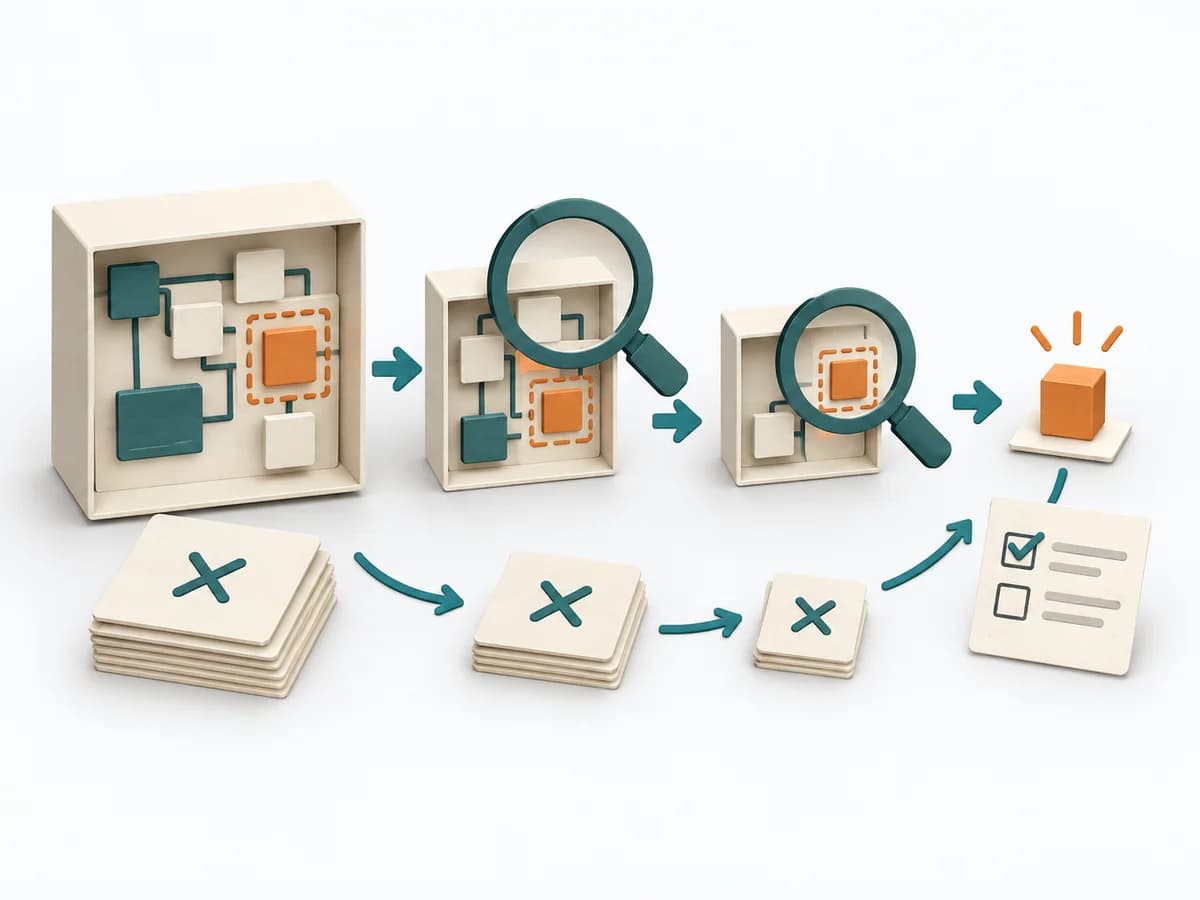 Engineering Fault Isolation |  Decision Making Force Field Analysis | 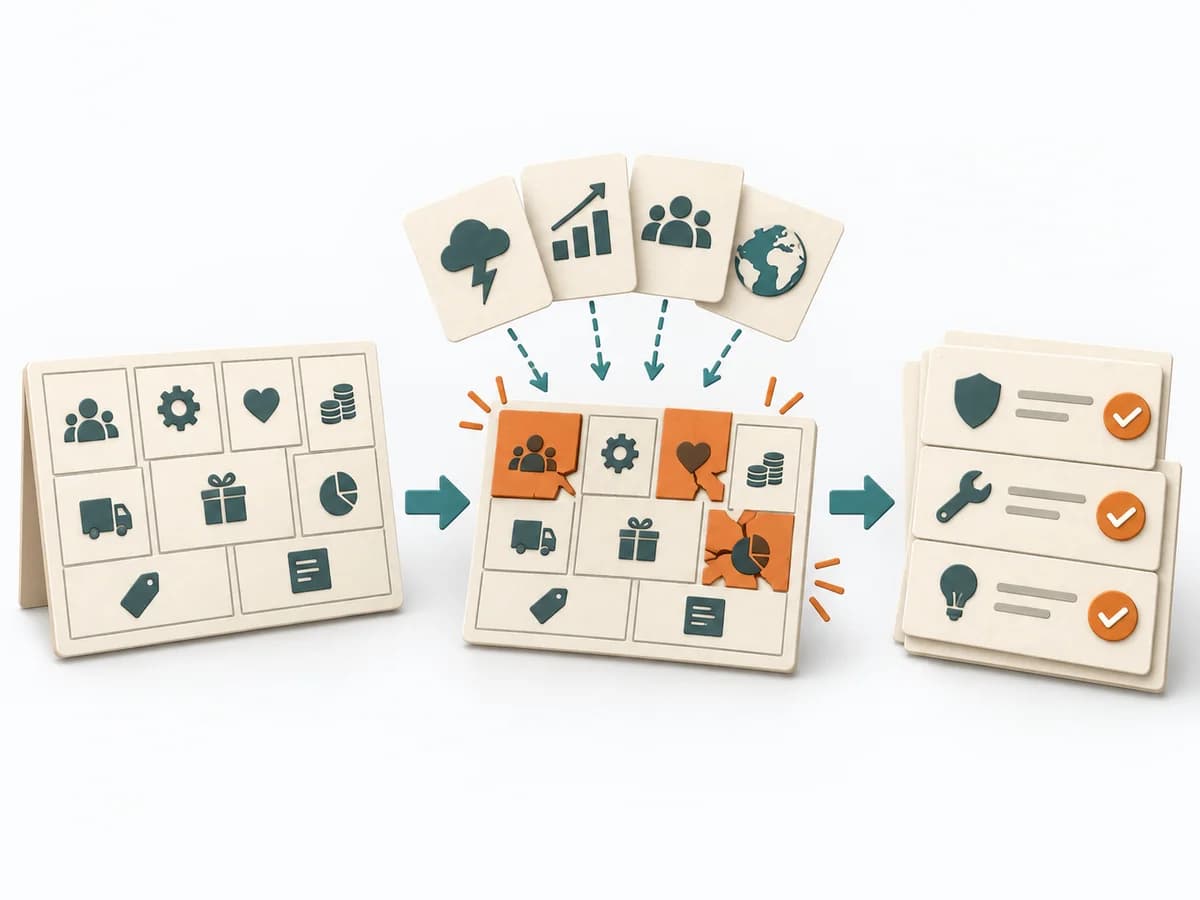 Business Strategy Business Model Stress Test |
|---|---|---|---|---|
Purposedifferent | Systems Mapping arranges elements, relationships, and boundaries so a complex field becomes legible at a glance. The overview stabilizes the overall picture before detail work or steering begins. | In technical failures, the visible symptom often gets mixed up with the actual cause. Fault Isolation narrows the fault space and progressively reduces which part of the system is truly affected. | In change initiatives, supporting and restraining forces sit at the table at the same time. Force Field Analysis makes these tensions explicit and shows where change can be pushed forward by strengthening or relieving. | A Business Model Stress Test checks how well a business model holds up under pressure and headwinds. It compares strengths, risks, market logic, and courses of action. The result is captured as a stress-test report and action plan per scenario. |
Complexitydifferent | Medium | Medium | Low | High |
Timedifferent | 1-3 h | 30-180 min | 45-90 min | Half day |
Participantsdifferent | 3-12 | 1-6 | 3-12 | 3-8 |
Formatdifferent | Workshop + async | Workshop + async | Workshop | Workshop |
Outputdifferent | System Map, Dependencies, Leverage Points | Fault Isolation Map, Test Log, Excluded Hypotheses, Narrowed Fault Area | Force Field Map, Change Levers, Risk Notes | Stress Test Report, Action Plan per Scenario |
Tagsno overlap | Systems thinkingMappingBoundariesChange | TroubleshootingDiagnosisEngineering | ChangeDecisionStrategy | StrategyBusiness modelRiskDiagnosis |