View methods side by side.
Choose up to four methods. Add them using the search and share the comparison by copying its link.
| Criterion |  Systems Thinking Systems Mapping |  Domain Modeling Context Map | 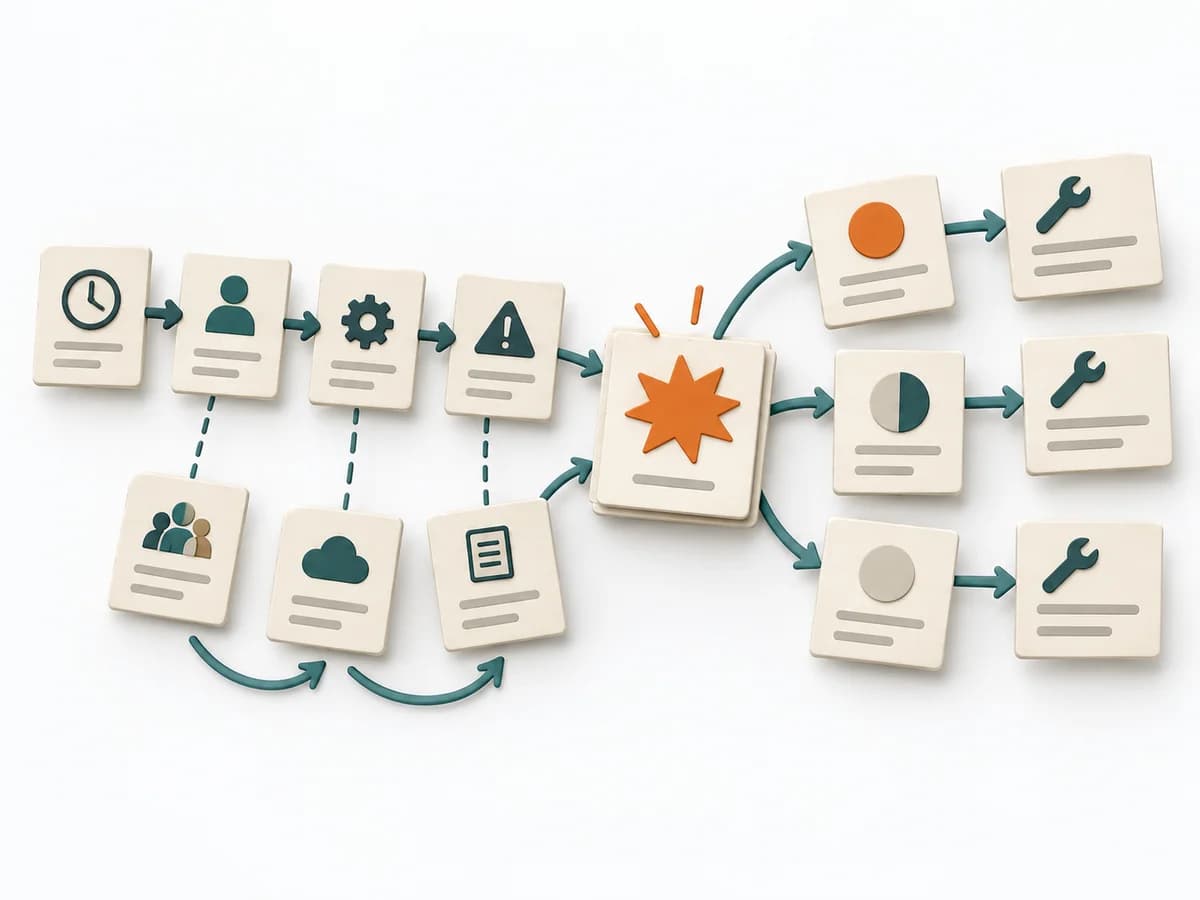 Operations Causal Factor Analysis |  Systems Thinking Current Reality Tree |
|---|---|---|---|---|
Purposedifferent | Systems Mapping arranges elements, relationships, and boundaries so a complex field becomes legible at a glance. The overview stabilizes the overall picture before detail work or steering begins. | When several contexts need to talk to each other, it makes their relationships and dependencies legible. It helps sort integration pressure and responsibilities across system boundaries. | For an event with a complicated course, the method breaks down the contributing factors along the timeline. It shows how conditions, decisions, and reactions together produce a course of events. | A Current Reality Tree condenses many symptoms into a few causal chains. The method makes visible which core problems drive several negative effects at once. |
Complexitydifferent | Medium | Medium | High | High |
Timedifferent | 1-3 h | 1-3 h | 2-6 h | 2-6 h |
Participantsdifferent | 3-12 | 2-8 | 3-10 | 3-8 |
Formatdifferent | Workshop + async | Workshop + async | Workshop + async | Workshop |
Outputdifferent | System Map, Dependencies, Leverage Points | Context Map, Integration Patterns, Boundary Notes | Event Timeline, Causal Factor Chart, Cause List, Corrective Actions | Current Reality Tree, Core Problems, Intervention Ideas |
Tagsno overlap | Systems thinkingMappingBoundariesChange | Domain-Driven DesignBoundariesStrategy | CausalityIncidentRoot causeTimeline | Systems thinkingRoot causeConstraintsCausality |