View methods side by side.
Choose up to four methods. Add them using the search and share the comparison by copying its link.
| Criterion |  UX Research Surveys | 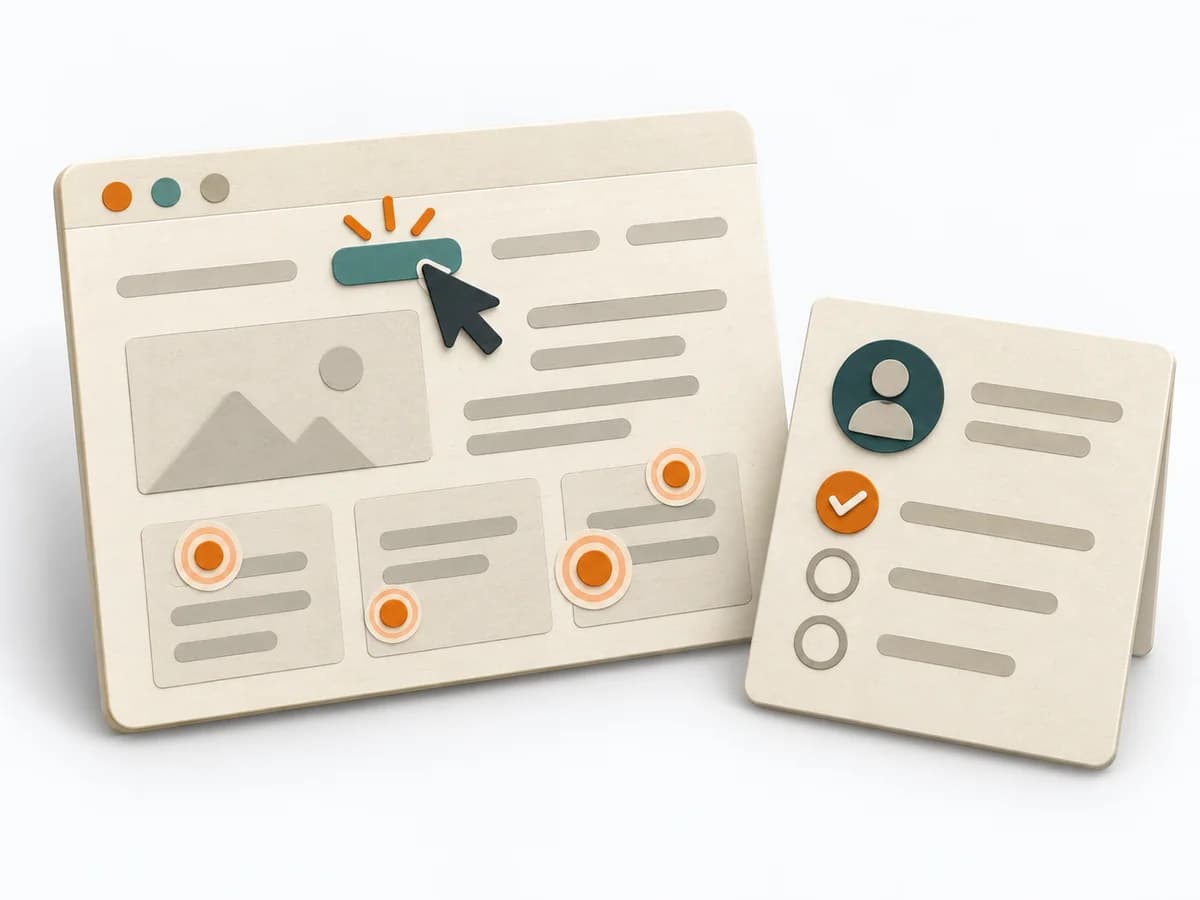 UX Research First-click Testing |  Decision Making Assumption Surfacing |  Product Strategy DIBB |
|---|---|---|---|---|
Purposedifferent | When a topic needs to be validated broadly and many people can answer the same question, surveys gather structured feedback in a scalable form. Answers become comparable and segmentable instead of remaining merely anecdotal. | When users immediately turn the wrong way on a screen or wireframe, first click testing checks initial orientation at high speed. The first click shows early whether expectation, labeling, and wayfinding fit together. | Plans often contain assumptions that were never openly stated and remain dangerous precisely because of that. Assumption Surfacing makes these silent premises visible and prioritizes which of them carry the initiative or could sink it. | DIBB helps clarify target groups, value, goals, and priorities by making the logic behind a decision explicit. It captures results as a DIBB document, belief list, bet list, and learning report. |
Complexitydifferent | Medium | Low | Low | Low |
Timedifferent | 3-14 Tage | 1-2 Tage | 45-90 min | 1-2 h |
Participantsdifferent | 50+ | 10-30 | 2-8 | 2-8 |
Formatdifferent | Async | Async | Workshop + async | Workshop + async |
Outputdifferent | Survey Results, Charts, Segment Insights | Click Heatmap, Success Rate, Design Recommendations | Assumption List, Critical Assumptions, Learning Plan | DIBB document, Belief list, Bet list, Learning report |
Tagsno overlap | QuantitativeResearchValidation | UXNavigationFindabilityValidation | AssumptionsRiskDecisionDiscovery | StrategyDecisionAssumptionsHypothesis |