View methods side by side.
Choose up to four methods. Add them using the search and share the comparison by copying its link.
| Criterion |  UX Research Surveys | 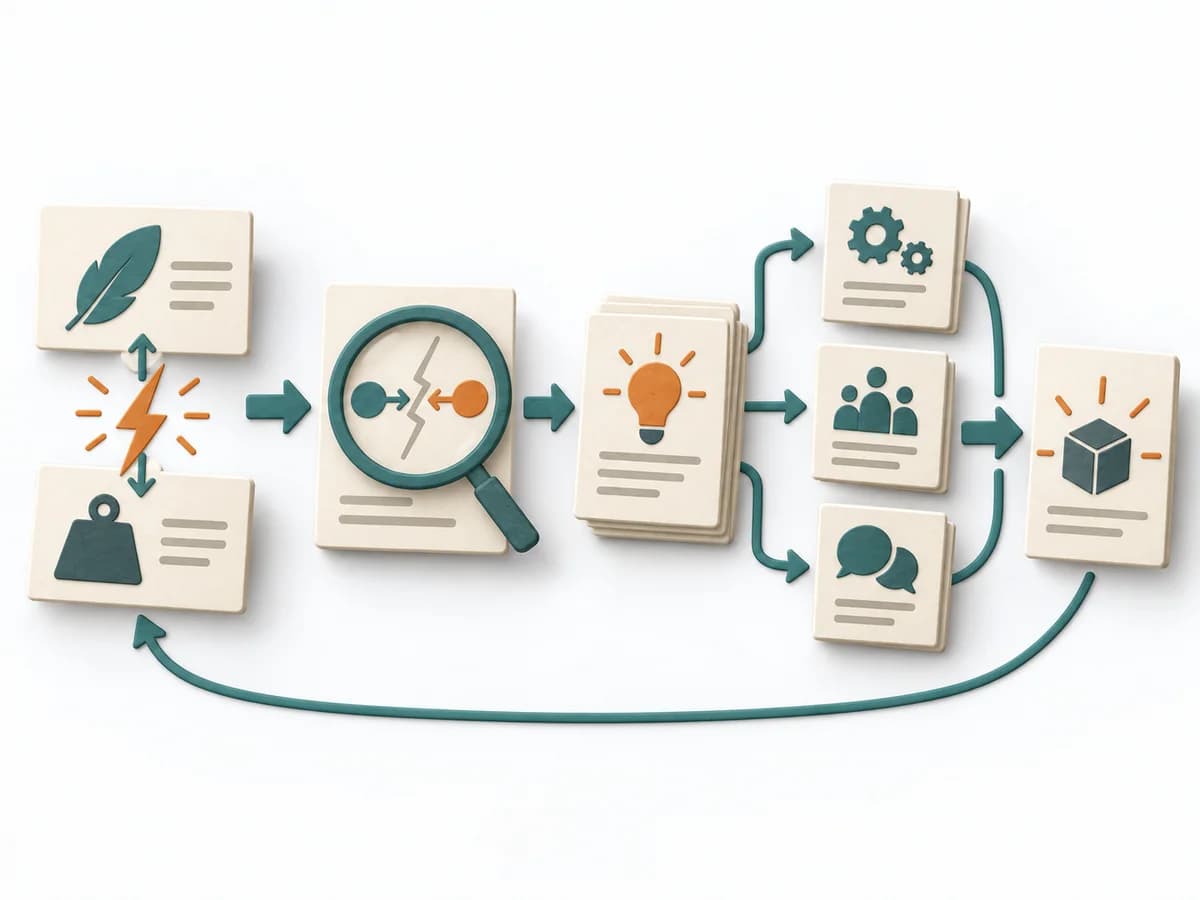 Innovation Contradiction Analysis |  Innovation Design Thinking | 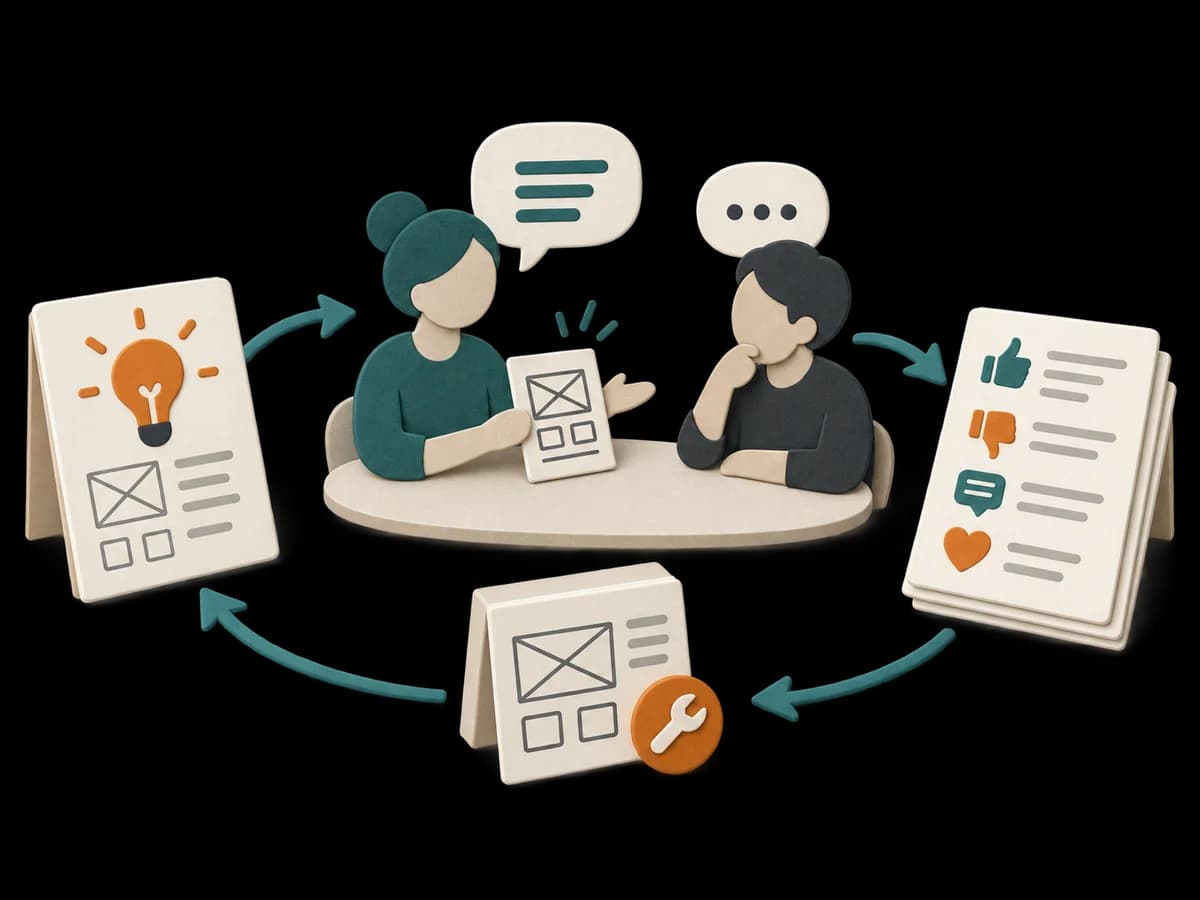 Product Discovery Solution Interview |
|---|---|---|---|---|
Purposedifferent | When a topic needs to be validated broadly and many people can answer the same question, surveys gather structured feedback in a scalable form. Answers become comparable and segmentable instead of remaining merely anecdotal. | When a system should improve while another measure suffers as a result, the method makes the underlying conflict precisely formulable. It separates the desired effect from its side effect. This makes solutions possible that address the contradiction deliberately instead of half-heartedly. | For complex user problems with an uncertain cause, the method connects observation, interpretation, and experiment into a learning cycle. It keeps the focus on real needs and avoids premature solution language. This produces robust decisions for product and service. | When a solution idea is already on the table, it checks how it is understood and evaluated. It looks for resonance, objections, and missing fit early in the conversation. |
Complexitydifferent | Medium | Medium | High | Medium |
Timedifferent | 3-14 Tage | 60-120 min | 1 Tag bis mehrere Wochen | 30-60 min je Interview |
Participantsdifferent | 50+ | 2-8 | 4-10 | 5-10 Interviews |
Formatdifferent | Async | Workshop | Workshop | Workshop + async |
Outputdifferent | Survey Results, Charts, Segment Insights | Contradiction Statement, Abstraction Notes, Solution Principles, Concept Ideas | Problem Statement, Prototype, Test Learnings | Solution Feedback, Objection List, Validation Notes |
Tagsno overlap | QuantitativeResearchValidation | ContradictionsInnovationProblem solving | InnovationPrototypeResearch | ValidationInterviewsPrototype |