View methods side by side.
Choose up to four methods. Add them using the search and share the comparison by copying its link.
| Criterion |  Business Strategy Strategy Execution Loop | 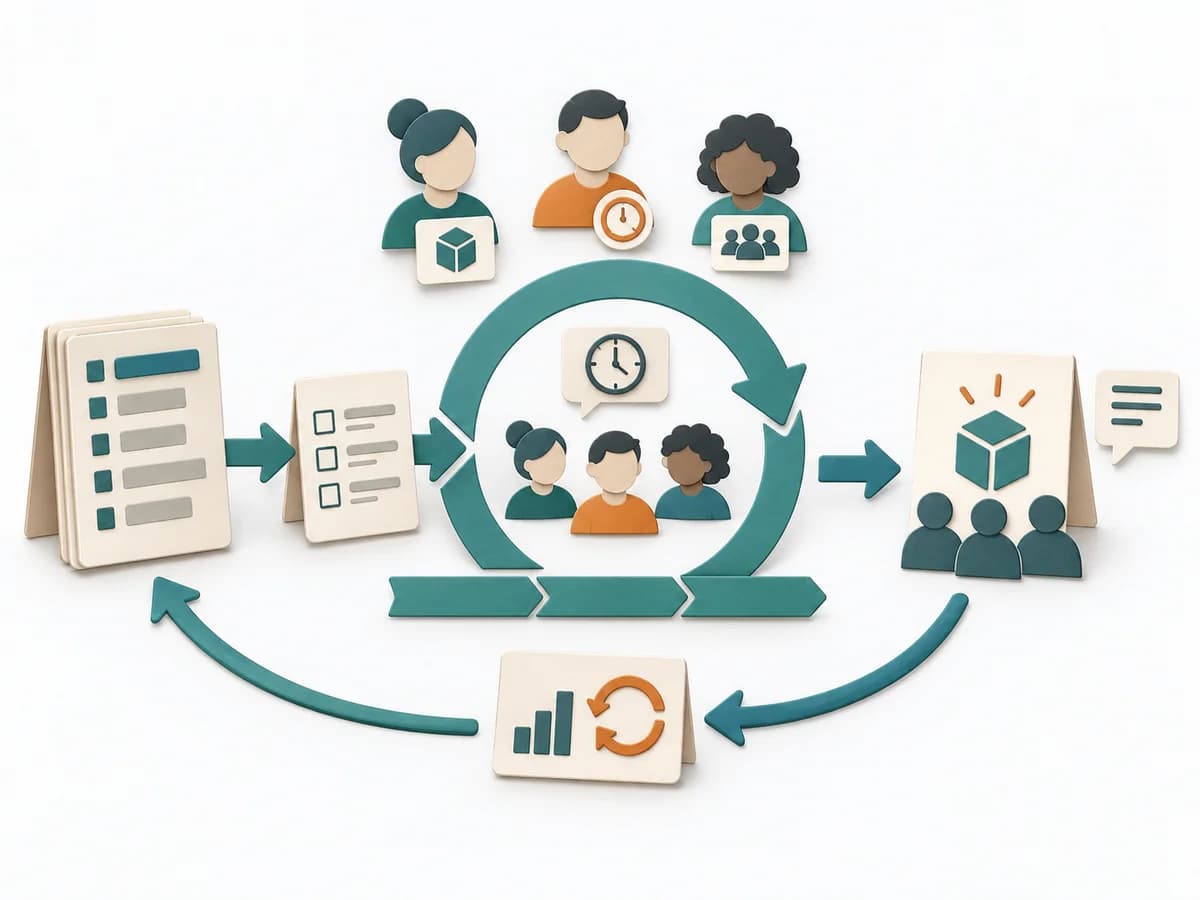 Agile Scrum |  Operations Barrier Analysis |  DevOps Blameless Postmortem |
|---|---|---|---|---|
Purposedifferent | The Strategy Execution Loop helps avoid treating strategy as a one-off document. It makes visible how strategic decisions are turned into objectives, initiatives, operational work, measurement, and learning. | When a team needs to work in a fixed delivery rhythm, it stabilizes cadence, responsibility, and feedback loops. It makes collaboration reliable across sprint boundaries. | For a risk that can only be managed through multiple layers of protection, the method examines the effectiveness of each barrier. It shows where safeguards are missing, too weak, or fail under real conditions. | After an incident with damage or a near miss, the method creates a sober field for learning without assigning blame. It directs attention to the course of events, conditions, and effective countermeasures. |
Complexitydifferent | High | Medium | Medium | Medium |
Timedifferent | Initial 3-6 h, then monthly or quarterly reviews | 1-4 Wochen je Sprint, laufend | 2-4 h | 30-90 min |
Participantsdifferent | 5-12 | 3-10 (Scrum Team) | 2-6 | 3-12 |
Formatsame | Workshop + async | Workshop + async | Workshop + async | Workshop + async |
Outputdifferent | Execution Loop, Review Cadence, Strategic Learning Log | Product Backlog, Sprint Backlog, Increment, Sprint Goal | Barrier Inventory, Failure Analysis per Barrier, Action Backlog | Postmortem Doc, Action Items, Timeline |
Tagsno overlap | ExecutionCadenceLearningGovernance | AgileIterationCadence | Root causeSafetyIncident | Site Reliability EngineeringIncidentLearningReliability |