View methods side by side.
Choose up to four methods. Add them using the search and share the comparison by copying its link.
| Criterion |  Business Strategy Strategy Execution Loop |  Agile ROAM Board | 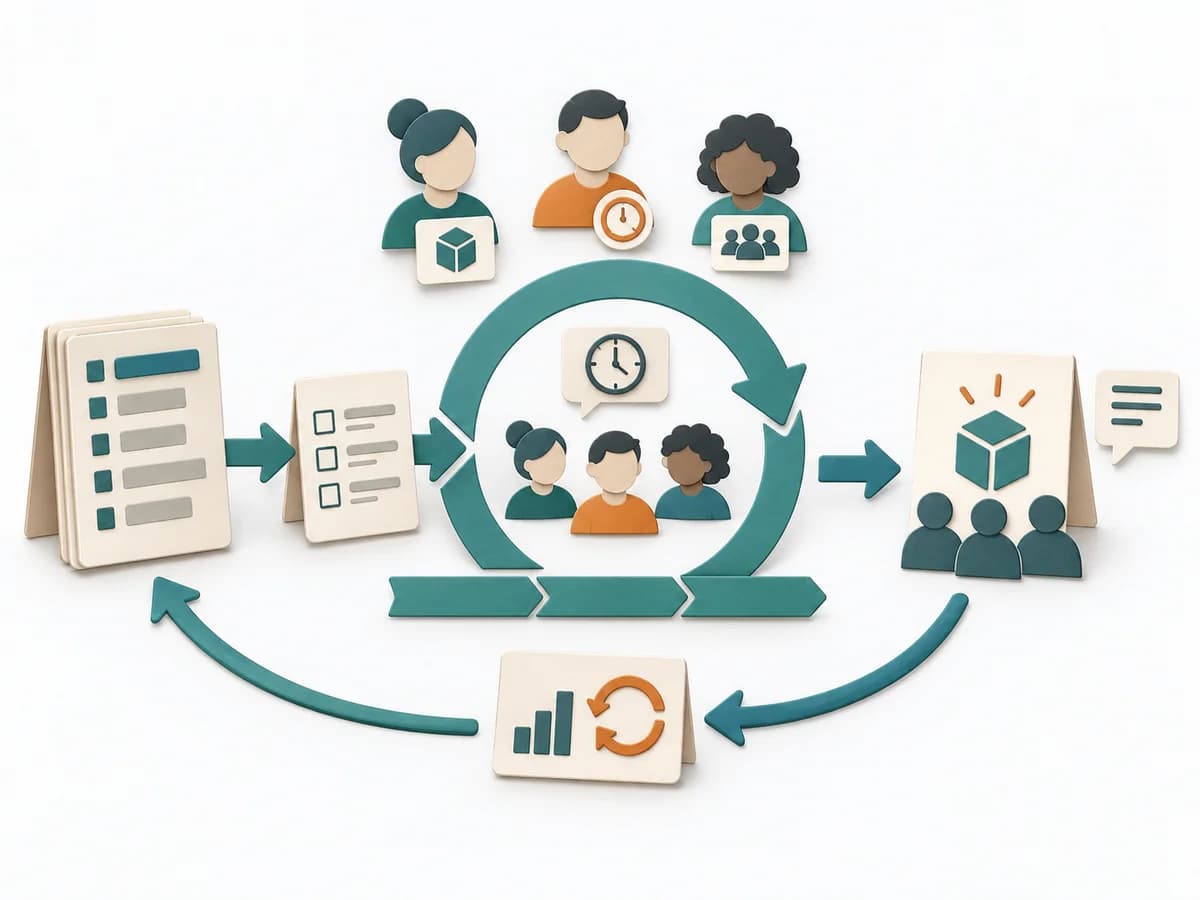 Agile Scrum | 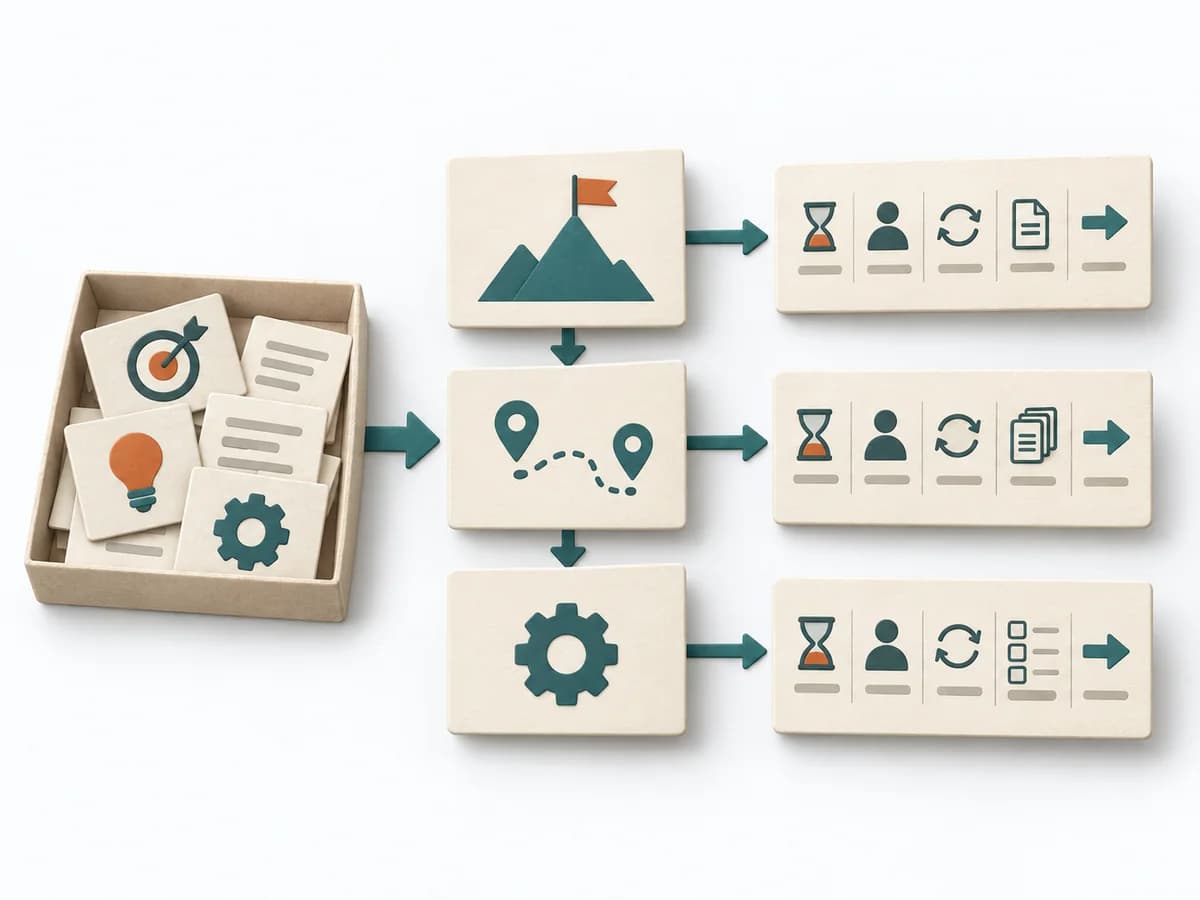 Business Strategy Strategic, Tactical and Operational Planning |
|---|---|---|---|---|
Purposedifferent | The Strategy Execution Loop helps avoid treating strategy as a one-off document. It makes visible how strategic decisions are turned into objectives, initiatives, operational work, measurement, and learning. | When work needs to move between different states or columns, it makes that movement and its handoffs legible. It sorts work by value, risk, and delivery ability. The result is captured as a ROAM Board and an Owner List. | When a team needs to work in a fixed delivery rhythm, it stabilizes cadence, responsibility, and feedback loops. It makes collaboration reliable across sprint boundaries. | It places decisions and artifacts at the right level. Strategic planning clarifies direction, tactical planning translates it into programs, and operational planning steers concrete processes. |
Complexitydifferent | High | Low | Medium | Medium |
Timedifferent | Initial 3-6 h, then monthly or quarterly reviews | 20-40 min initial, dann laufend | 1-4 Wochen je Sprint, laufend | 90-180 min |
Participantsdifferent | 5-12 | 3-15 | 3-10 (Scrum Team) | 4-12 |
Formatdifferent | Workshop + async | Workshop + async | Workshop + async | Workshop |
Outputdifferent | Execution Loop, Review Cadence, Strategic Learning Log | ROAM Board, Owner List | Product Backlog, Sprint Backlog, Increment, Sprint Goal | Planning Levels Map, Cadence Model, Planning Artifact Inventory |
Tagsno overlap | ExecutionCadenceLearningGovernance | RiskAgileTrackingAlignment | AgileIterationCadence | CadenceGovernanceExecution |