View methods side by side.
Choose up to four methods. Add them using the search and share the comparison by copying its link.
Selected:Strategy Execution LoopGame Day4Ls RetrospectiveStrategic, Tactical and Operational Planning
| Criterion |  Business Strategy Strategy Execution Loop |  DevOps Game Day |  Agile 4Ls Retrospective | 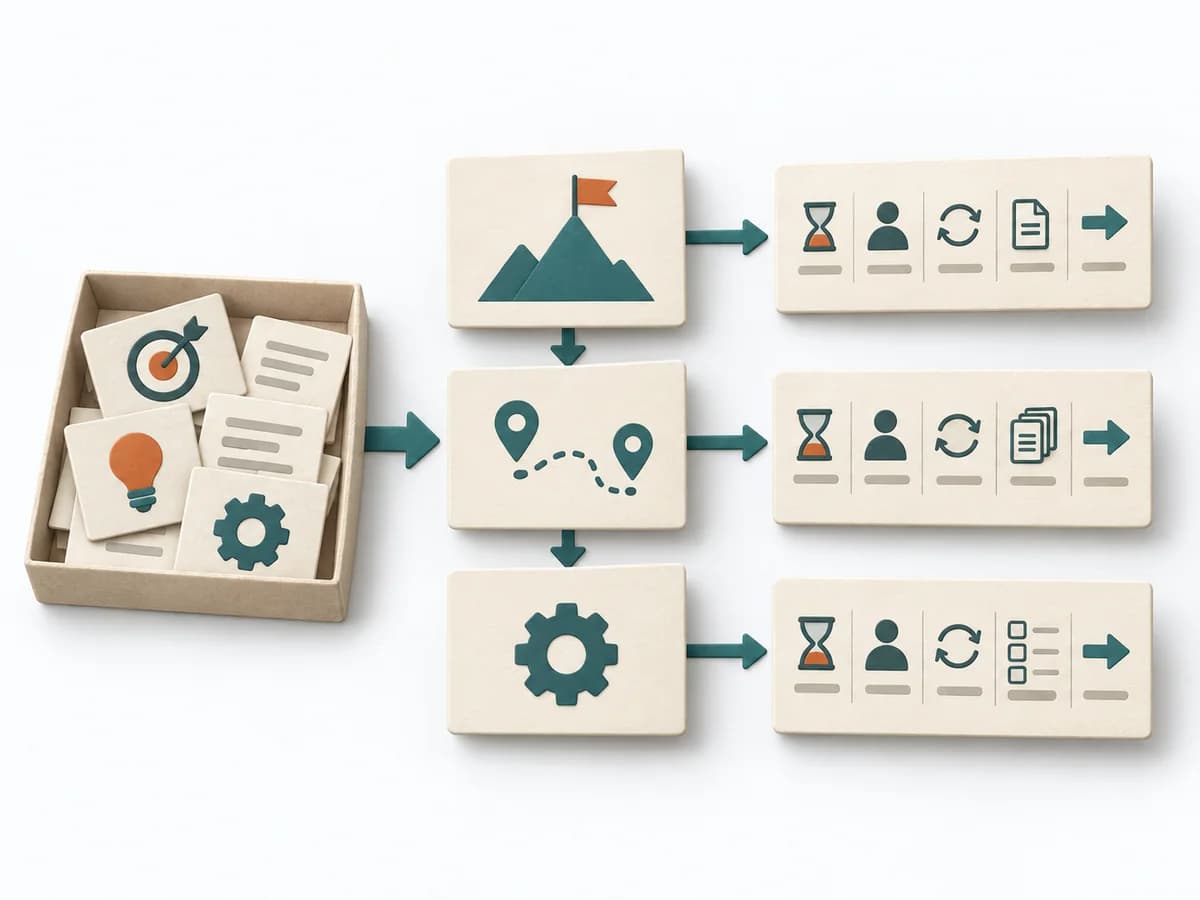 Business Strategy Strategic, Tactical and Operational Planning |
|---|---|---|---|---|
Purposedifferent | The Strategy Execution Loop helps avoid treating strategy as a one-off document. It makes visible how strategic decisions are turned into objectives, initiatives, operational work, measurement, and learning. | In preparing for rare incidents, the method tests response capability under controlled conditions. It shows where assumptions about stability, roles, and recovery are too optimistic. | When a sprint should not only be assessed but also learned from, it captures experience in clear learning categories. It records what worked, what's missing, and what should run differently next time. | It places decisions and artifacts at the right level. Strategic planning clarifies direction, tactical planning translates it into programs, and operational planning steers concrete processes. |
Complexitydifferent | High | High | Low | Medium |
Timedifferent | Initial 3-6 h, then monthly or quarterly reviews | Halber Tag | 45–75 min | 90-180 min |
Participantsdifferent | 5-12 | 5-20 | Team members involved | 4-12 |
Formatdifferent | Workshop + async | Workshop | Workshop | Workshop |
Outputdifferent | Execution Loop, Review Cadence, Strategic Learning Log | Simulation Notes, Gaps List, Updated Runbooks | 4Ls Board, Learning Themes, Improvement Actions | Planning Levels Map, Cadence Model, Planning Artifact Inventory |
Tagsno overlap | ExecutionCadenceLearningGovernance | ResilienceOperationsIncident | RetrospectiveLearningReflectionTeam | CadenceGovernanceExecution |