View methods side by side.
Choose up to four methods. Add them using the search and share the comparison by copying its link.
Selected:Strategic, Tactical and Operational PlanningSpecification by ExampleScrumArchitecture Decision Record
| Criterion | 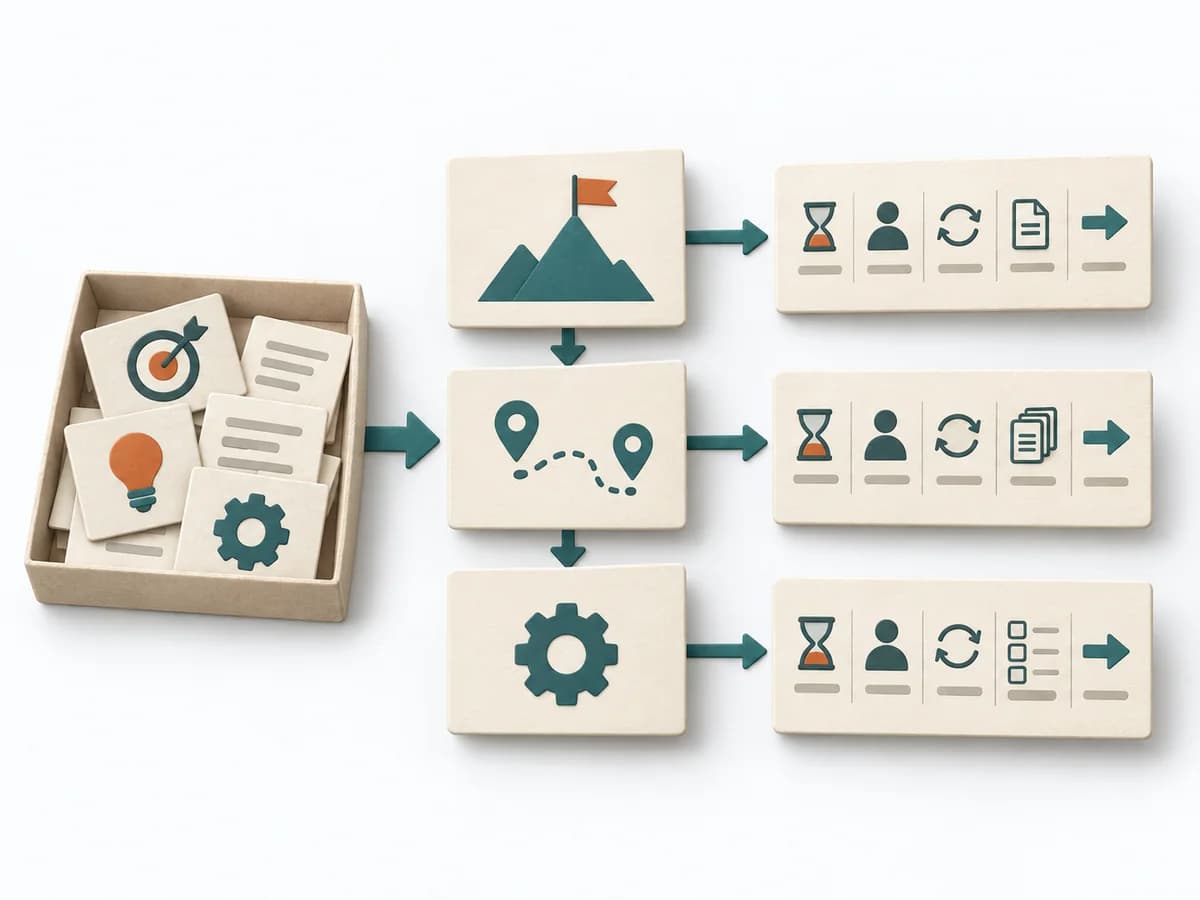 Business Strategy Strategic, Tactical and Operational Planning |  Agile Specification by Example | 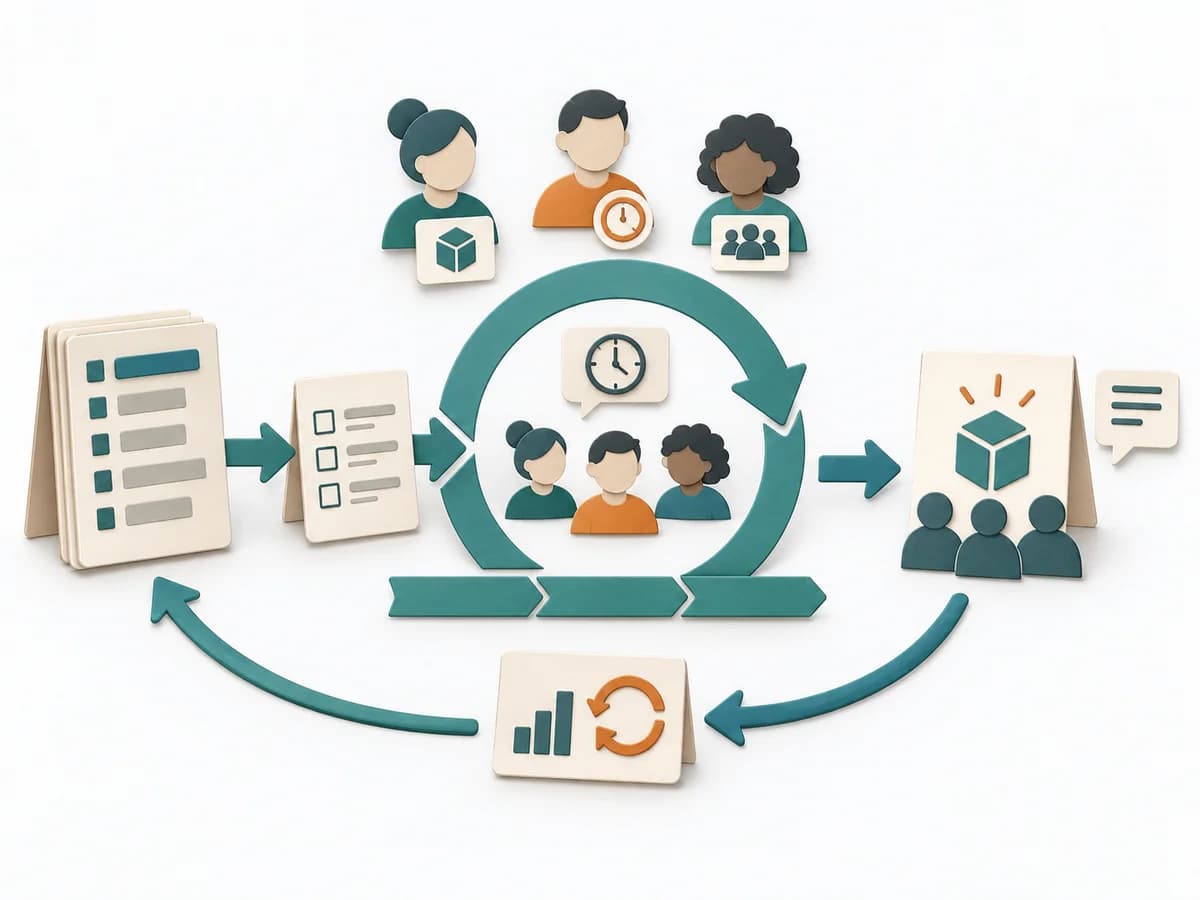 Agile Scrum |  Architecture Architecture Decision Record |
|---|---|---|---|---|
Purposedifferent | It places decisions and artifacts at the right level. Strategic planning clarifies direction, tactical planning translates it into programs, and operational planning steers concrete processes. | When business rules need to become precise, it ties language, example, and test together. It sorts work by value, risk, and delivery ability. The result is captured as an Example Table and Acceptance Tests. | When a team needs to work in a fixed delivery rhythm, it stabilizes cadence, responsibility, and feedback loops. It makes collaboration reliable across sprint boundaries. | An ADR permanently records an architecture decision with context, trade-offs, and consequence. It creates continuity for later changes because the decision path stays traceable. |
Complexitydifferent | Medium | Medium | Medium | Low |
Timedifferent | 90-180 min | 60-90 min pro Feature | 1-4 Wochen je Sprint, laufend | 15-45 min |
Participantsdifferent | 4-12 | 3-6 | 3-10 (Scrum Team) | 1-3 |
Formatdifferent | Workshop | Workshop | Workshop + async | Async |
Outputdifferent | Planning Levels Map, Cadence Model, Planning Artifact Inventory | Example Table, Acceptance Tests | Product Backlog, Sprint Backlog, Increment, Sprint Goal | ADR File, Decision Log, Rationale |
Tagsno overlap | CadenceGovernanceExecution | AgileRequirementsExamplesBehavior-Driven Development | AgileIterationCadence | ArchitectureRationaleDocumentationGovernance |