View methods side by side.
Choose up to four methods. Add them using the search and share the comparison by copying its link.
| Criterion | 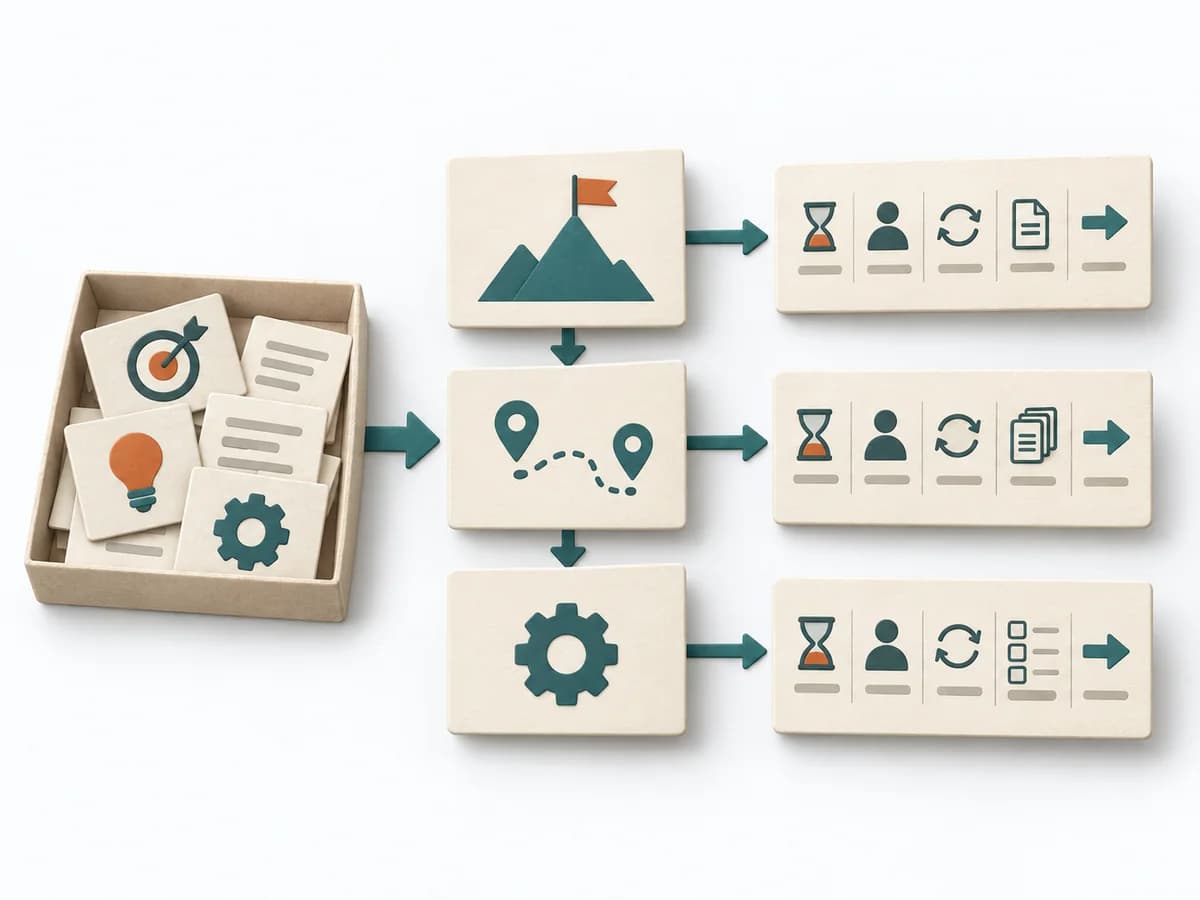 Business Strategy Strategic, Tactical and Operational Planning |  Decision Making RAPID |  Operations 5 Whys |  Business Strategy Strategy Execution Loop |
|---|---|---|---|---|
Purposedifferent | It places decisions and artifacts at the right level. Strategic planning clarifies direction, tactical planning translates it into programs, and operational planning steers concrete processes. | In complex management decisions, clarity is often missing about who recommends, who agrees, and who makes the decision. RAPID creates this assignment and stabilizes decisions across several levels. | For a single, hard-to-explain deviation, the method exposes the causal chain behind the visible symptom. It keeps the cause open until a controllable condition emerges instead of a mere description. | The Strategy Execution Loop helps avoid treating strategy as a one-off document. It makes visible how strategic decisions are turned into objectives, initiatives, operational work, measurement, and learning. |
Complexitydifferent | Medium | Medium | Low | High |
Timedifferent | 90-180 min | 45-90 min | 15-30 min | Initial 3-6 h, then monthly or quarterly reviews |
Participantsdifferent | 4-12 | 3-12 | 2-6 | 5-12 |
Formatdifferent | Workshop | Workshop + async | Workshop | Workshop + async |
Outputdifferent | Planning Levels Map, Cadence Model, Planning Artifact Inventory | RAPID Role Map, Recommendation, Decision Log | Root cause notes, Countermeasures | Execution Loop, Review Cadence, Strategic Learning Log |
Tagsno overlap | CadenceGovernanceExecution | DecisionRolesGovernance | Root causeIncidentLeanProblem solving | ExecutionCadenceLearningGovernance |