View methods side by side.
Choose up to four methods. Add them using the search and share the comparison by copying its link.
Selected:Strategic, Tactical and Operational PlanningPDCA CycleAssumption SurfacingAssumption Mapping
| Criterion | 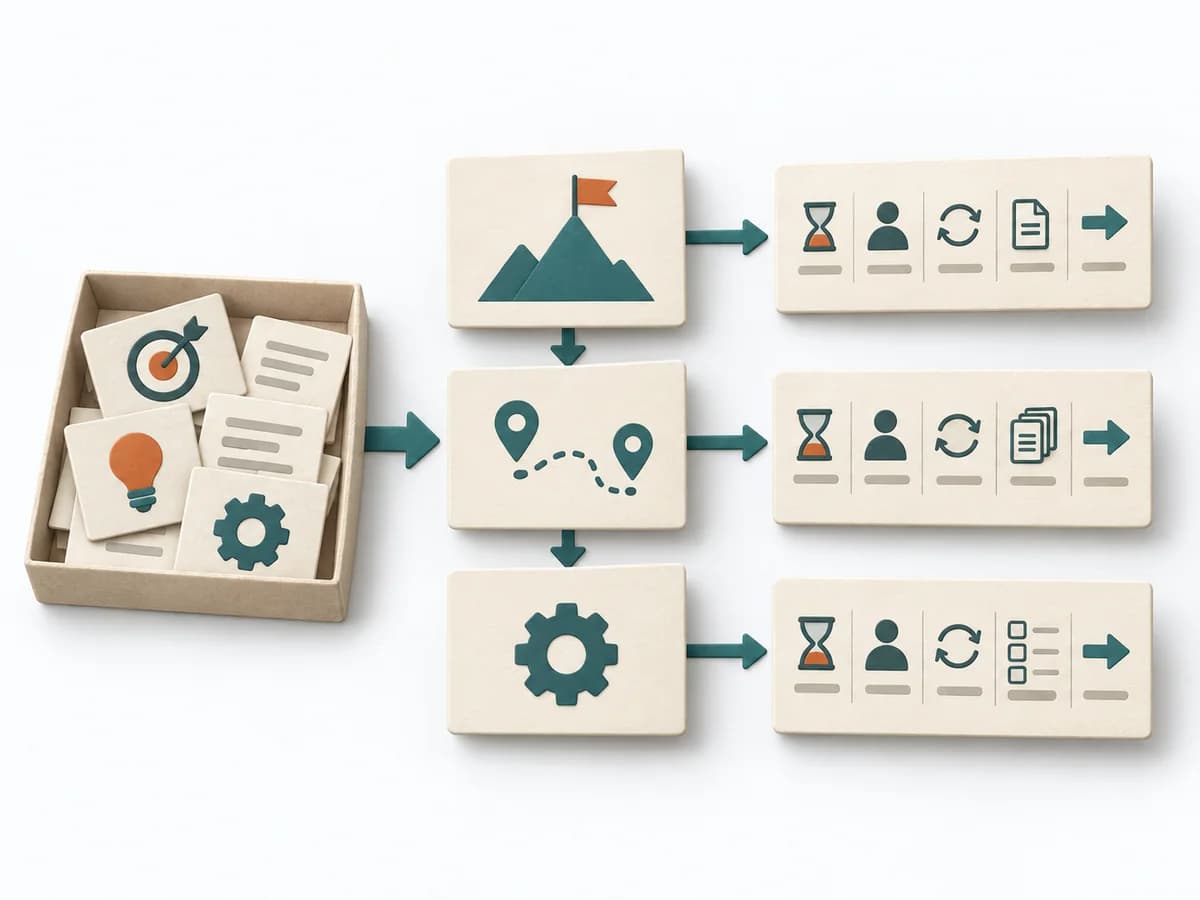 Business Strategy Strategic, Tactical and Operational Planning | 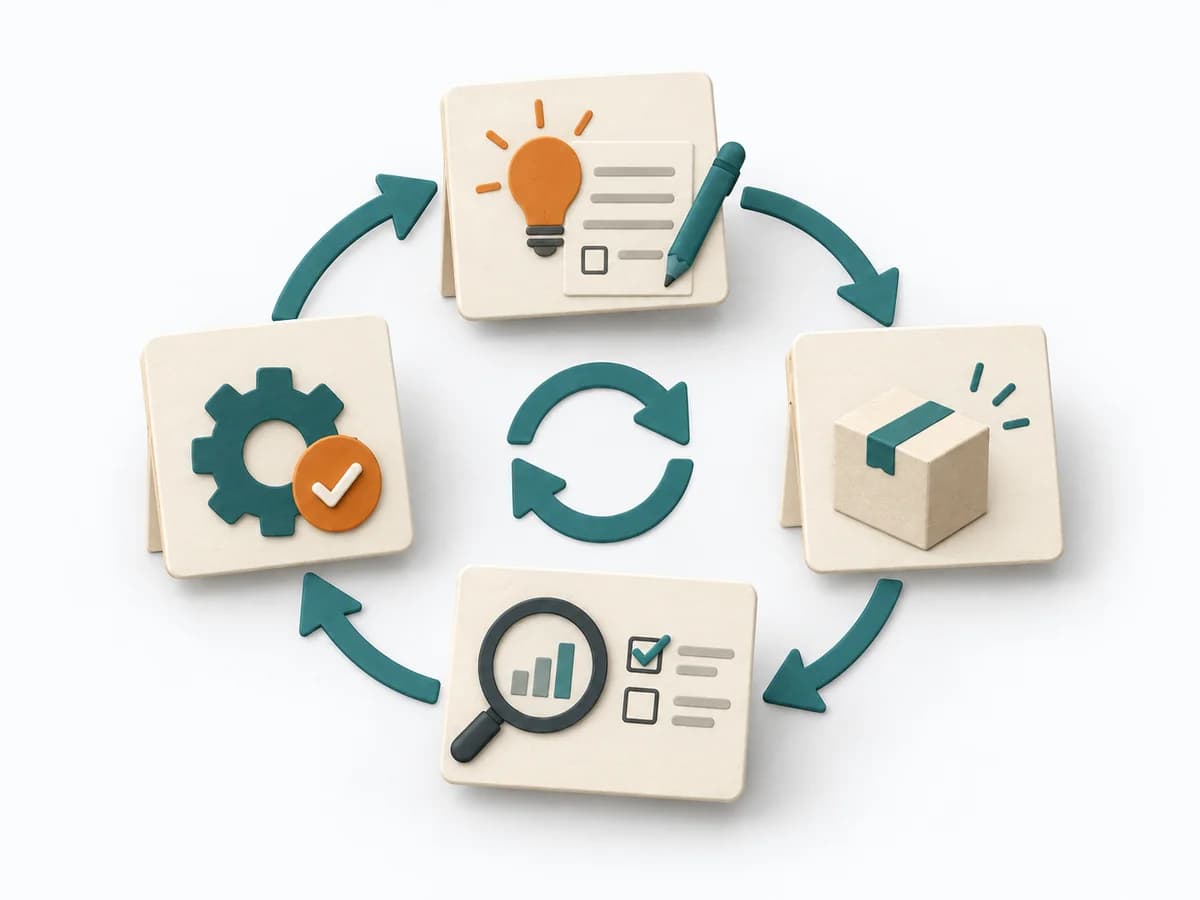 Operations PDCA Cycle |  Decision Making Assumption Surfacing |  Product Discovery Assumption Mapping |
|---|---|---|---|---|
Purposedifferent | It places decisions and artifacts at the right level. Strategic planning clarifies direction, tactical planning translates it into programs, and operational planning steers concrete processes. | For an improvement that still has to prove itself in everyday work, the method runs it through small learning loops. It connects planning, checking, and standardization into a repeatable learning mode. | Plans often contain assumptions that were never openly stated and remain dangerous precisely because of that. Assumption Surfacing makes these silent premises visible and prioritizes which of them carry the initiative or could sink it. | When assumptions still sit unordered in the room, it weighs uncertainty against leverage. It makes visible which hypotheses should be checked first. |
Complexitydifferent | Medium | Low | Low | Medium |
Timedifferent | 90-180 min | 1 h bis mehrere Wochen | 45-90 min | 45-60 min |
Participantsdifferent | 4-12 | 1-8 | 2-8 | 2-8 |
Formatdifferent | Workshop | Workshop + async | Workshop + async | Workshop + async |
Outputdifferent | Planning Levels Map, Cadence Model, Planning Artifact Inventory | PDCA Log, Experiment Plan, Learning Outcome, Standard Change | Assumption List, Critical Assumptions, Learning Plan | Assumption map, Test backlog, Risk ranking |
Tagsno overlap | CadenceGovernanceExecution | Continuous improvementLeanExperiments | AssumptionsRiskDecisionDiscovery | AssumptionsRiskExperimentsValidation |