View methods side by side.
Choose up to four methods. Add them using the search and share the comparison by copying its link.
Selected:Strategic, Tactical and Operational PlanningGoal Question MetricDACIDecision Rights Mapping
| Criterion | 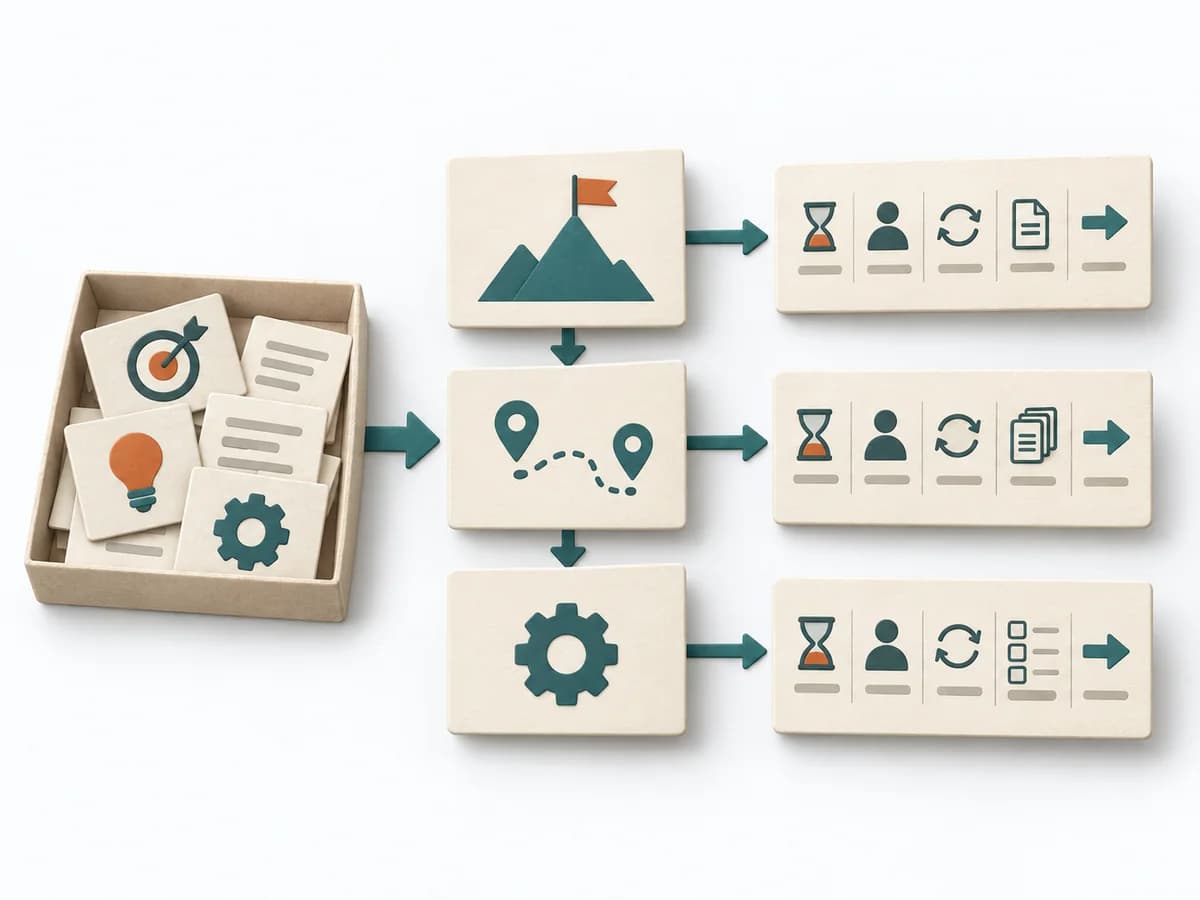 Business Strategy Strategic, Tactical and Operational Planning | 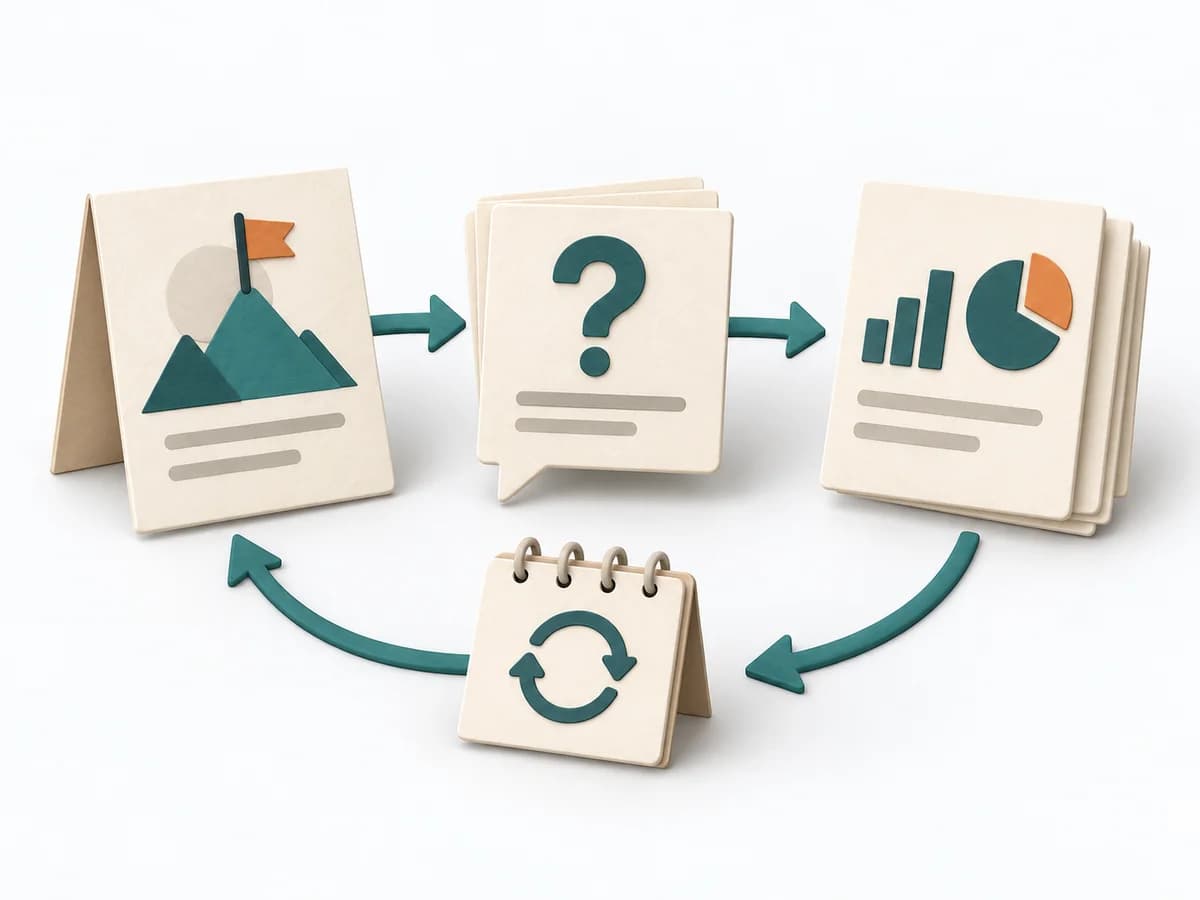 Engineering Goal Question Metric |  Decision Making DACI |  Decision Making Decision Rights Mapping |
|---|---|---|---|---|
Purposedifferent | It places decisions and artifacts at the right level. Strategic planning clarifies direction, tactical planning translates it into programs, and operational planning steers concrete processes. | Helps clarify technical problems, hypotheses, and next steps in concrete terms. It breaks a technical problem into testable parts. The result is captured as a GQM table and metric briefs. | In cross-functional decisions, responsibilities quickly blur between approval, influence, and execution. DACI arranges these roles so decision pressure, contribution, and information stay cleanly separated. | In organizations with many stakeholders, it often blurs who actually decides and who is merely consulted. It separates options, evaluation criteria, and open risks. The result is captured as a Decision Rights matrix and an agreement. |
Complexitydifferent | Medium | Medium | Low | Medium |
Timedifferent | 90-180 min | 90-180 min | 30-60 min | 90-180 min |
Participantsdifferent | 4-12 | 3-6 | 2-10 | 4-12 |
Formatdifferent | Workshop | Workshop | Workshop + async | Workshop |
Outputdifferent | Planning Levels Map, Cadence Model, Planning Artifact Inventory | GQM Table, Metric Profiles | DACI Matrix, Decision Owner, Decision Log | Decision Rights Matrix, Agreement |
Tagsno overlap | CadenceGovernanceExecution | MetricsMeasurementEngineeringAlignment | DecisionRolesGovernanceAlignment | DecisionGovernanceAlignmentResponsibility |