View methods side by side.
Choose up to four methods. Add them using the search and share the comparison by copying its link.
| Criterion | 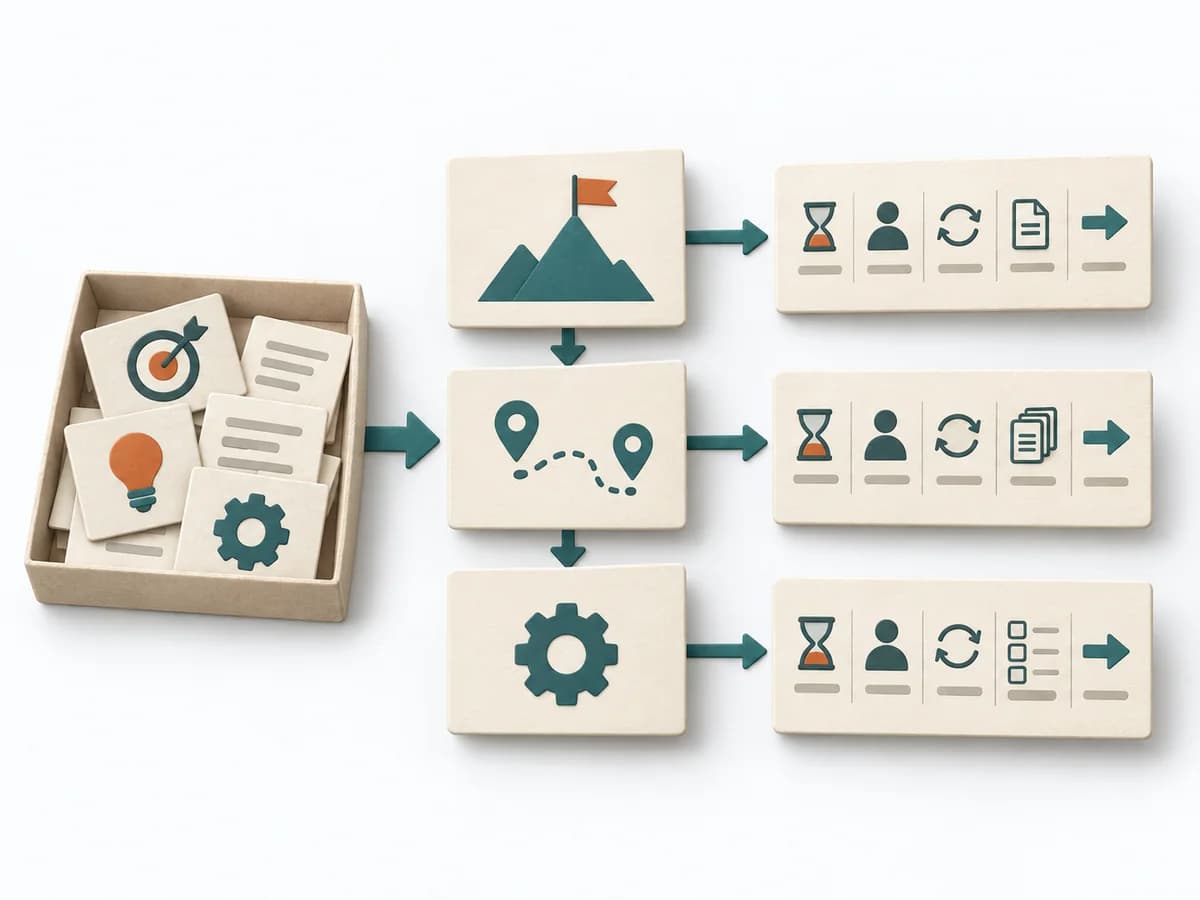 Business Strategy Strategic, Tactical and Operational Planning |  Growth Flywheel | 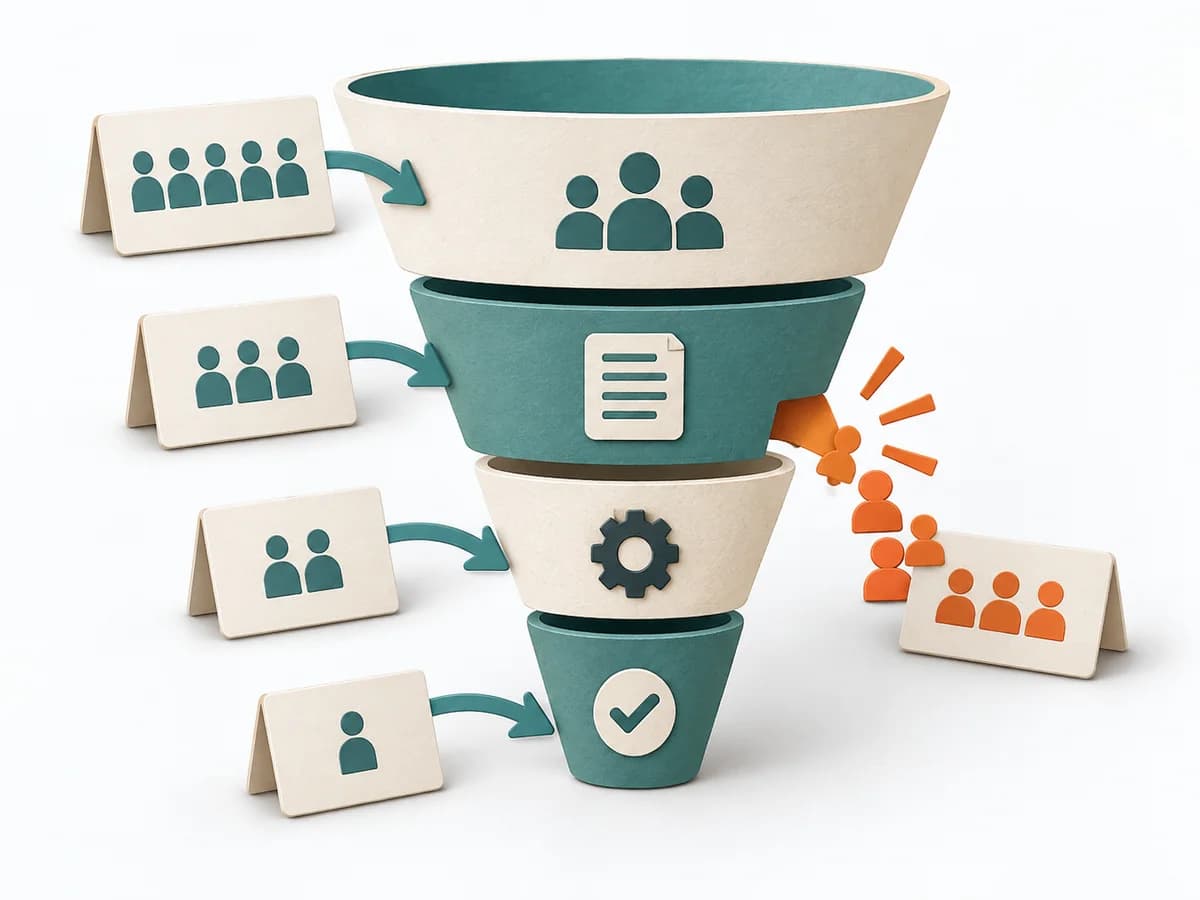 Growth Funnel Analysis | 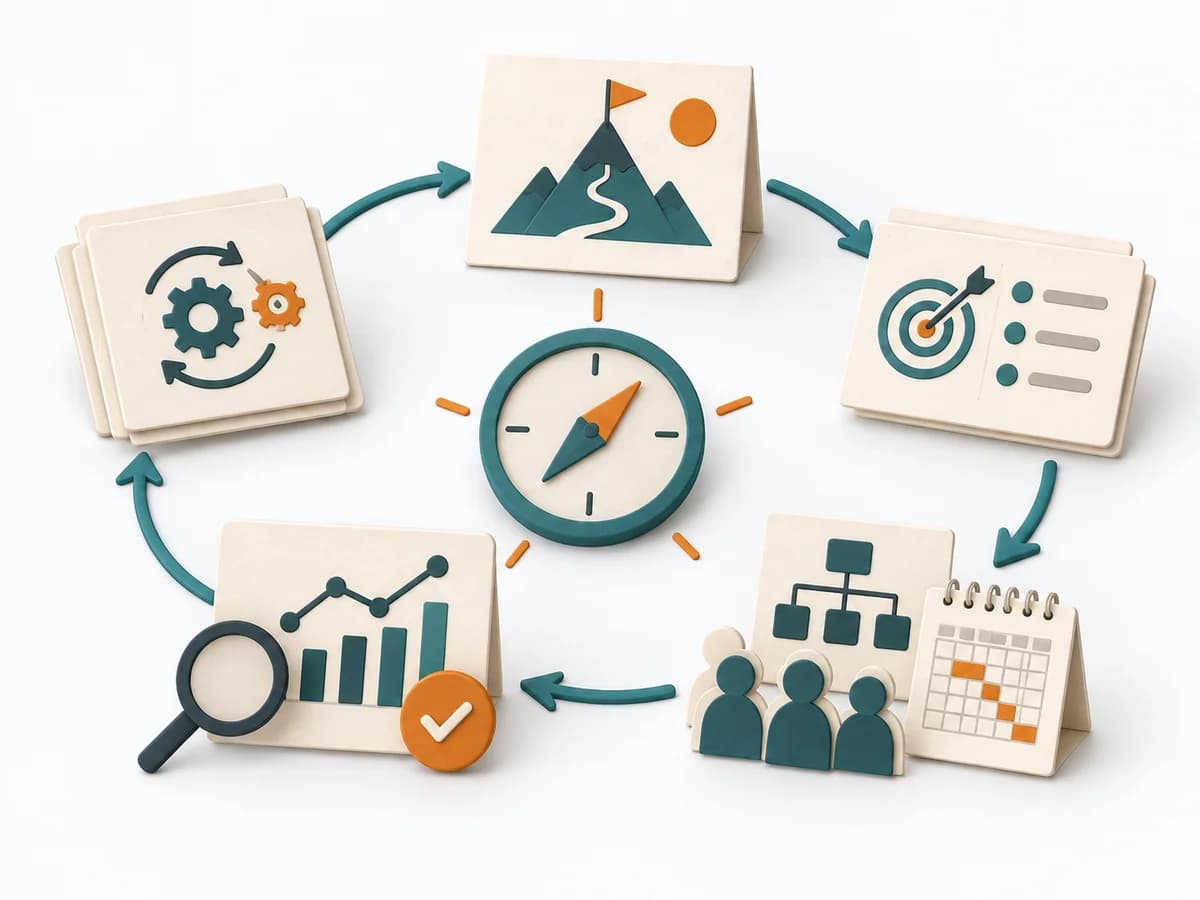 Business Strategy Strategy Execution Loop |
|---|---|---|---|---|
Purposedifferent | It places decisions and artifacts at the right level. Strategic planning clarifies direction, tactical planning translates it into programs, and operational planning steers concrete processes. | Growth often breaks down where a reinforcing mechanism builds up too much friction. A Flywheel shows the cycle of value, repetition, and reinforcement meant to sustain growth. | When many visitors or users drop off along the way, the reason behind the number often stays hidden. Funnel Analysis exposes these transitions and makes visible exactly where the path collapses. | The Strategy Execution Loop helps avoid treating strategy as a one-off document. It makes visible how strategic decisions are turned into objectives, initiatives, operational work, measurement, and learning. |
Complexitydifferent | Medium | Medium | Medium | High |
Timedifferent | 90-180 min | 60-120 min | 1-3 h | Initial 3-6 h, then monthly or quarterly reviews |
Participantsdifferent | 4-12 | 3-8 | 1-5 | 5-12 |
Formatdifferent | Workshop | Workshop | Async | Workshop + async |
Outputdifferent | Planning Levels Map, Cadence Model, Planning Artifact Inventory | Flywheel Map, Friction Points, Growth Levers, Experiment Backlog | Funnel report, Drop-off analysis, Optimization hypotheses | Execution Loop, Review Cadence, Strategic Learning Log |
Tagsno overlap | CadenceGovernanceExecution | GrowthRetentionConversion | AnalyticsConversionGrowth | ExecutionCadenceLearningGovernance |