View methods side by side.
Choose up to four methods. Add them using the search and share the comparison by copying its link.
Selected:Strategic, Tactical and Operational PlanningAfter-Action ReviewSprint RetrospectiveLearning Review
| Criterion | 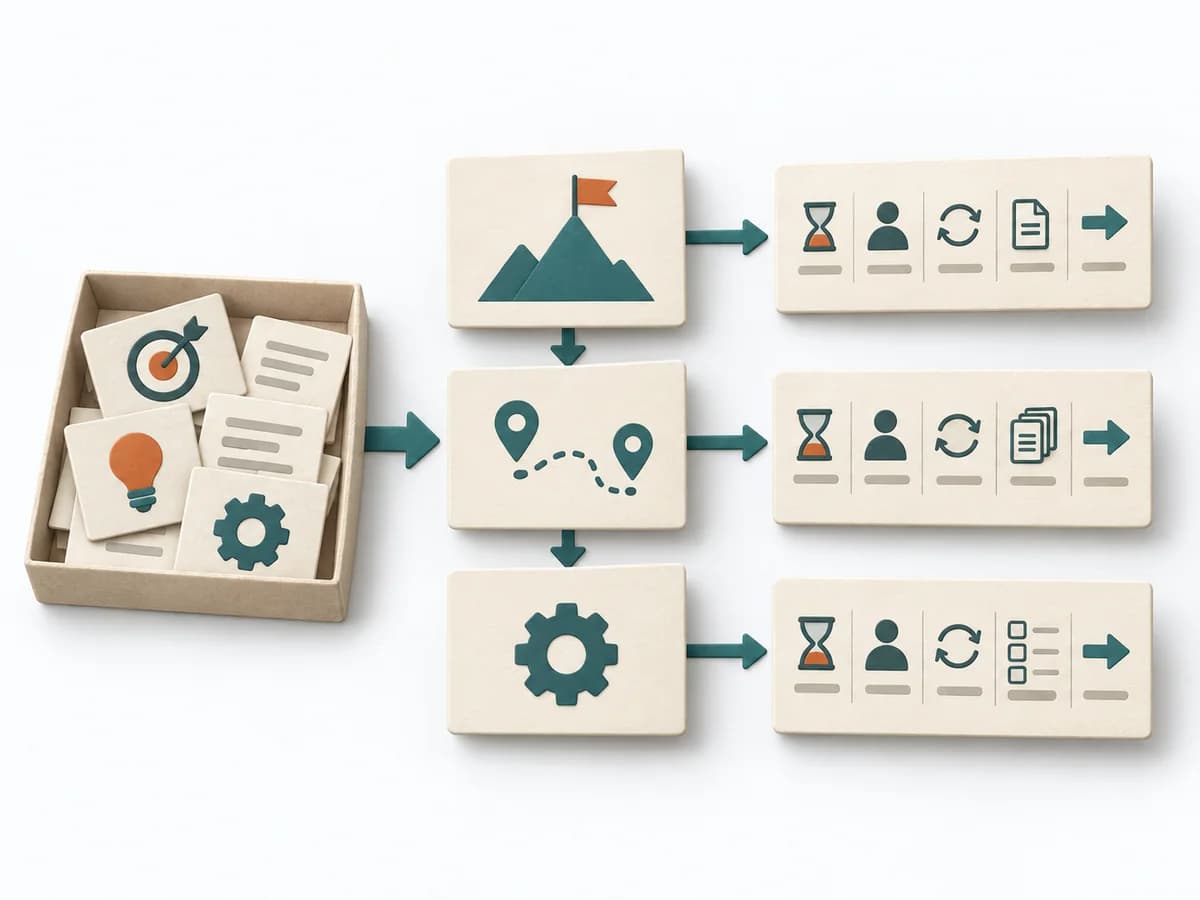 Business Strategy Strategic, Tactical and Operational Planning |  Operations After-Action Review |  Agile Sprint Retrospective |  Operations Learning Review |
|---|---|---|---|---|
Purposedifferent | It places decisions and artifacts at the right level. Strategic planning clarifies direction, tactical planning translates it into programs, and operational planning steers concrete processes. | After missions or project phases with unclear outcomes, the method makes visible what actually happened and what can be learned from it. It separates course, effect, and causes so experience turns into solid improvement. | When a sprint is over and friction shouldn't simply be carried forward, it opens the view onto collaboration and patterns. It creates space to see causes and changes together. | After a project phase with mixed results, the method makes learning from the individual case reusable. It connects events, decisions, and systemic conditions into robust insights. |
Complexitydifferent | Medium | Low | Low | Medium |
Timedifferent | 90-180 min | 20-45 min | Up to 3 hours for a one-month Sprint; shorter Sprints are usually shorter | 1-3 h |
Participantsdifferent | 4-12 | 3-12 | Scrum Team | 3-10 |
Formatdifferent | Workshop | Workshop + async | Workshop | Workshop |
Outputdifferent | Planning Levels Map, Cadence Model, Planning Artifact Inventory | Lessons learned, Action items, Event summary | Improvement actions, Team agreements | Learning Review Notes, System Factors, Improvement Actions |
Tagsno overlap | CadenceGovernanceExecution | LearningOperationsImprovement | RetrospectiveImprovementLearning | LearningRetrospectiveIncidentOperations |