View methods side by side.
Choose up to four methods. Add them using the search and share the comparison by copying its link.
Selected:Strategic, Tactical and Operational PlanningAfter-Action ReviewC4 ModelArchitecture Decision Record
| Criterion | 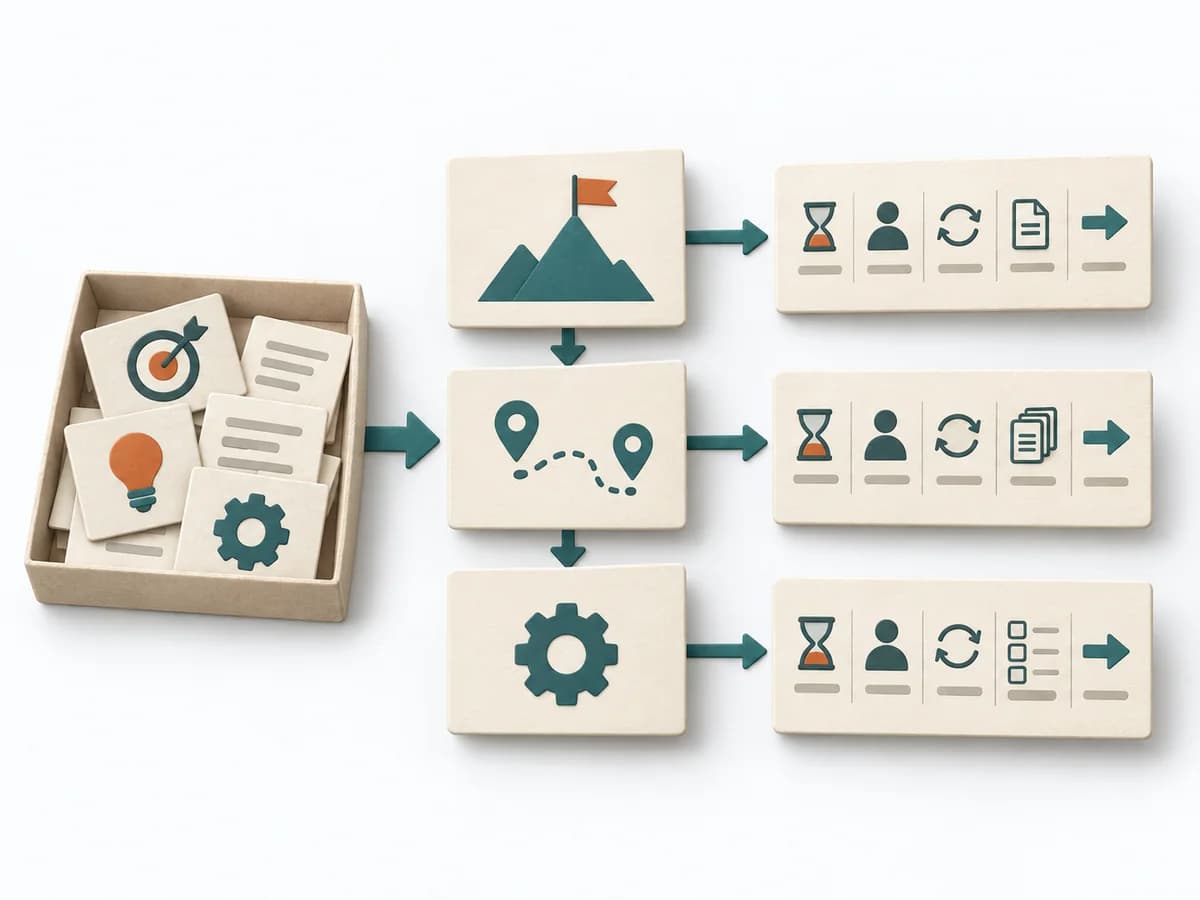 Business Strategy Strategic, Tactical and Operational Planning |  Operations After-Action Review | 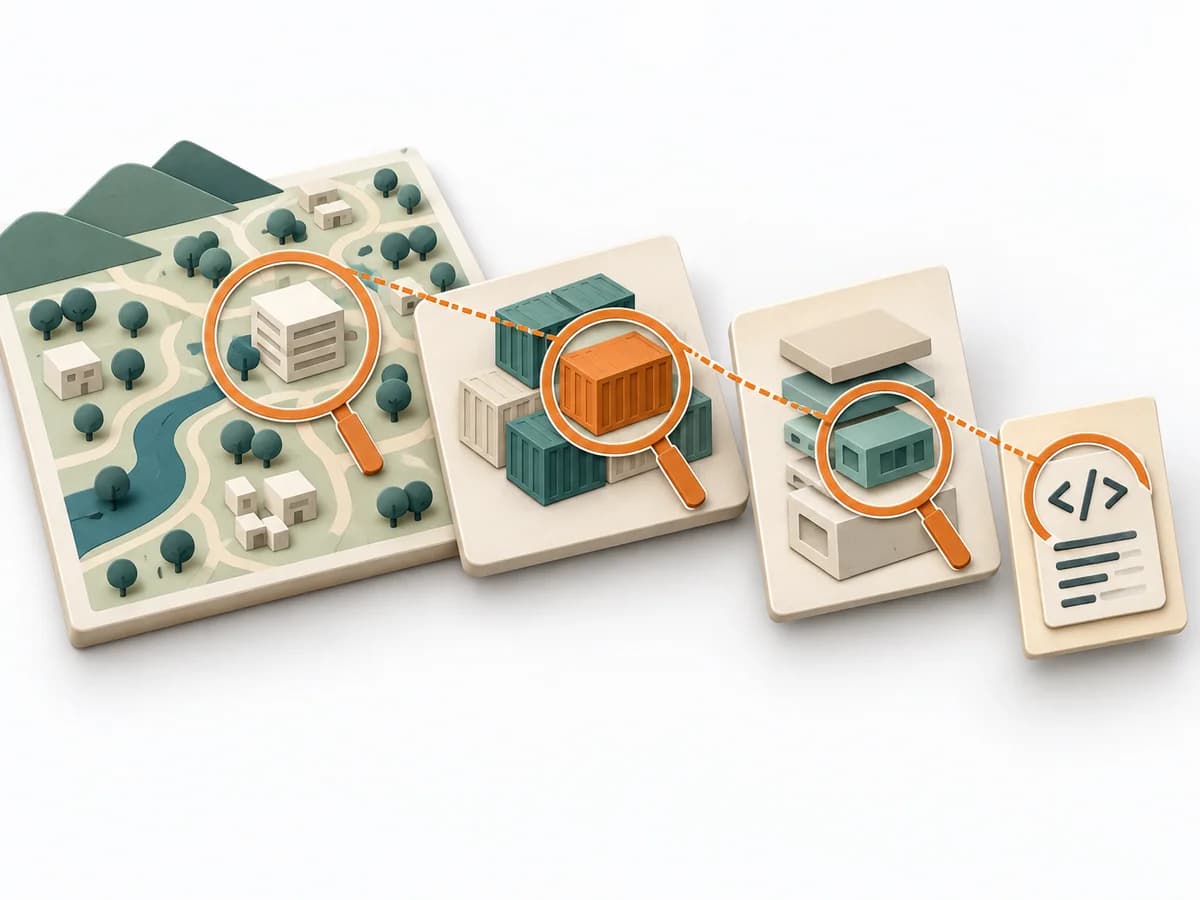 Architecture C4 Model |  Architecture Architecture Decision Record |
|---|---|---|---|---|
Purposedifferent | It places decisions and artifacts at the right level. Strategic planning clarifies direction, tactical planning translates it into programs, and operational planning steers concrete processes. | After missions or project phases with unclear outcomes, the method makes visible what actually happened and what can be learned from it. It separates course, effect, and causes so experience turns into solid improvement. | The C4 Model makes a system legible across several resolution levels, from context down to code. It suits situations where different audiences need to understand the same architecture from different altitudes. | An ADR permanently records an architecture decision with context, trade-offs, and consequence. It creates continuity for later changes because the decision path stays traceable. |
Complexitydifferent | Medium | Low | Low | Low |
Timedifferent | 90-180 min | 20-45 min | 1-4 h | 15-45 min |
Participantsdifferent | 4-12 | 3-12 | 1-5 | 1-3 |
Formatdifferent | Workshop | Workshop + async | Workshop + async | Async |
Outputdifferent | Planning Levels Map, Cadence Model, Planning Artifact Inventory | Lessons learned, Action items, Event summary | Context Diagram, Container Diagram, Component Diagram | ADR File, Decision Log, Rationale |
Tagsno overlap | CadenceGovernanceExecution | LearningOperationsImprovement | ArchitectureCommunicationVisualization | ArchitectureRationaleDocumentationGovernance |