View methods side by side.
Choose up to four methods. Add them using the search and share the comparison by copying its link.
| Criterion | 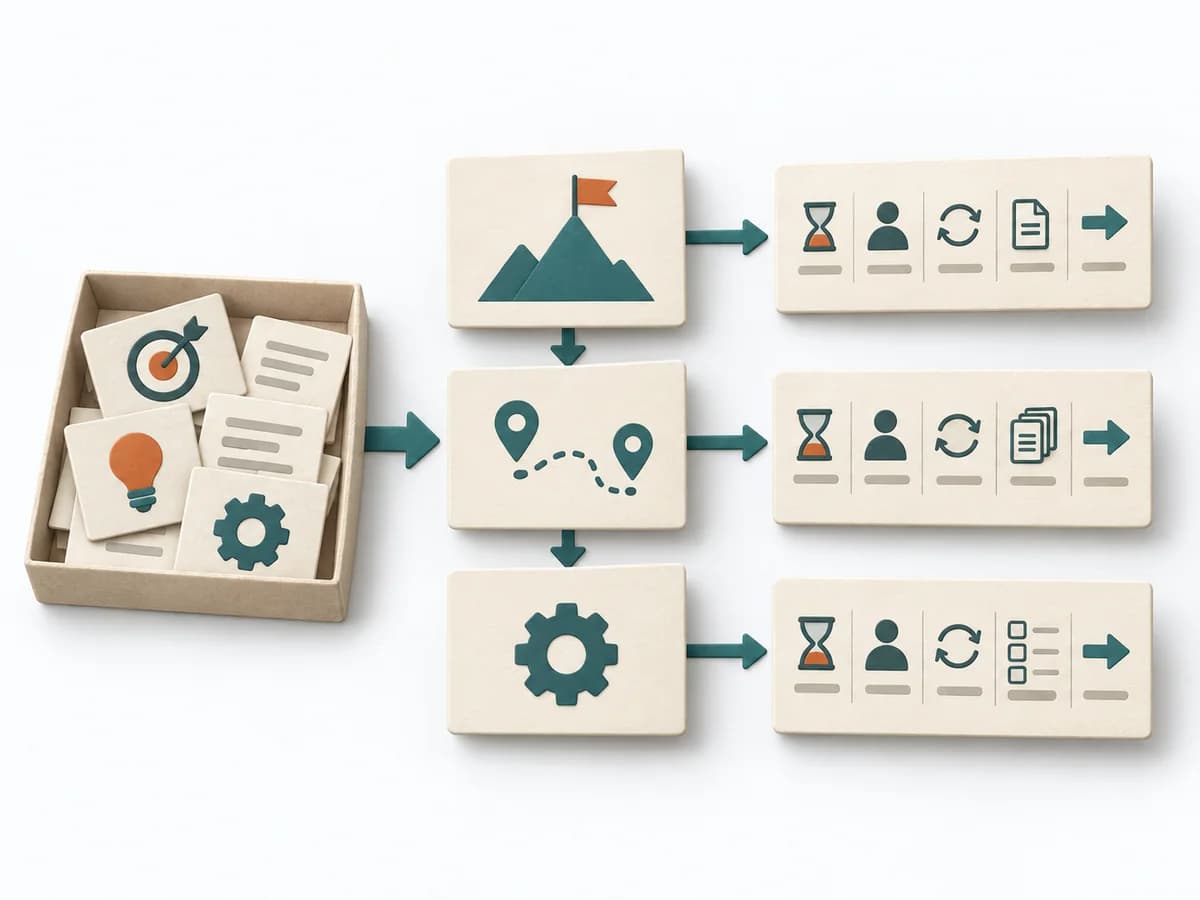 Business Strategy Strategic, Tactical and Operational Planning |  Operations 5 Whys |  Business Strategy Strategy Execution Loop |  Operations Barrier Analysis |
|---|---|---|---|---|
Purposedifferent | It places decisions and artifacts at the right level. Strategic planning clarifies direction, tactical planning translates it into programs, and operational planning steers concrete processes. | For a single, hard-to-explain deviation, the method exposes the causal chain behind the visible symptom. It keeps the cause open until a controllable condition emerges instead of a mere description. | The Strategy Execution Loop helps avoid treating strategy as a one-off document. It makes visible how strategic decisions are turned into objectives, initiatives, operational work, measurement, and learning. | For a risk that can only be managed through multiple layers of protection, the method examines the effectiveness of each barrier. It shows where safeguards are missing, too weak, or fail under real conditions. |
Complexitydifferent | Medium | Low | High | Medium |
Timedifferent | 90-180 min | 15-30 min | Initial 3-6 h, then monthly or quarterly reviews | 2-4 h |
Participantsdifferent | 4-12 | 2-6 | 5-12 | 2-6 |
Formatdifferent | Workshop | Workshop | Workshop + async | Workshop + async |
Outputdifferent | Planning Levels Map, Cadence Model, Planning Artifact Inventory | Root cause notes, Countermeasures | Execution Loop, Review Cadence, Strategic Learning Log | Barrier Inventory, Failure Analysis per Barrier, Action Backlog |
Tagsno overlap | CadenceGovernanceExecution | Root causeIncidentLeanProblem solving | ExecutionCadenceLearningGovernance | Root causeSafetyIncident |