View methods side by side.
Choose up to four methods. Add them using the search and share the comparison by copying its link.
| Criterion | 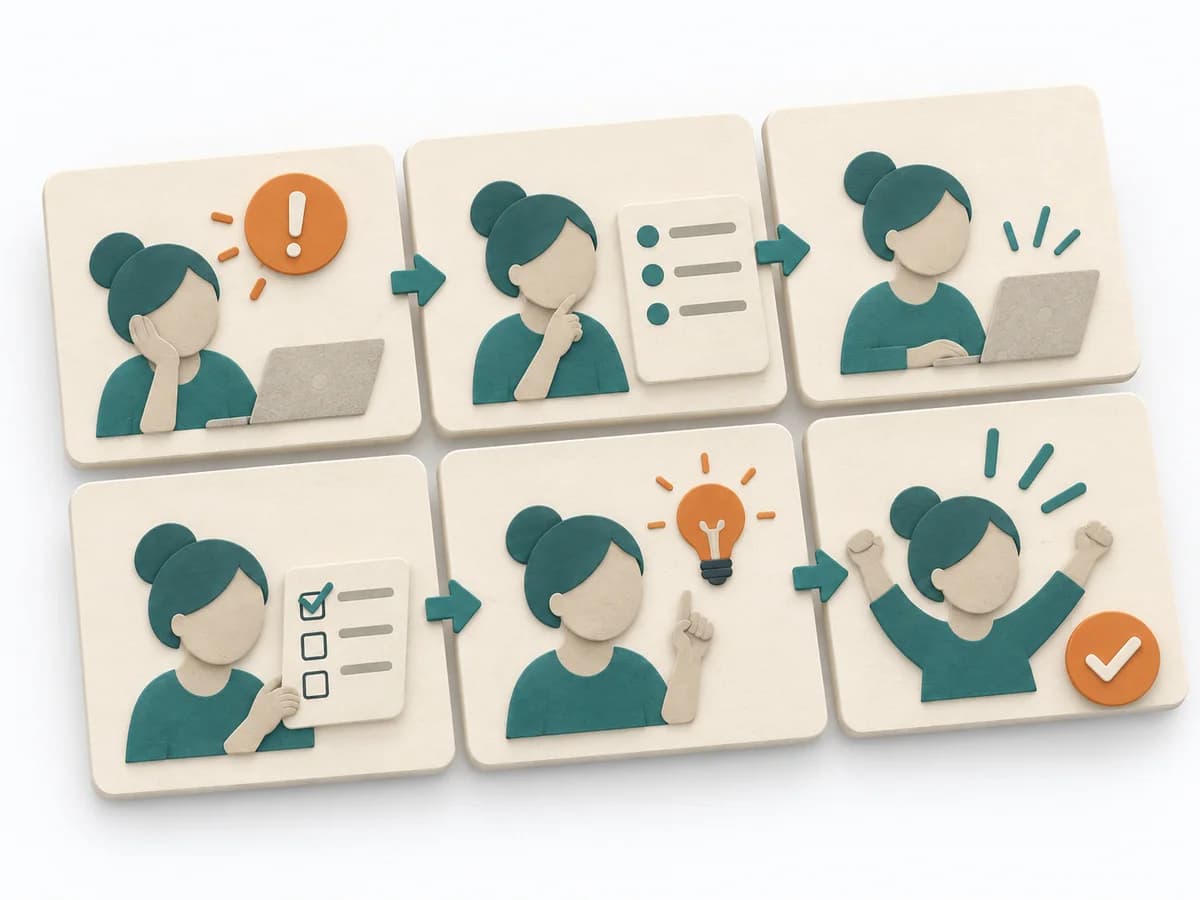 UX Design Storyboarding | 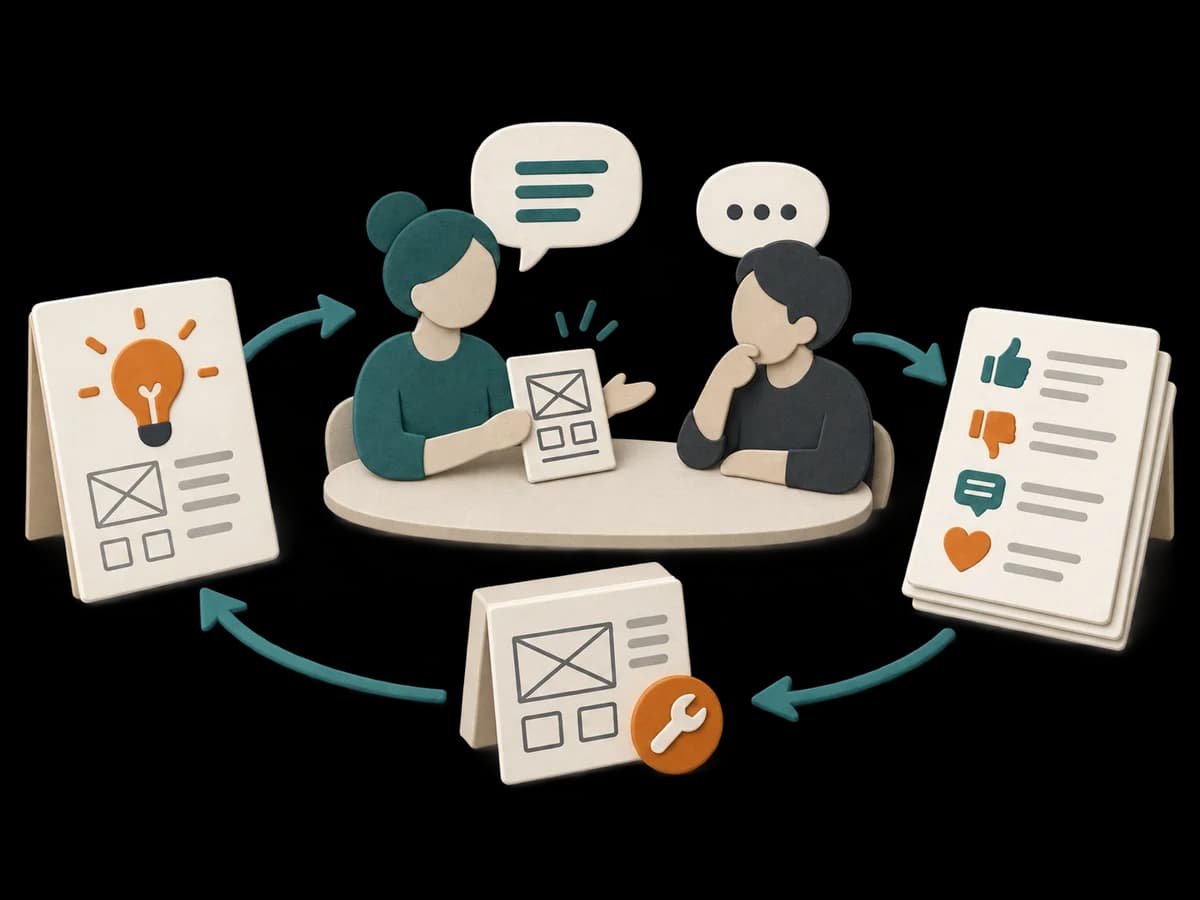 Product Discovery Solution Interview | 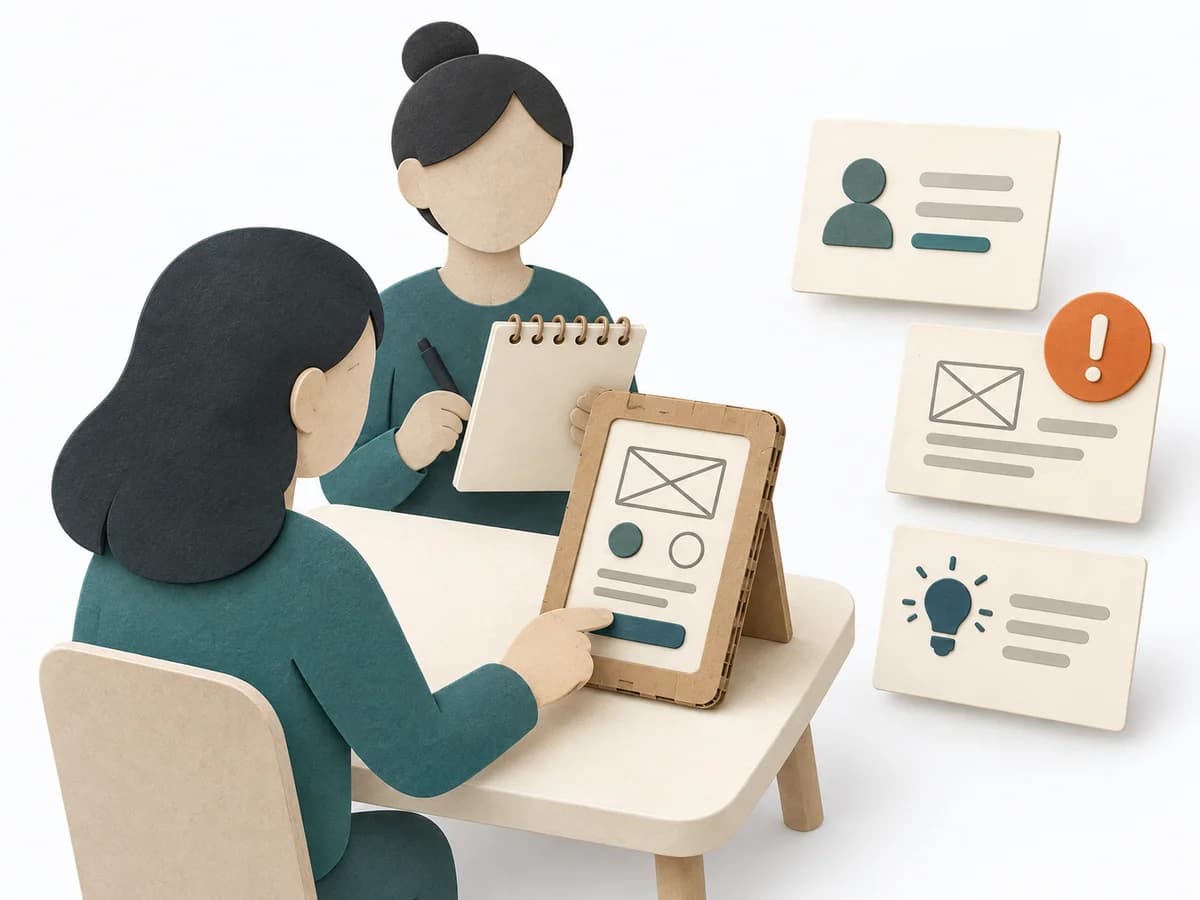 UX Research Usability Testing | 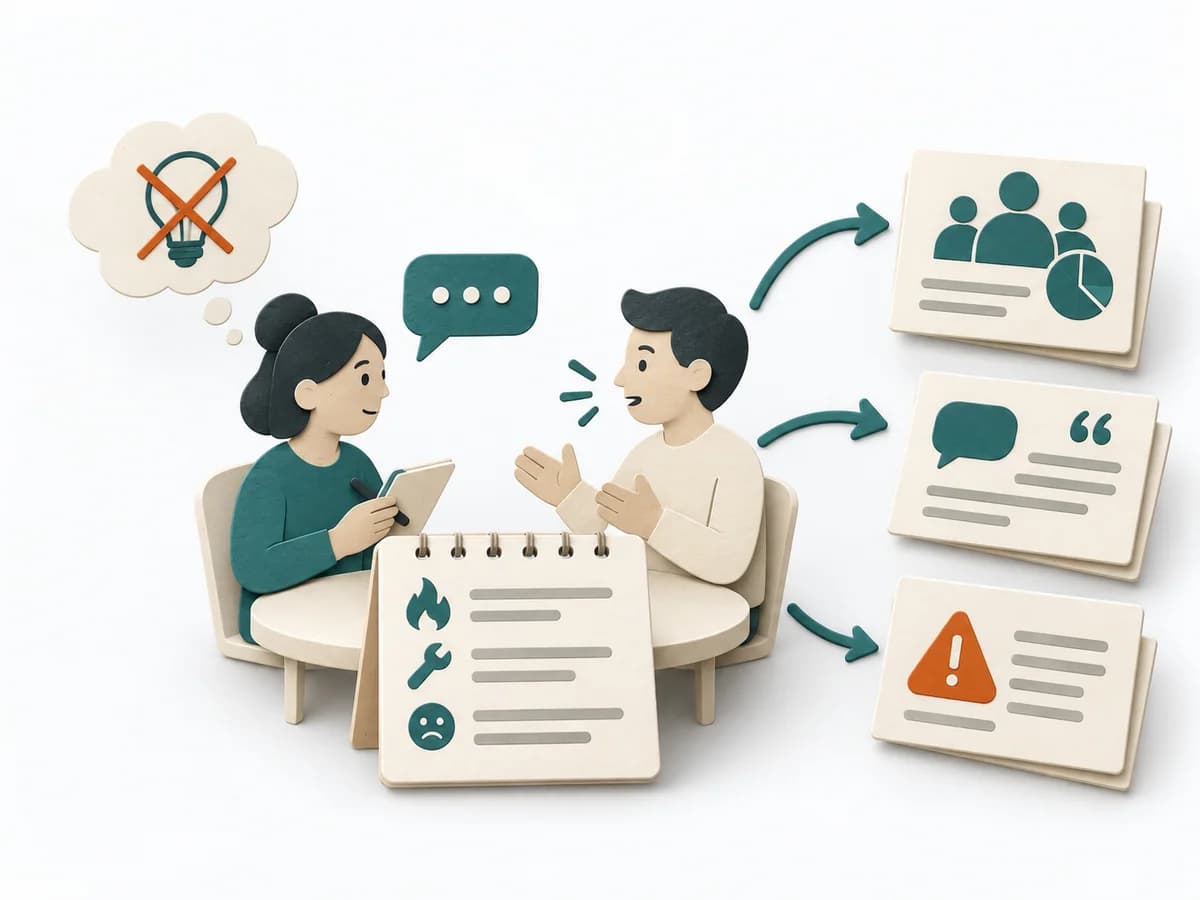 Product Discovery Problem Interview |
|---|---|---|---|---|
Purposedifferent | When a usage scenario needs to become understandable early, it condenses situations, context, and flow into a legible sequence. It helps check concept ideas before anything gets built. | When a solution idea is already on the table, it checks how it is understood and evaluated. It looks for resonance, objections, and missing fit early in the conversation. | When a product is built but people get stuck on tasks, usability testing shows the friction at concrete points. Observed use instead of self-report makes visible where orientation, understanding, or interaction breaks down. | When the picture of the problem still needs to become solid, it asks about real situations and consequences. It separates genuine suffering from mere interest in a solution. |
Complexitysame | Medium | Medium | Medium | Medium |
Timedifferent | 30-90 min | 30-60 min je Interview | 1-2 h je Session | 30-60 min je Interview |
Participantsdifferent | 1-8 | 5-10 Interviews | Based on research question | 5-12 Interviews |
Formatsame | Workshop + async | Workshop + async | Workshop + async | Workshop + async |
Outputdifferent | Storyboard, Concept Narrative, Testable Assumptions | Solution Feedback, Objection List, Validation Notes | Usability Issues, Severity List, Recommendations | Problem Evidence, Risk Notes, Customer Segments |
Tagsno overlap | VisualizationConceptsSequencePrototype | ValidationInterviewsPrototype | ValidationUXPrototype | DiscoveryInterviewsValidation |