View methods side by side.
Choose up to four methods. Add them using the search and share the comparison by copying its link.
| Criterion |  UX Design Storyboarding |  Knowledge Modeling Knowledge Mapping | 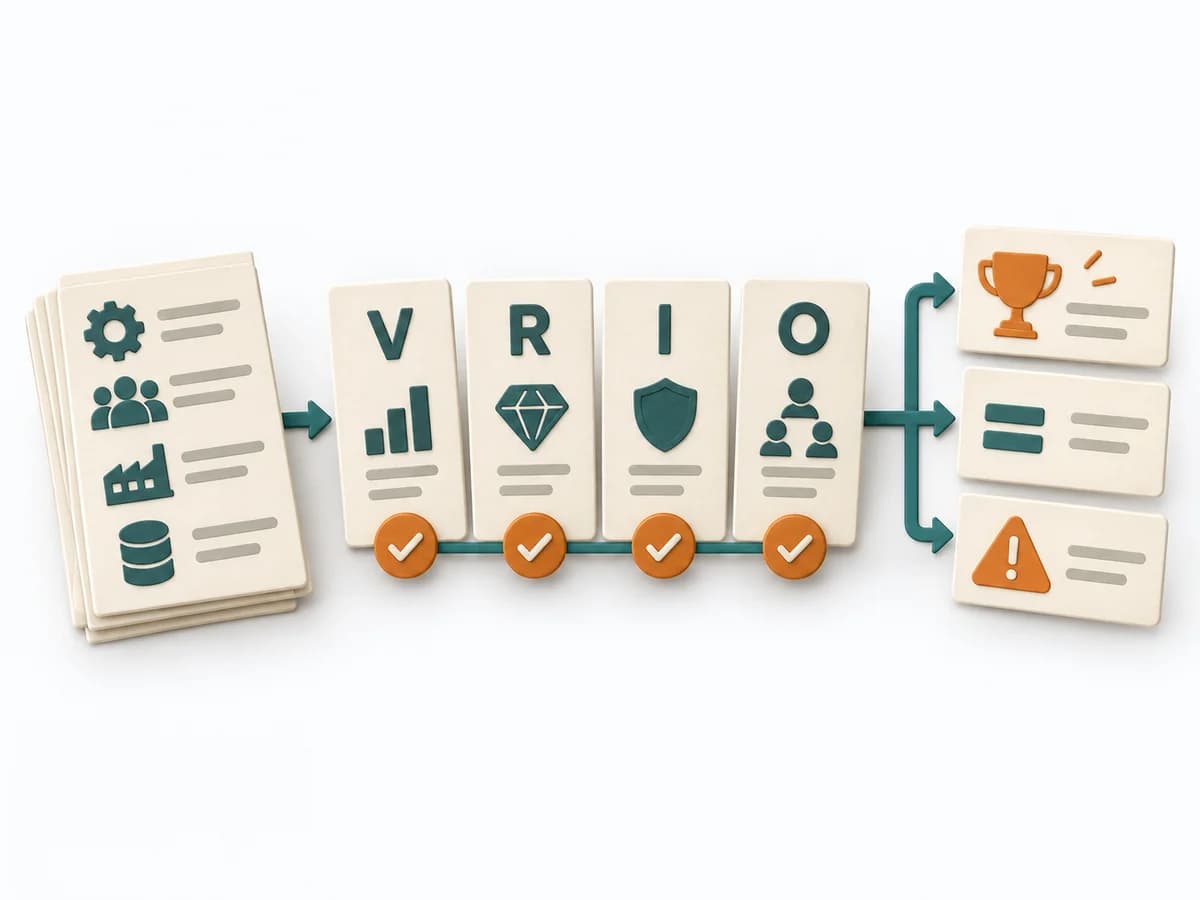 Business Strategy VRIO Framework | 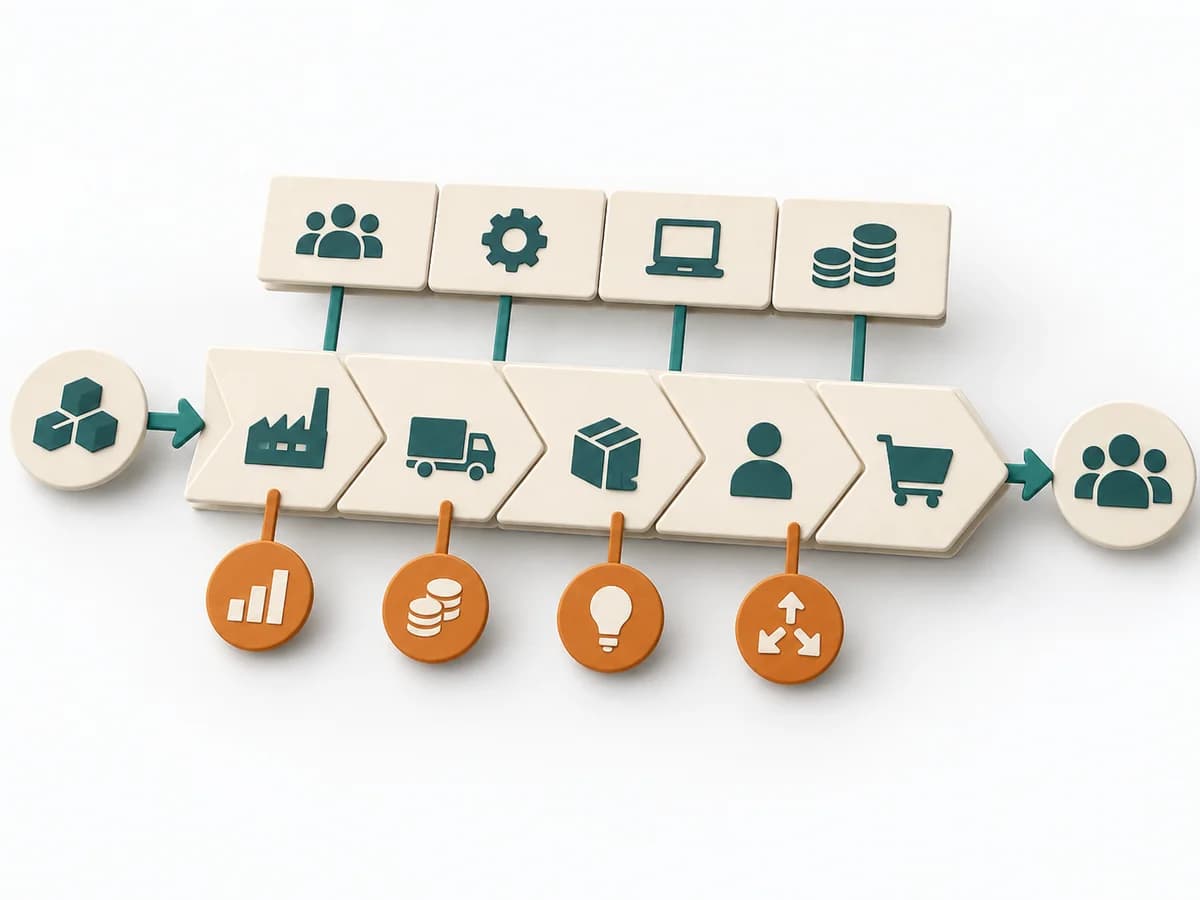 Business Strategy Value Chain Analysis |
|---|---|---|---|---|
Purposedifferent | When a usage scenario needs to become understandable early, it condenses situations, context, and flow into a legible sequence. It helps check concept ideas before anything gets built. | Knowledge Mapping makes knowledge, gaps, and transfer paths visible across a field. It fits when expertise should not just exist but also be findable and transferable. | The VRIO Framework rates resources and capabilities on whether they are Valuable, Rare, Inimitable, and Organized. It compares strengths, risks, market logic, and courses of action. The result is captured as a VRIO table and strategic actions. | Value Chain Analysis shows where value is created, costs accrue, and differentiation becomes possible along the process. It compares strengths, risks, market logic, and courses of action. The result is captured as a value-chain map and lever list. |
Complexitydifferent | Medium | Medium | Medium | High |
Timedifferent | 30-90 min | 1-3 h | 90-180 min | Half day |
Participantsdifferent | 1-8 | 3-12 | 3-6 | 3-8 |
Formatdifferent | Workshop + async | Workshop | Workshop | Workshop |
Outputdifferent | Storyboard, Concept Narrative, Testable Assumptions | Knowledge Map, Critical Knowledge Areas, Transfer Plan | VRIO Table, Strategic Actions | Value Chain Map, Lever List |
Tagsno overlap | VisualizationConceptsSequencePrototype | KnowledgeMappingRisk | StrategyDiagnosisBusiness modelCapability | StrategyBusiness modelDiagnosisAnalysis |