View methods side by side.
Choose up to four methods. Add them using the search and share the comparison by copying its link.
| Criterion | 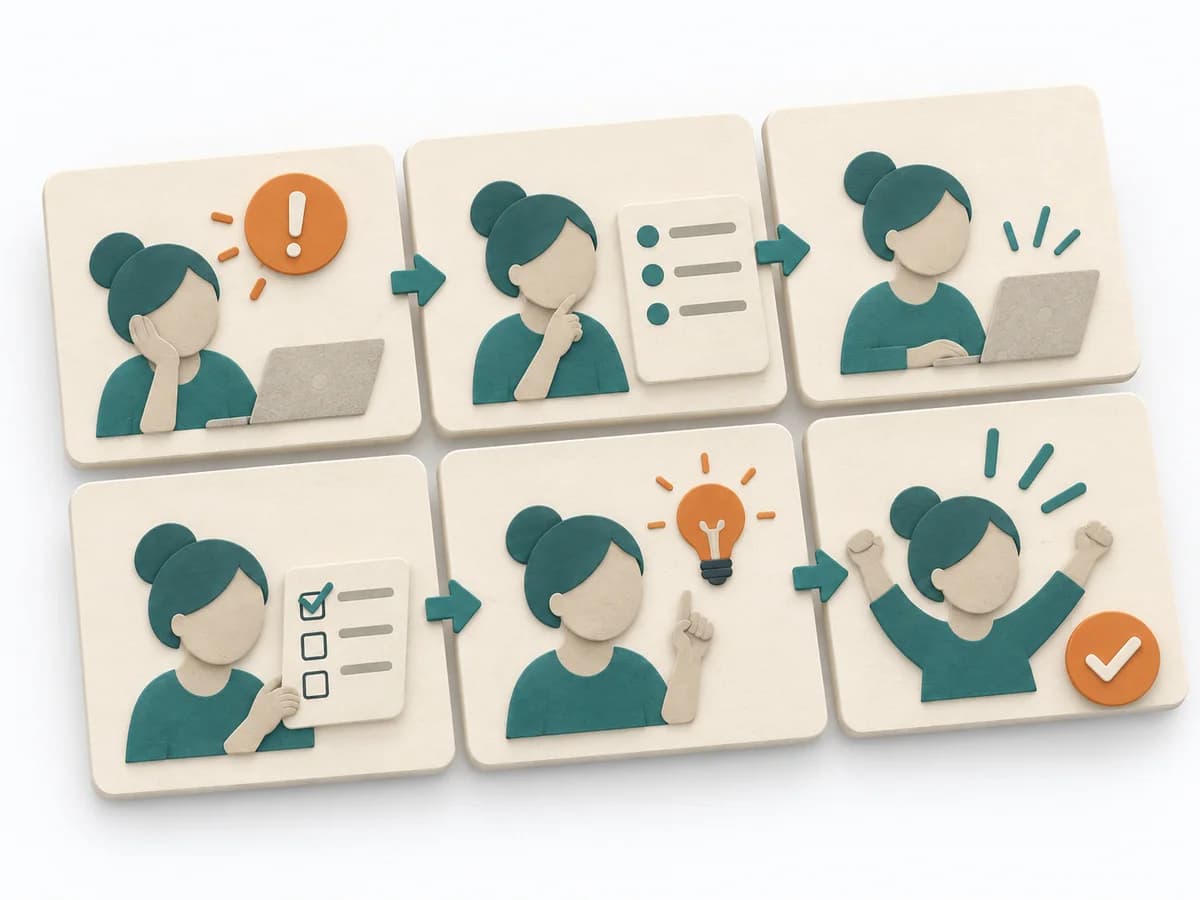 UX Design Storyboarding |  Knowledge Modeling Knowledge Mapping | 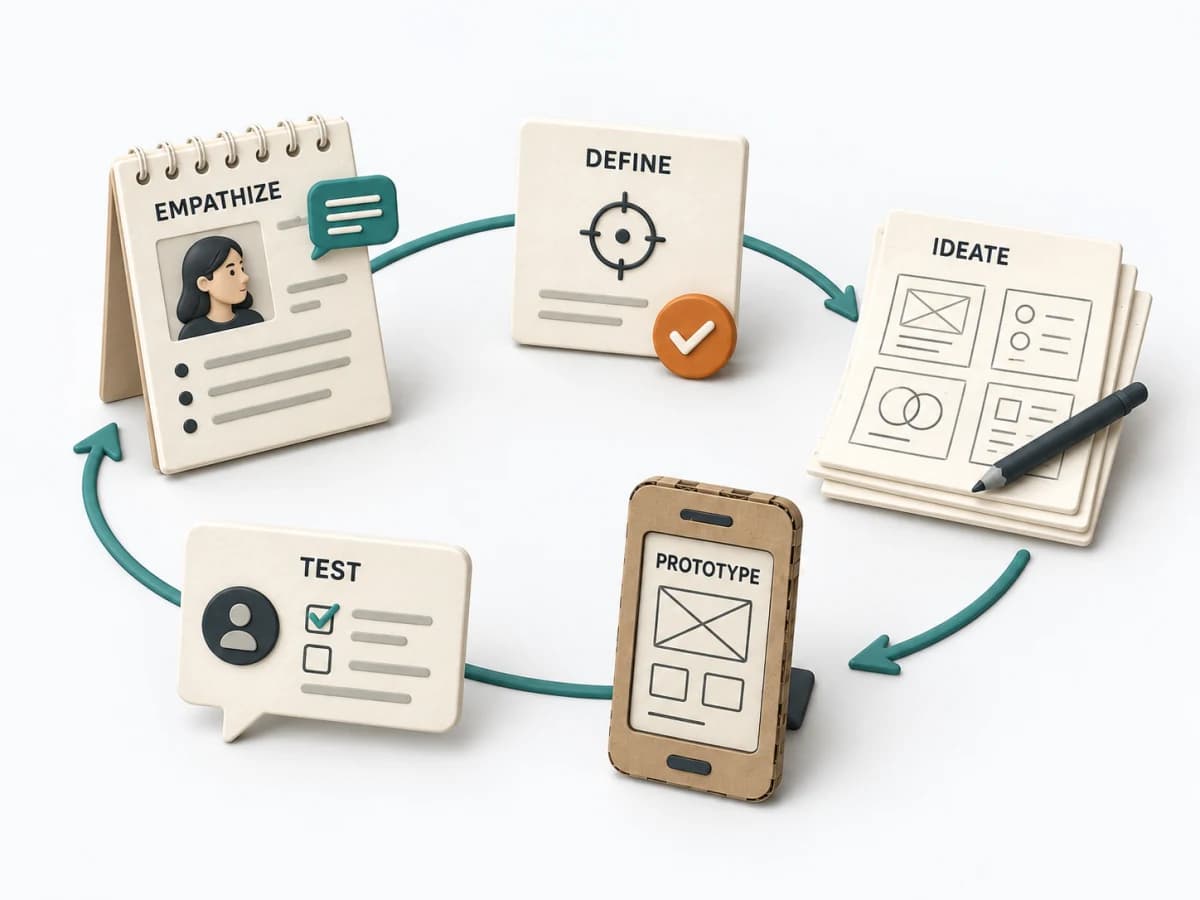 Innovation Design Thinking |  Product Discovery Assumption Mapping |
|---|---|---|---|---|
Purposedifferent | When a usage scenario needs to become understandable early, it condenses situations, context, and flow into a legible sequence. It helps check concept ideas before anything gets built. | Knowledge Mapping makes knowledge, gaps, and transfer paths visible across a field. It fits when expertise should not just exist but also be findable and transferable. | For complex user problems with an uncertain cause, the method connects observation, interpretation, and experiment into a learning cycle. It keeps the focus on real needs and avoids premature solution language. This produces robust decisions for product and service. | When assumptions still sit unordered in the room, it weighs uncertainty against leverage. It makes visible which hypotheses should be checked first. |
Complexitydifferent | Medium | Medium | High | Medium |
Timedifferent | 30-90 min | 1-3 h | 1 Tag bis mehrere Wochen | 45-60 min |
Participantsdifferent | 1-8 | 3-12 | 4-10 | 2-8 |
Formatdifferent | Workshop + async | Workshop | Workshop | Workshop + async |
Outputdifferent | Storyboard, Concept Narrative, Testable Assumptions | Knowledge Map, Critical Knowledge Areas, Transfer Plan | Problem Statement, Prototype, Test Learnings | Assumption map, Test backlog, Risk ranking |
Tagsno overlap | VisualizationConceptsSequencePrototype | KnowledgeMappingRisk | InnovationPrototypeResearch | AssumptionsRiskExperimentsValidation |