View methods side by side.
Choose up to four methods. Add them using the search and share the comparison by copying its link.
| Criterion | 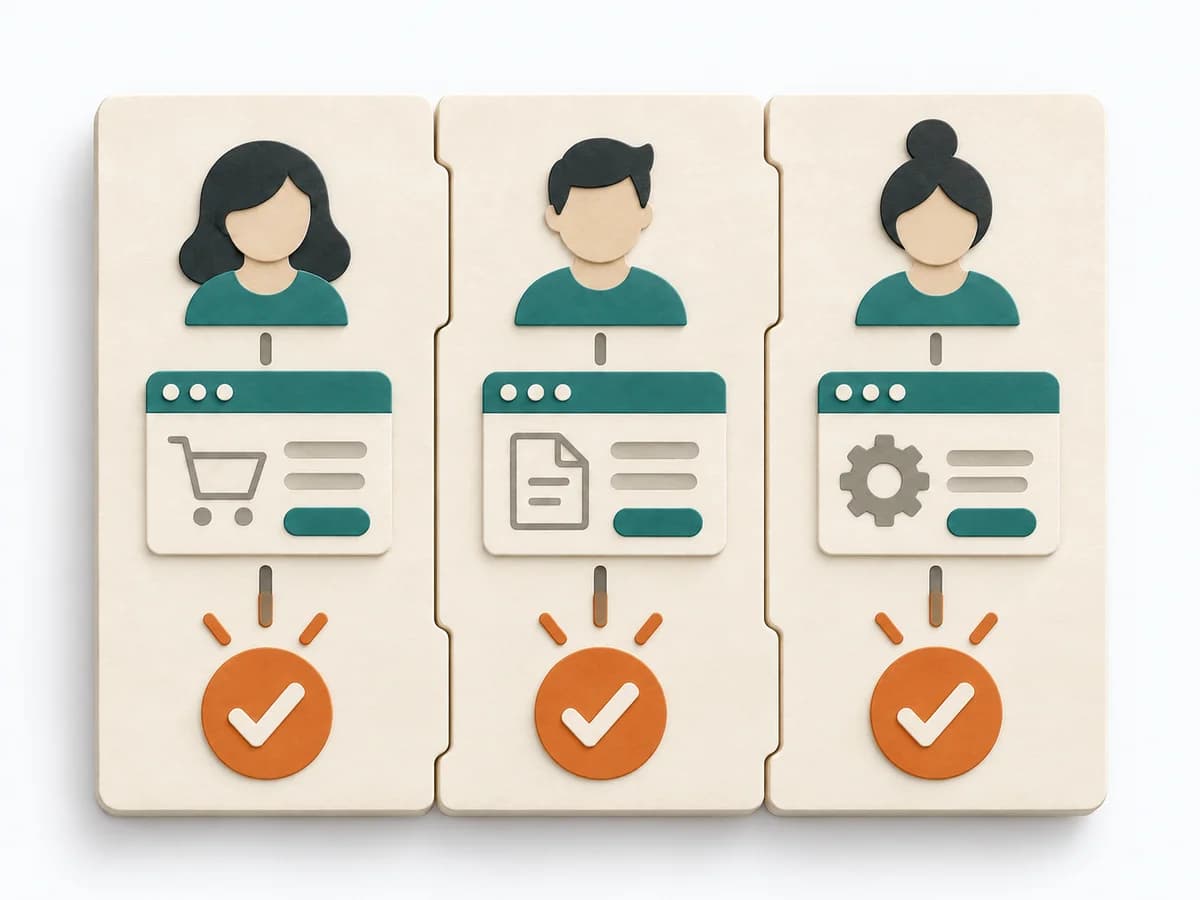 Agile Story Splitting | 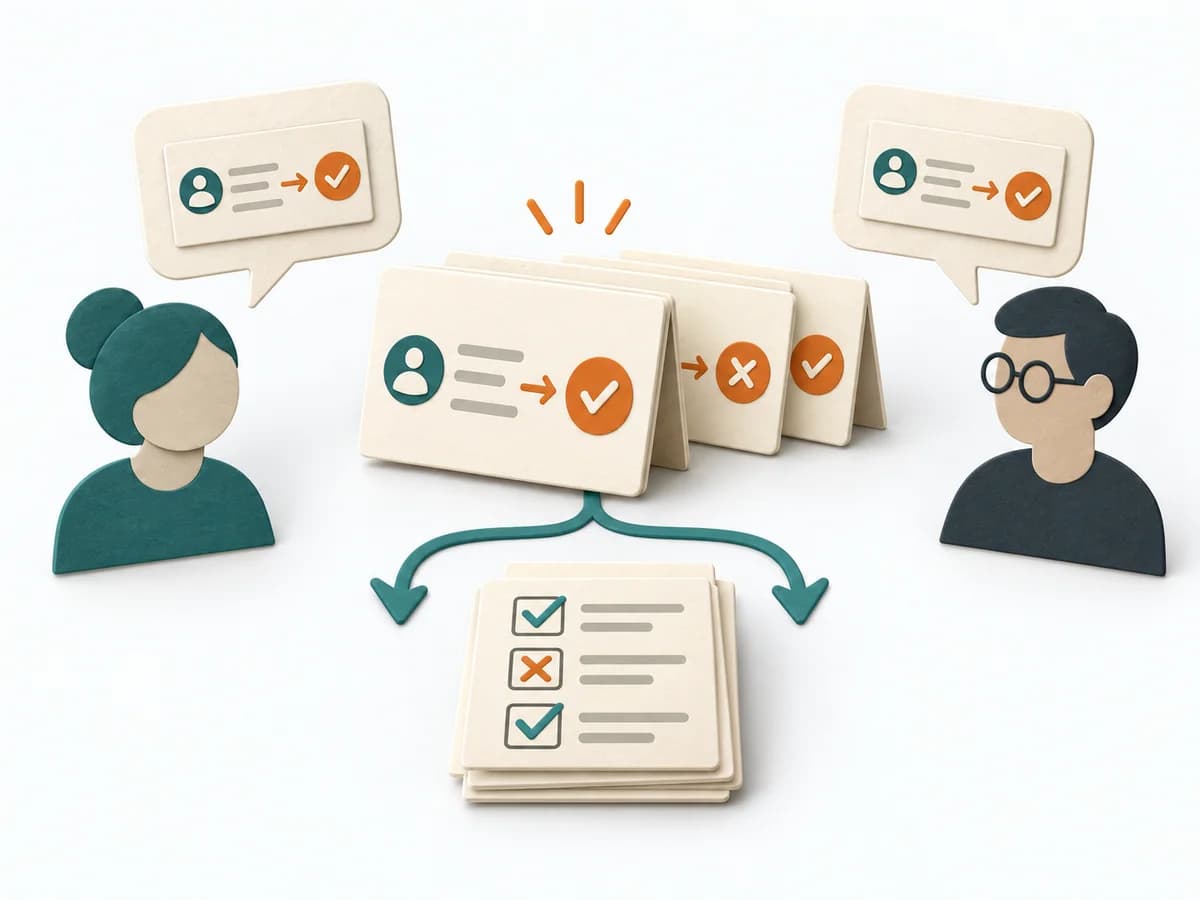 Agile Specification by Example | 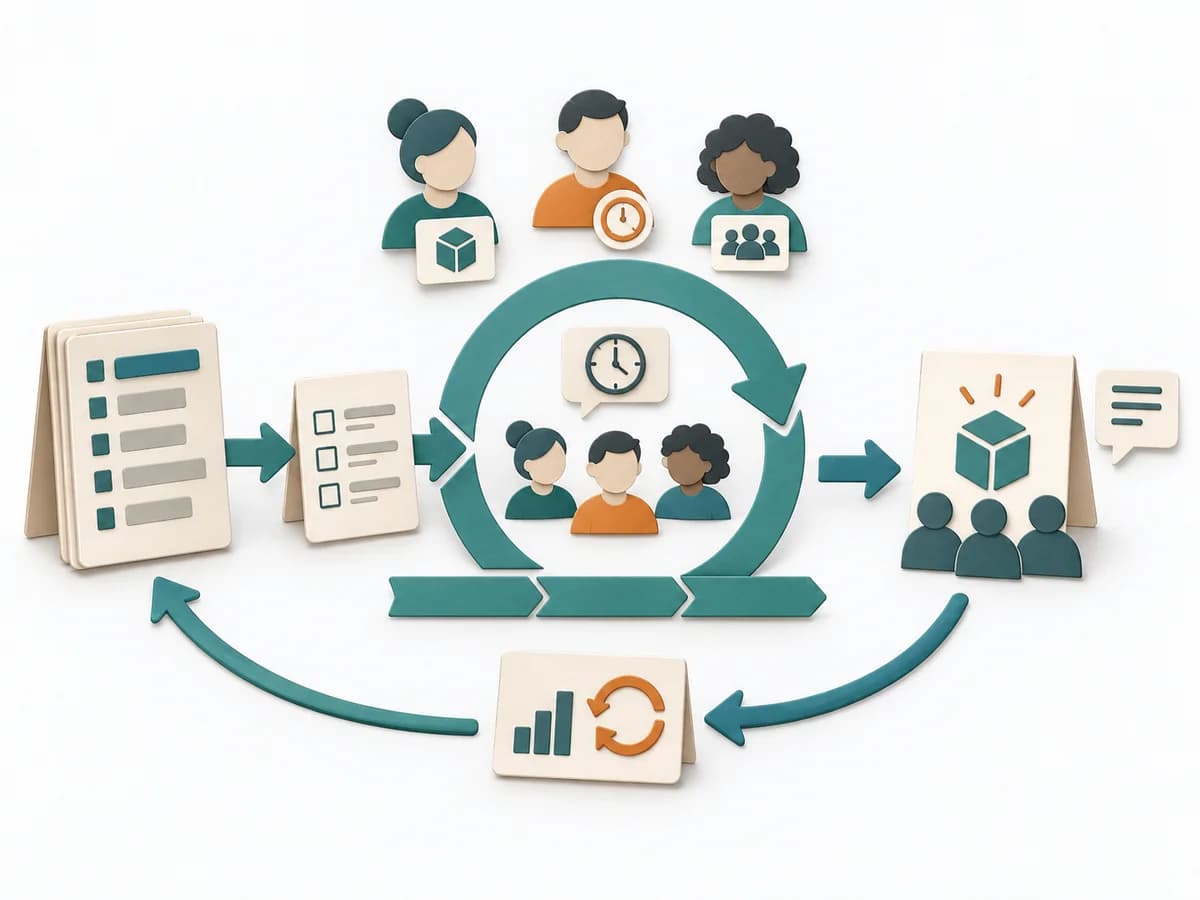 Agile Scrum | 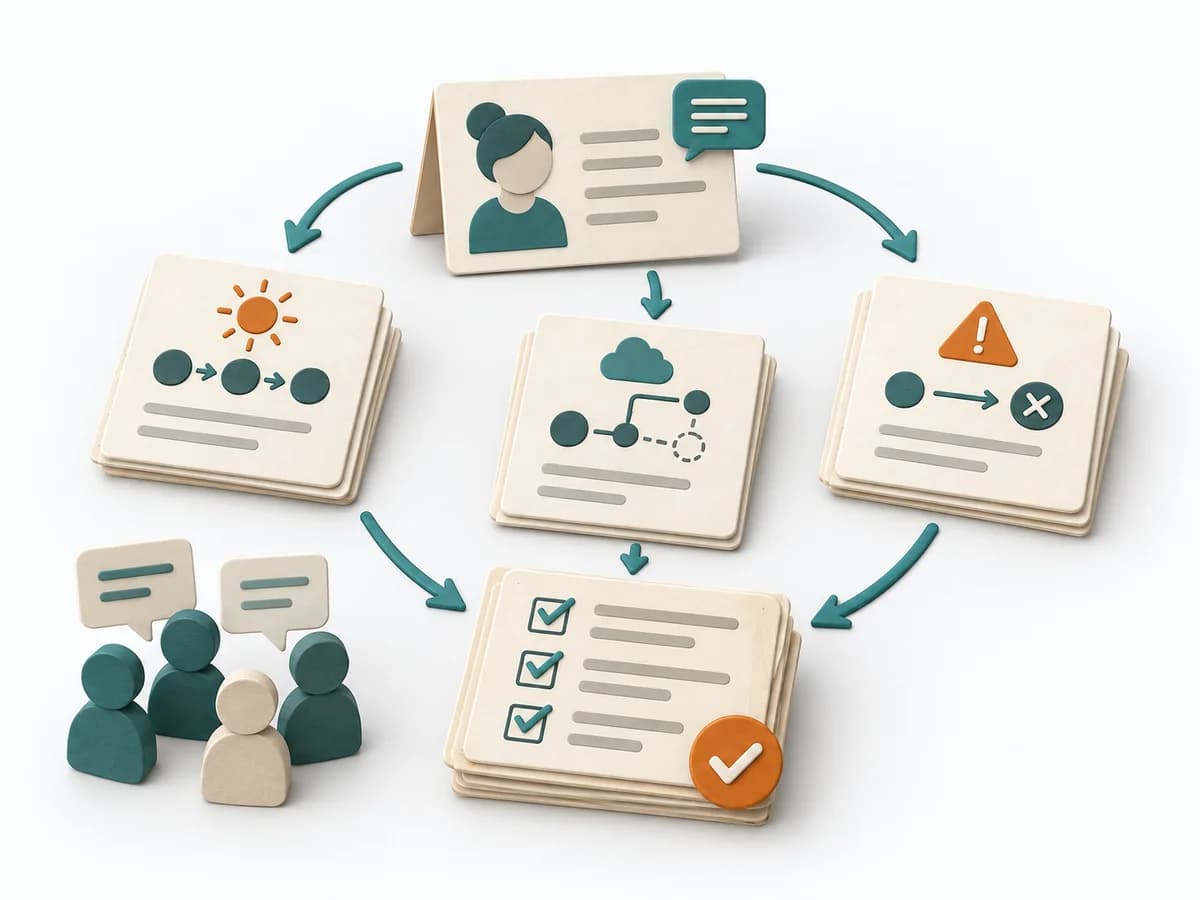 Agile Acceptance Criteria Workshop |
|---|---|---|---|---|
Purposedifferent | When a story becomes too large for a clean flow, it breaks scope down along value and risk. It shapes the work into a form that ships earlier and is easier to verify. | When business rules need to become precise, it ties language, example, and test together. It sorts work by value, risk, and delivery ability. The result is captured as an Example Table and Acceptance Tests. | When a team needs to work in a fixed delivery rhythm, it stabilizes cadence, responsibility, and feedback loops. It makes collaboration reliable across sprint boundaries. | When a story needs clear checkpoints before implementation, it sharpens expectation and scope together. It sorts work by value, risk, and delivery ability. The result is captured as Acceptance Criteria and a Story Update. |
Complexitydifferent | Medium | Medium | Medium | Low |
Timedifferent | 30-60 min | 60-90 min pro Feature | 1-4 Wochen je Sprint, laufend | 20-40 min pro Story |
Participantsdifferent | 2-6 | 3-6 | 3-10 (Scrum Team) | 3-6 |
Formatdifferent | Workshop + async | Workshop | Workshop + async | Workshop |
Outputdifferent | Smaller Stories, Acceptance Criteria, Split Rationale | Example Table, Acceptance Tests | Product Backlog, Sprint Backlog, Increment, Sprint Goal | Acceptance Criteria, Story Update |
Tagsno overlap | BacklogIterationDelivery | AgileRequirementsExamplesBehavior-Driven Development | AgileIterationCadence | AgileRequirementsRefinementBehavior-Driven Development |