View methods side by side.
Choose up to four methods. Add them using the search and share the comparison by copying its link.
| Criterion | 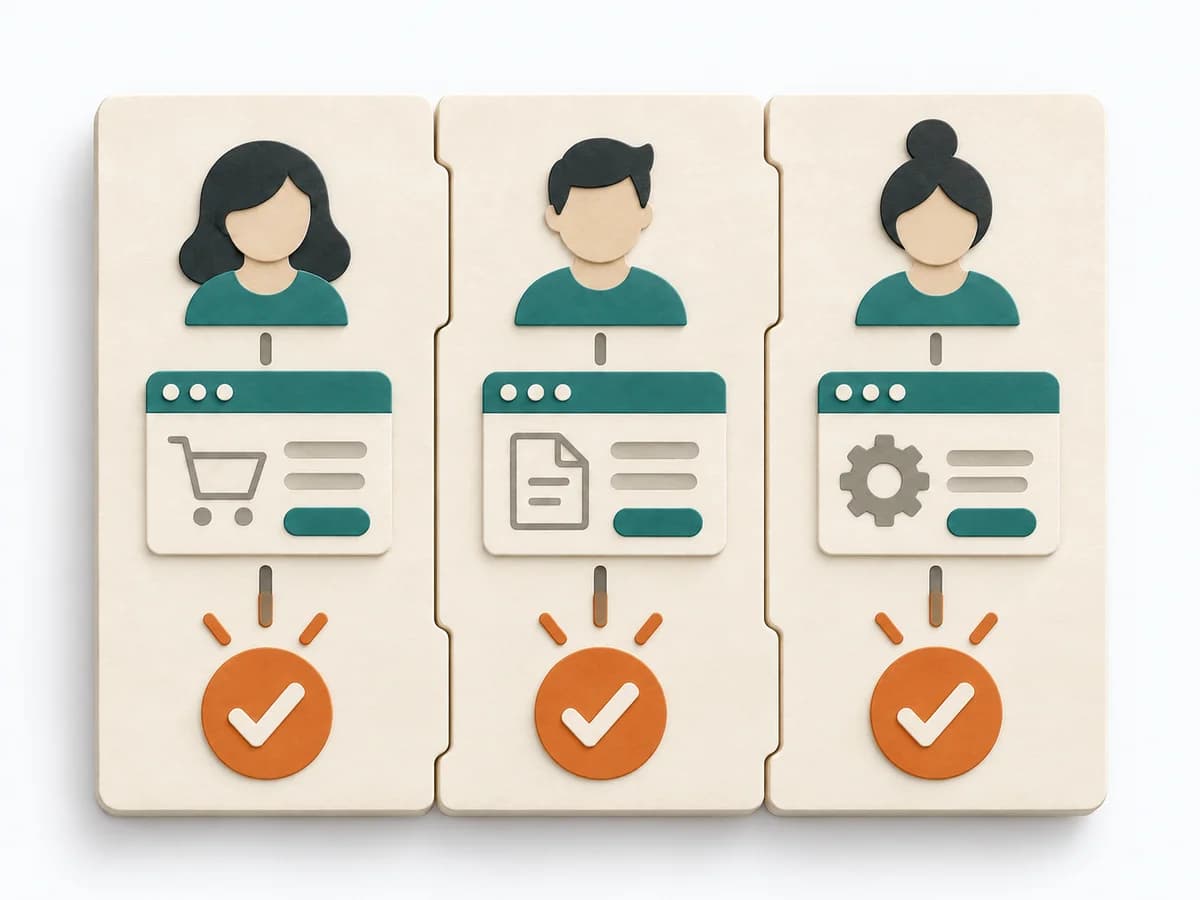 Agile Story Splitting | 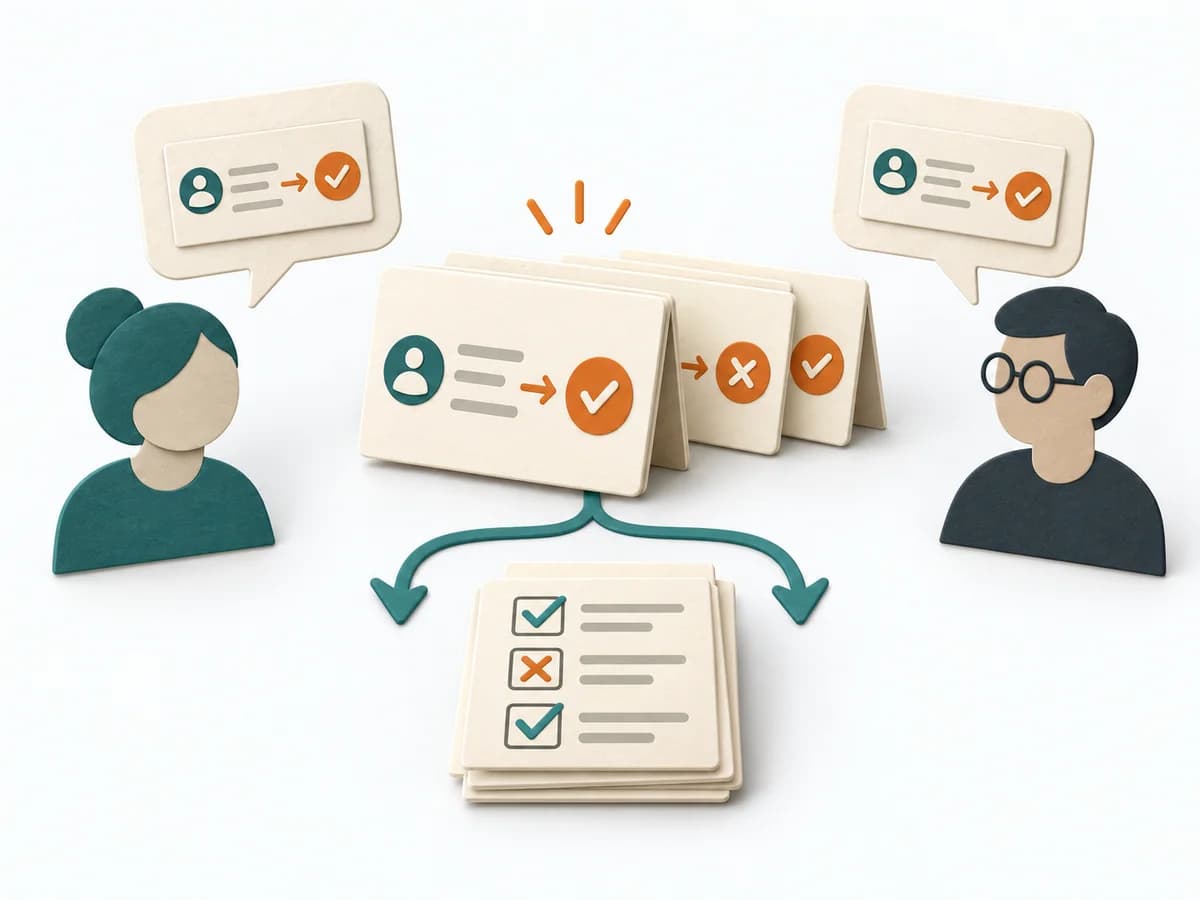 Agile Specification by Example | 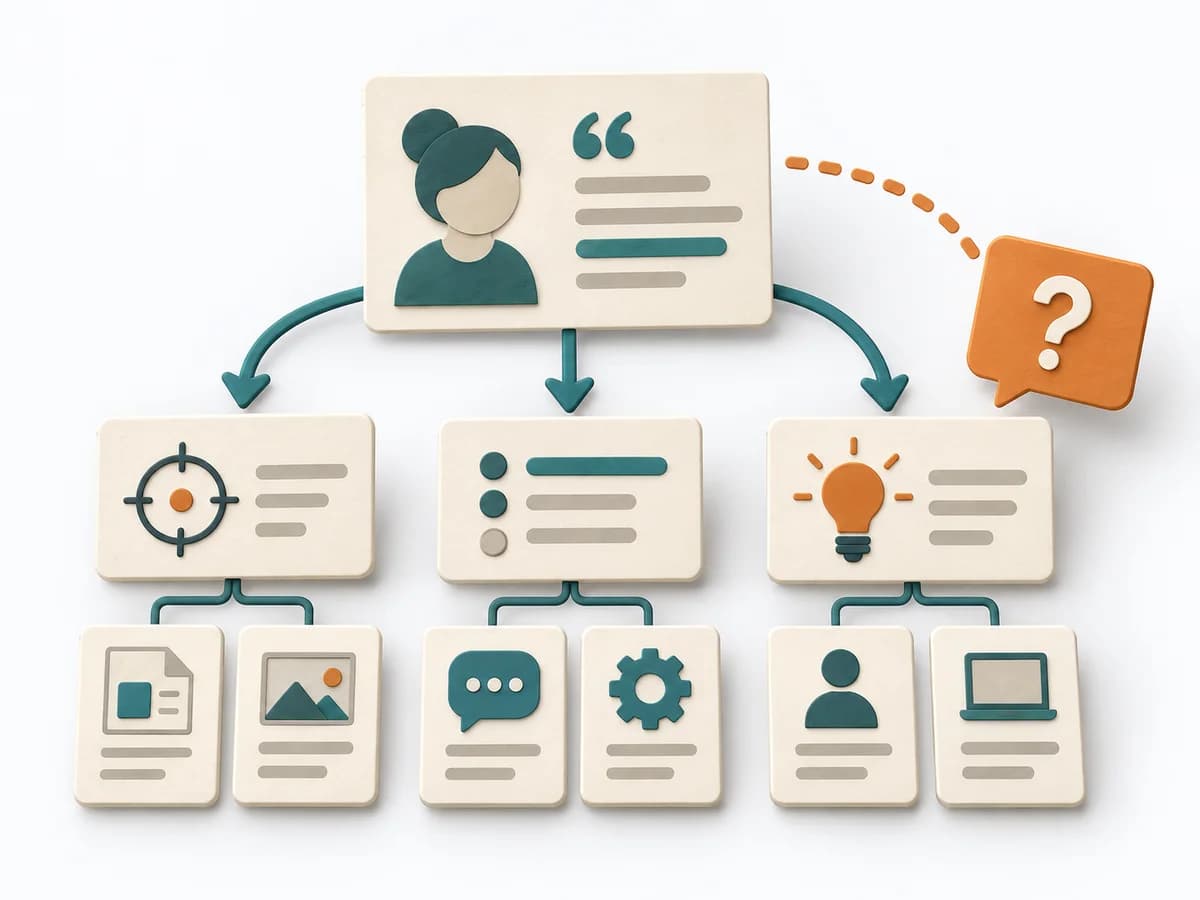 Agile Example Mapping | 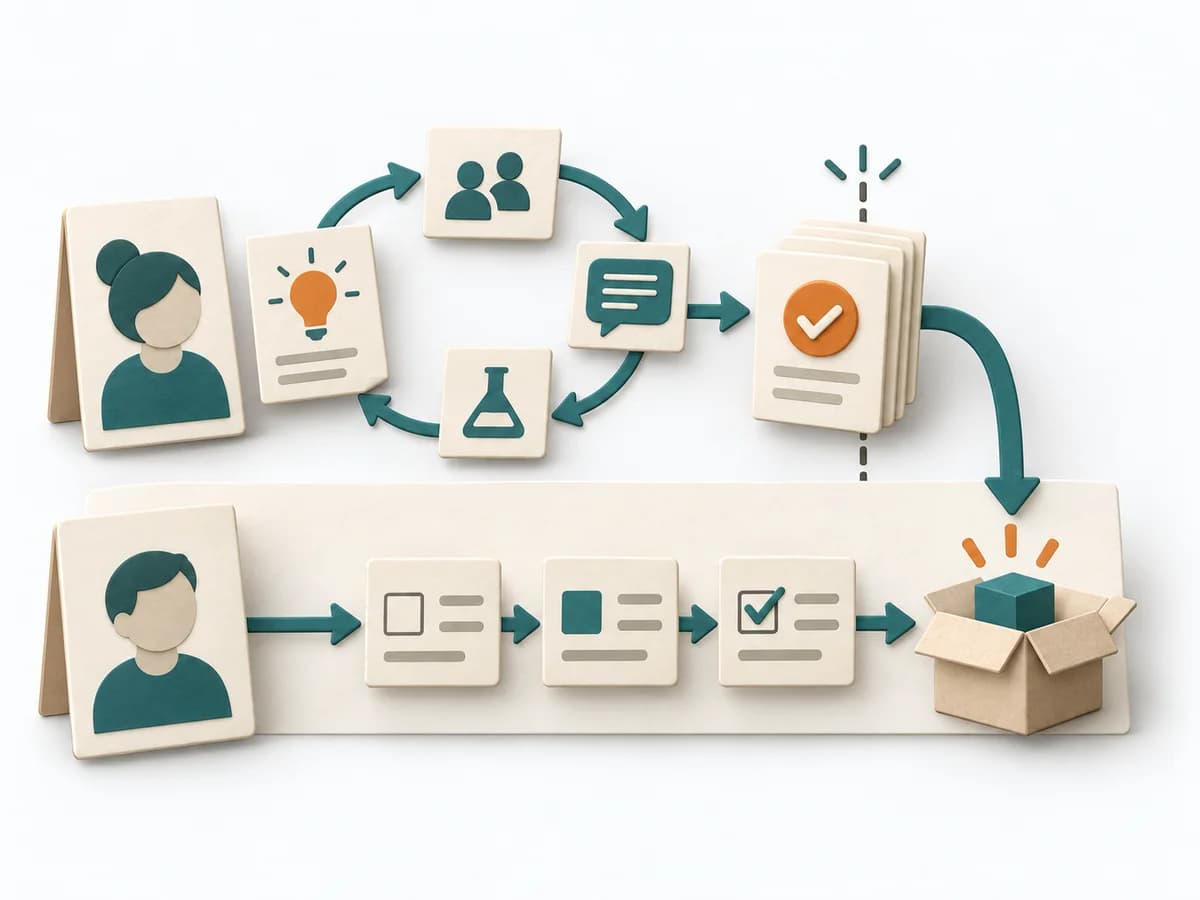 Product Discovery Dual-Track Agile |
|---|---|---|---|---|
Purposedifferent | When a story becomes too large for a clean flow, it breaks scope down along value and risk. It shapes the work into a form that ships earlier and is easier to verify. | When business rules need to become precise, it ties language, example, and test together. It sorts work by value, risk, and delivery ability. The result is captured as an Example Table and Acceptance Tests. | When a story carries business rules and exceptions, it brings clarity before implementation. It makes examples, open questions, and boundaries visible enough that the logic becomes jointly sound. | When uncertainty and delivery run in parallel, it separates learning work from implementation while keeping both connected. It prevents unvalidated ideas from falling directly into the delivery stream. |
Complexitydifferent | Medium | Medium | Low | Medium |
Timedifferent | 30-60 min | 60-90 min pro Feature | 30-60 min | Laufend, Wochen bis Monate |
Participantsdifferent | 2-6 | 3-6 | 3-7 | 4-10 |
Formatdifferent | Workshop + async | Workshop | Workshop | Workshop + async |
Outputdifferent | Smaller Stories, Acceptance Criteria, Split Rationale | Example Table, Acceptance Tests | Example Map, Acceptance Criteria, Open Questions | Discovery Backlog, Delivery Backlog, Experiment-Ergebnisse, Validierte Stories |
Tagsno overlap | BacklogIterationDelivery | AgileRequirementsExamplesBehavior-Driven Development | Behavior-Driven DevelopmentRequirementsExamplesRefinement | AgileDiscoveryDelivery |