View methods side by side.
Choose up to four methods. Add them using the search and share the comparison by copying its link.
| Criterion |  Agile Story Splitting |  Product Discovery Assumption Mapping | 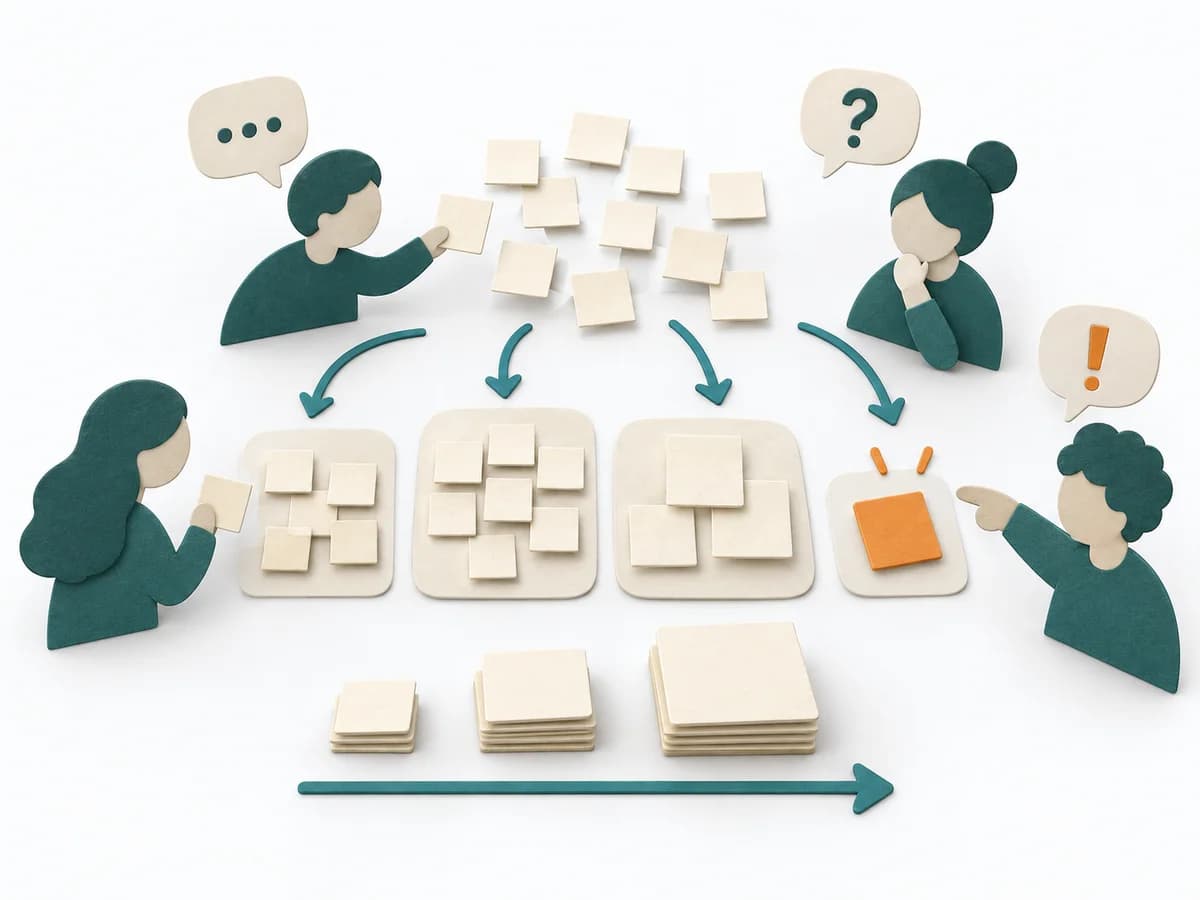 Agile Affinity Estimation | 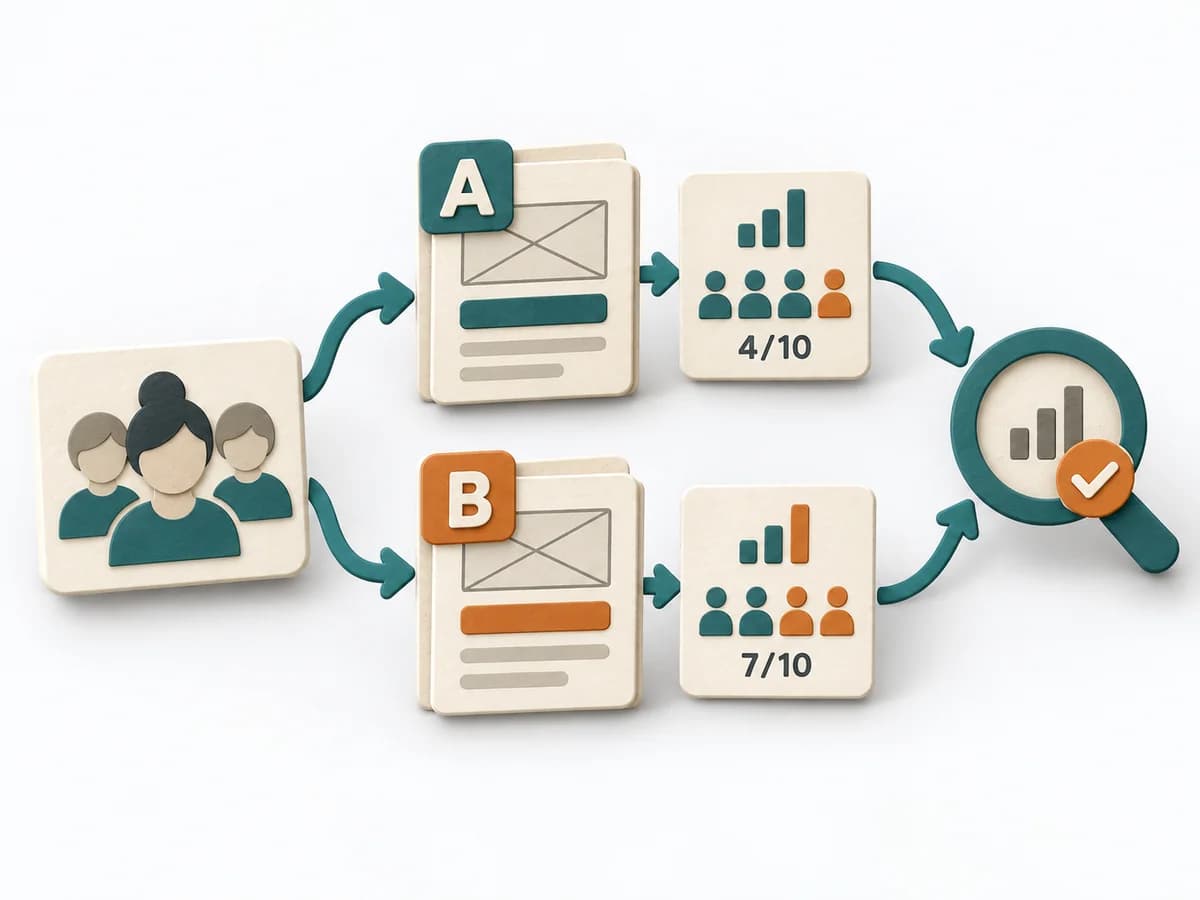 Growth A/B Testing |
|---|---|---|---|---|
Purposedifferent | When a story becomes too large for a clean flow, it breaks scope down along value and risk. It shapes the work into a form that ships earlier and is easier to verify. | When assumptions still sit unordered in the room, it weighs uncertainty against leverage. It makes visible which hypotheses should be checked first. | When many tasks need to be classified quickly, it sorts them by perceived effort and similarity. It reduces the effort of fine-grained estimation for large volumes. | When two variants compete, discussions quickly decide by taste rather than effect. A/B Testing checks behavior under controlled conditions and separates real improvement from chance or expectation effects. |
Complexitydifferent | Medium | Medium | Medium | High |
Timedifferent | 30-60 min | 45-60 min | 30-90 min | 1-4 Wochen |
Participantsdifferent | 2-6 | 2-8 | 3-12 | 1-6 |
Formatdifferent | Workshop + async | Workshop + async | Workshop | Async |
Outputdifferent | Smaller Stories, Acceptance Criteria, Split Rationale | Assumption map, Test backlog, Risk ranking | Affinity Size Map, Grouped Estimates, Unclear Items | Experiment results, Decision log, Learning summary |
Tagsno overlap | BacklogIterationDelivery | AssumptionsRiskExperimentsValidation | EstimationBacklogRelative sizing | ExperimentsGrowthAnalyticsValidation |