View methods side by side.
Choose up to four methods. Add them using the search and share the comparison by copying its link.
| Criterion | 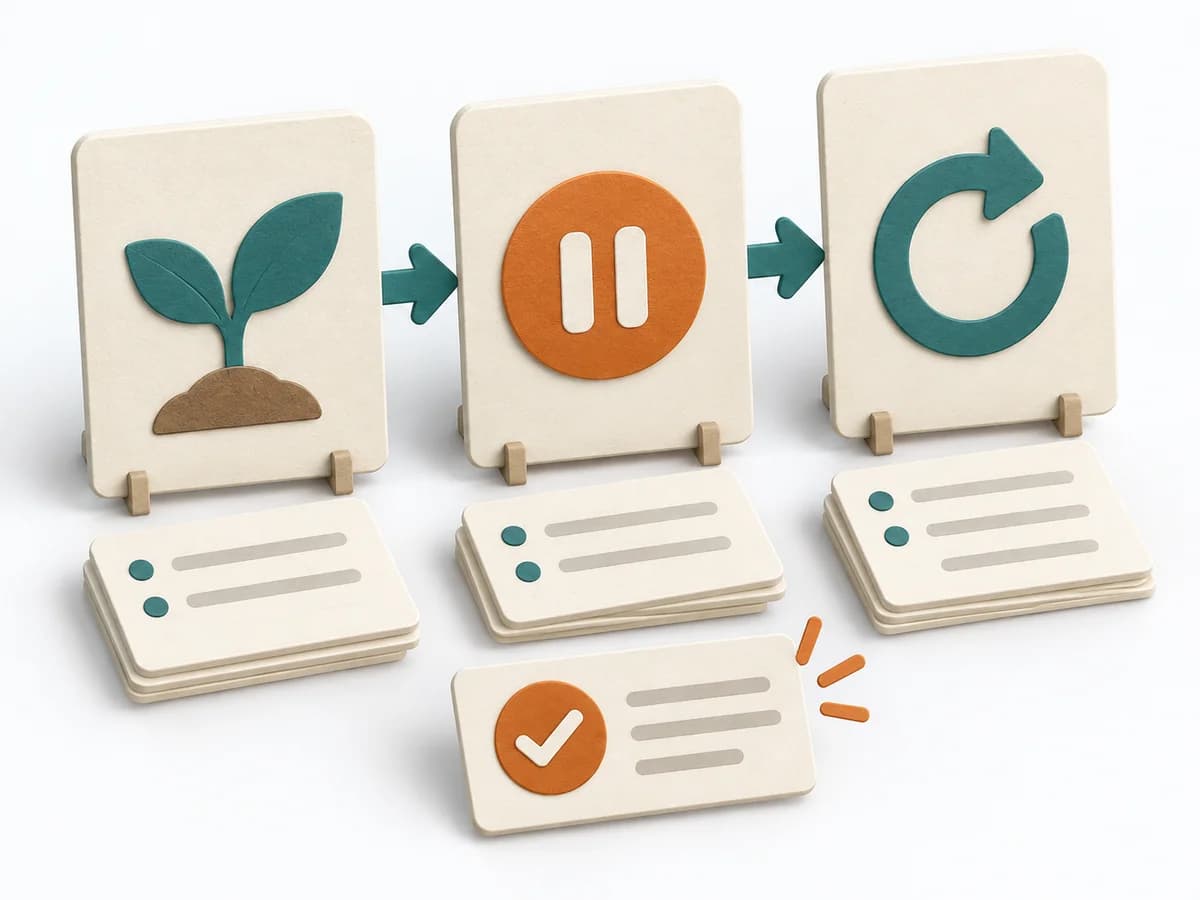 Agile Start Stop Continue |  UX Research Customer Journey Mapping | 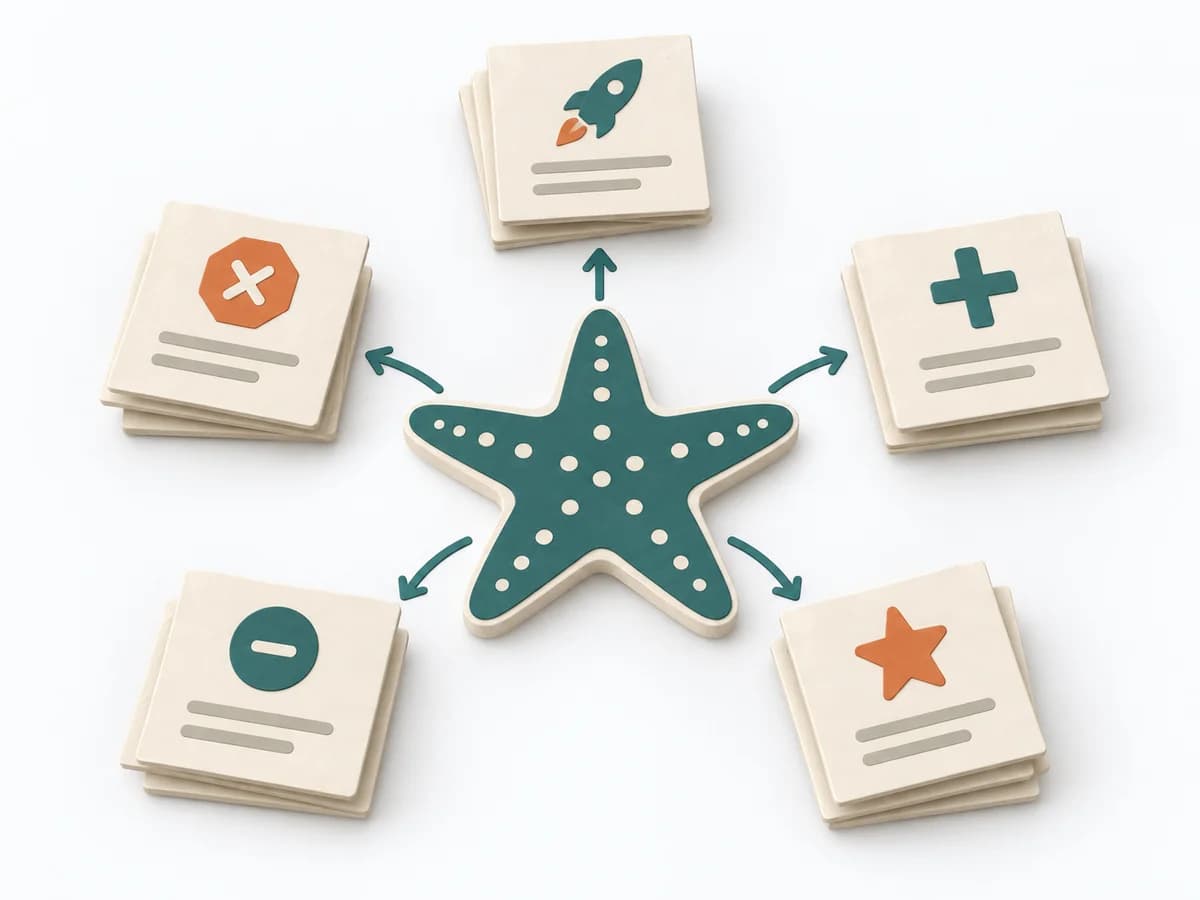 Agile Starfish Retrospective | 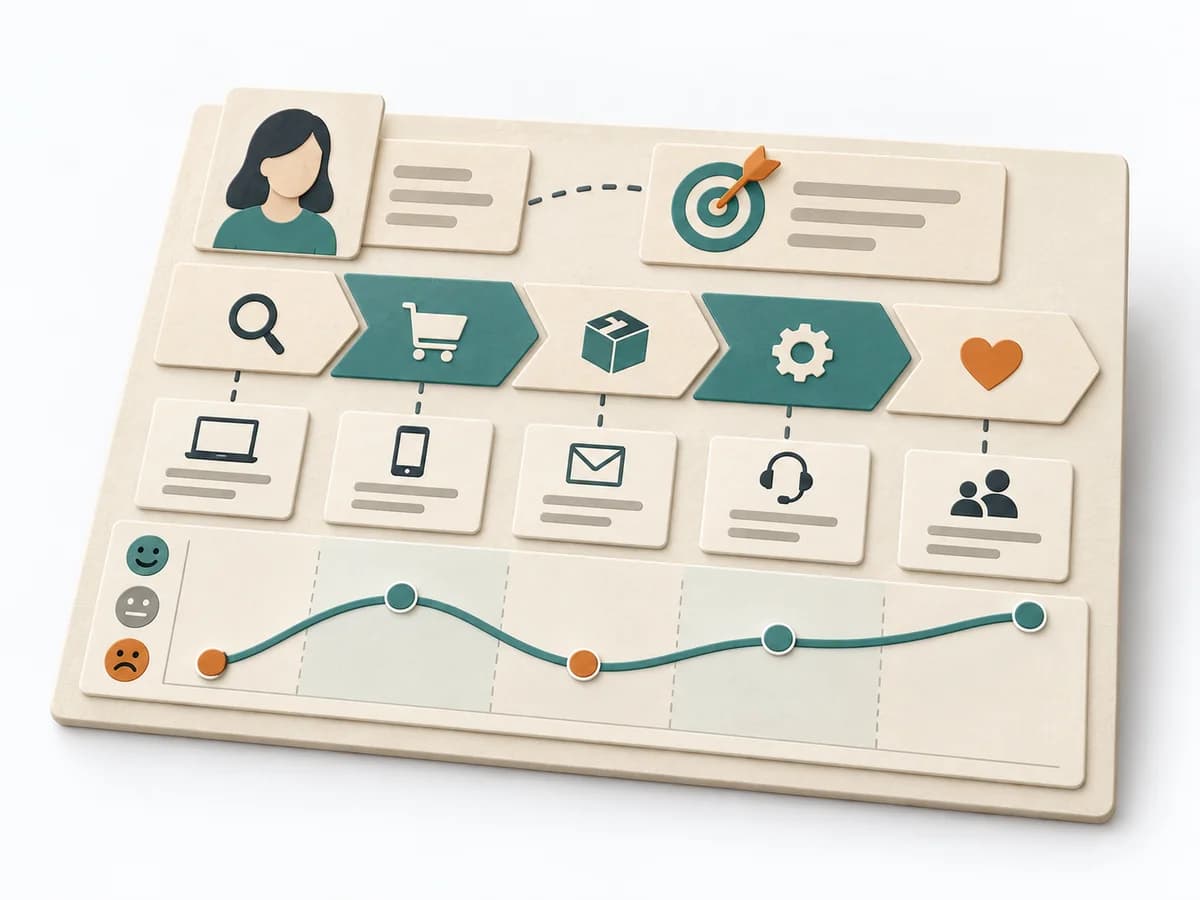 UX Design Customer Journey Canvas |
|---|---|---|---|---|
Purposedifferent | When a team wants to deliberately adjust its working behavior, it makes habits visible and assessable. It focuses on concrete changes instead of diffuse mood. | When a user journey falls apart across many touchpoints, customer journey mapping makes the experience visible as a coherent arc. Phases, emotions, and breaks become legible enough to prioritize critical moments deliberately. | When improvement options need to be sorted more finely than just start and stop, it brings observations into clear kinds of action. This makes visible what should be done more, less, newly, or continued. | When a journey needs to be understood across several phases, it arranges experience, touchpoints, and opportunities into one picture. It makes gaps and friction along the user path clear. |
Complexitydifferent | Low | Medium | Low | Medium |
Timedifferent | 30-60 min | 2-4 h | 45-90 min | 1-3 h |
Participantsdifferent | 3-12 | 4-10 | 4-12 | 3-10 |
Formatsame | Workshop | Workshop | Workshop | Workshop |
Outputdifferent | Start Stop Continue Board, Improvement Actions | Journey Map, Pain-point List, Opportunity Backlog | Starfish Board, Practice Changes, Experiments | Customer Journey Canvas, Pain Points, Experience Opportunities |
Tagsno overlap | RetrospectiveImprovementTeamReflection | JourneyServiceService design | RetrospectiveImprovementExperimentsTeam | JourneyCustomerService designCanvas |