View methods side by side.
Choose up to four methods. Add them using the search and share the comparison by copying its link.
| Criterion | 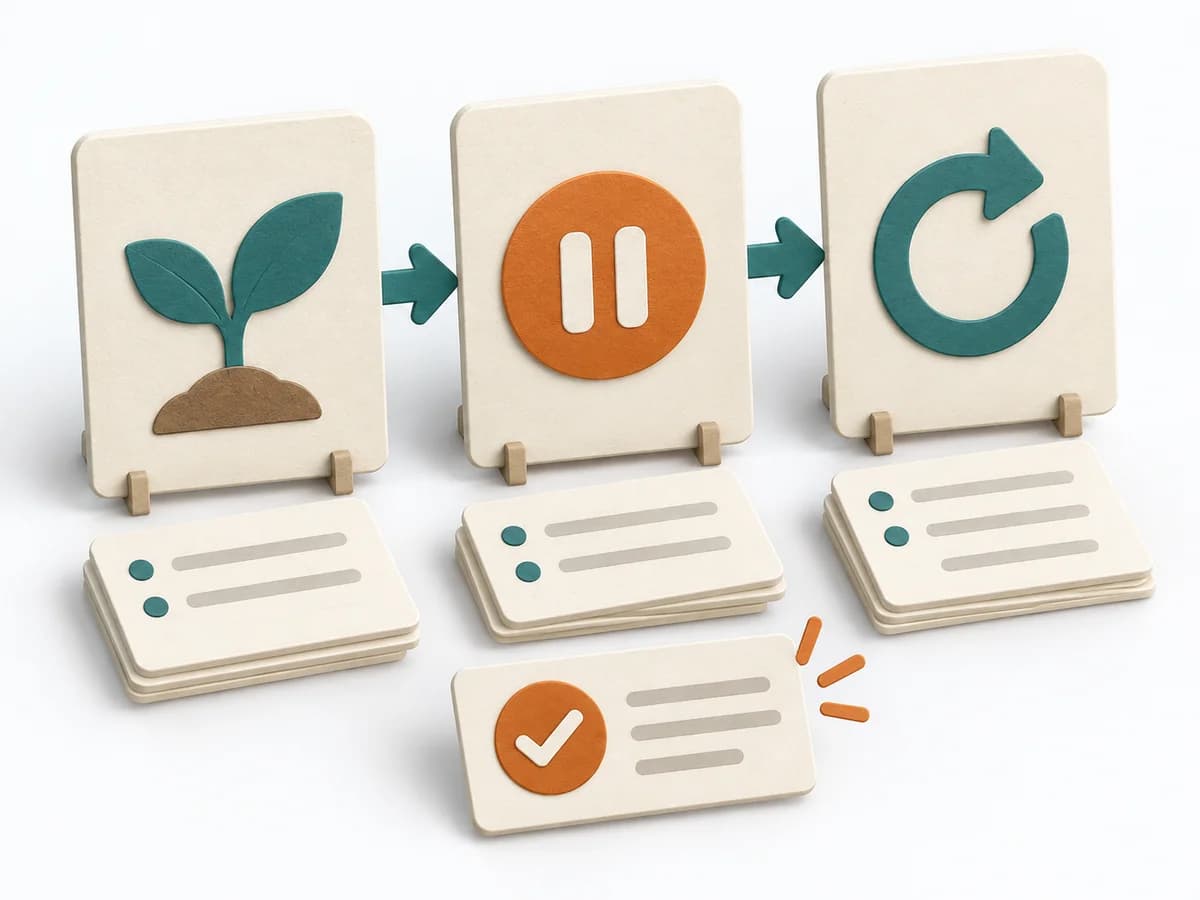 Agile Start Stop Continue |  Facilitation Alignment Mapping | 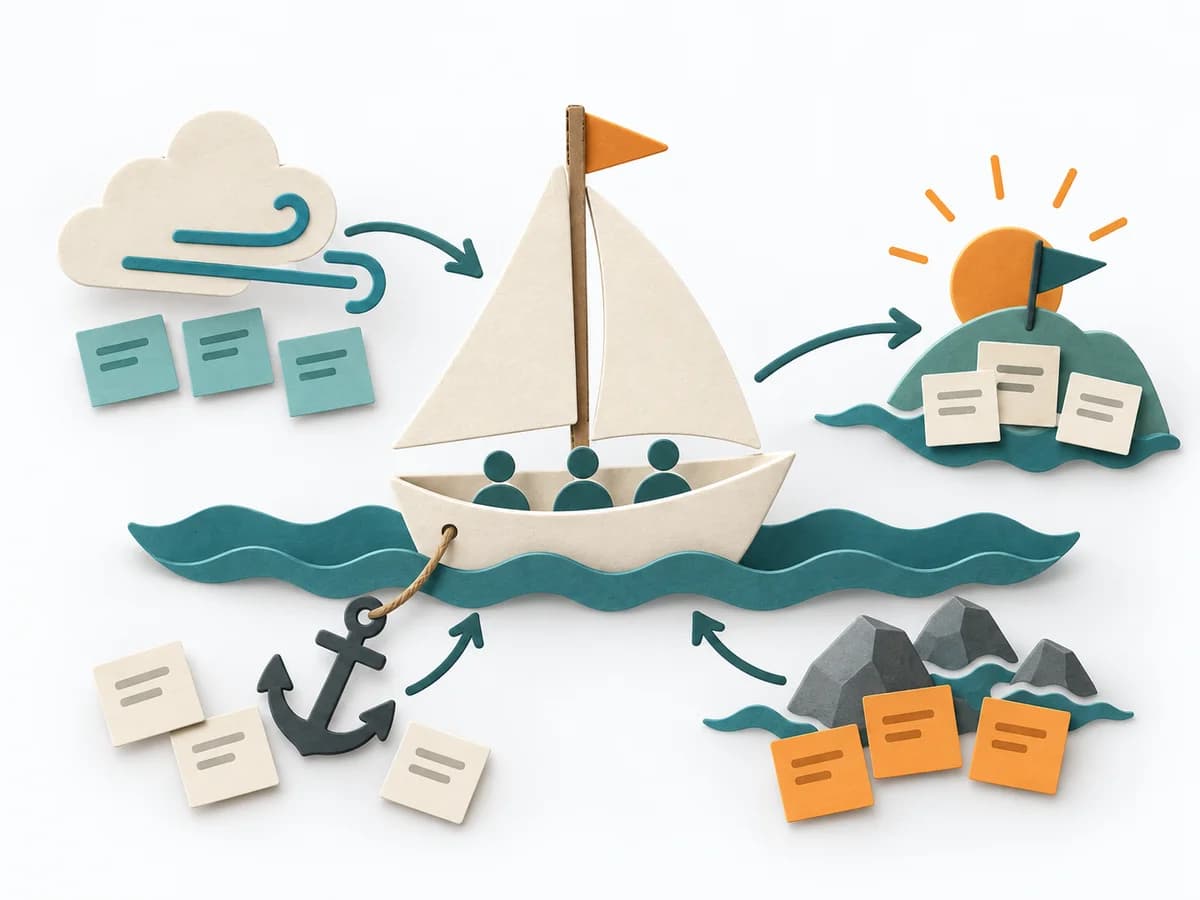 Agile Sailboat Retrospective | 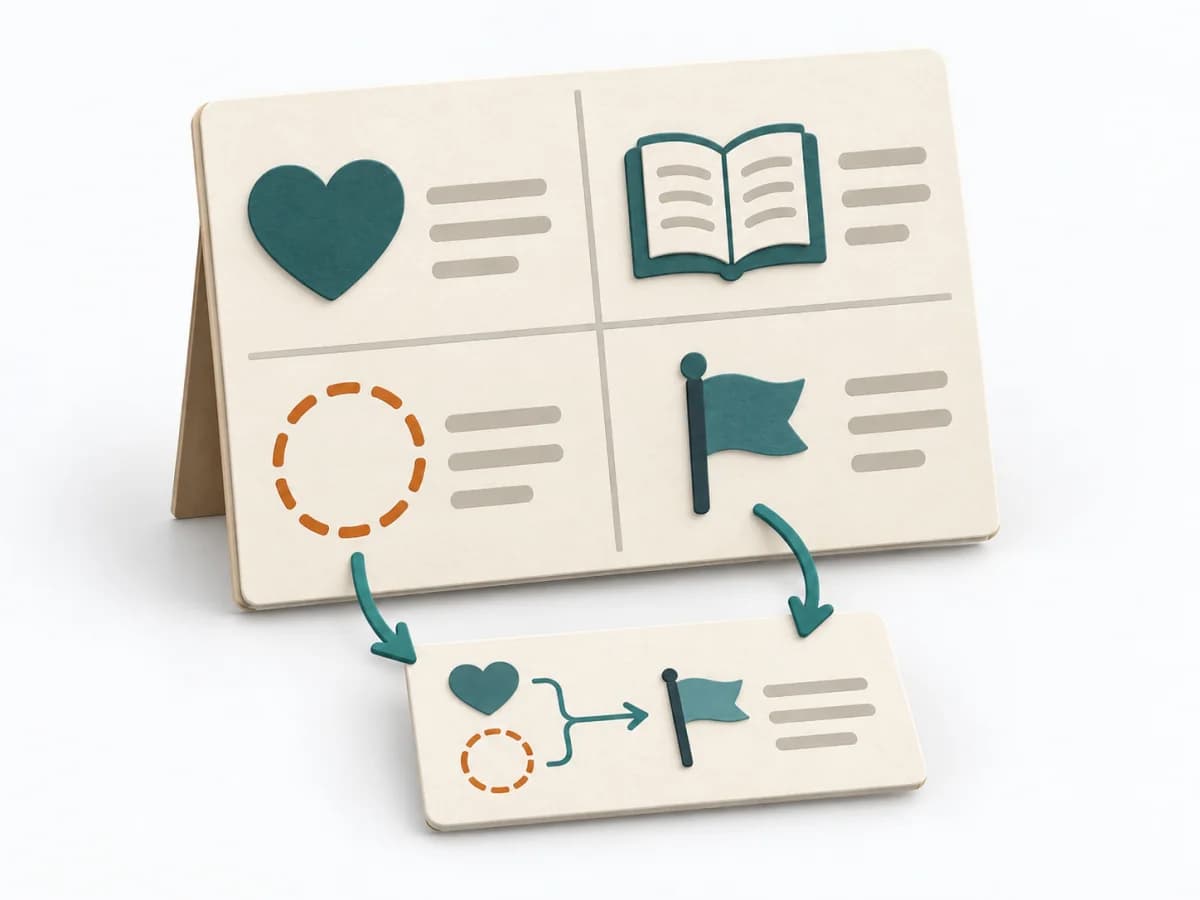 Agile 4Ls Retrospective |
|---|---|---|---|---|
Purposedifferent | When a team wants to deliberately adjust its working behavior, it makes habits visible and assessable. It focuses on concrete changes instead of diffuse mood. | When several people work toward one goal but hold different mental maps, Alignment Mapping makes the discrepancies visible. It arranges goals, assumptions, and priorities so shared direction becomes verifiable. | When a team wants to read momentum, brakes, and risks together, it offers an easily understandable picture of the situation. It makes drive, obstacles, and headwind visible in the same picture. | When a sprint should not only be assessed but also learned from, it captures experience in clear learning categories. It records what worked, what's missing, and what should run differently next time. |
Complexitydifferent | Low | Medium | Low | Low |
Timedifferent | 30-60 min | 1-2 h | 45-90 min | 45–75 min |
Participantsdifferent | 3-12 | 4-12 | 4-12 | Team members involved |
Formatsame | Workshop | Workshop | Workshop | Workshop |
Outputdifferent | Start Stop Continue Board, Improvement Actions | Alignment Map, Open Issues, Decision Questions | Sailboat Board, Risks, Improvement Actions | 4Ls Board, Learning Themes, Improvement Actions |
Tagsno overlap | RetrospectiveImprovementTeamReflection | AlignmentStakeholdersStrategyFacilitation | RetrospectiveTeamImprovement | RetrospectiveLearningReflectionTeam |