View methods side by side.
Choose up to four methods. Add them using the search and share the comparison by copying its link.
| Criterion | 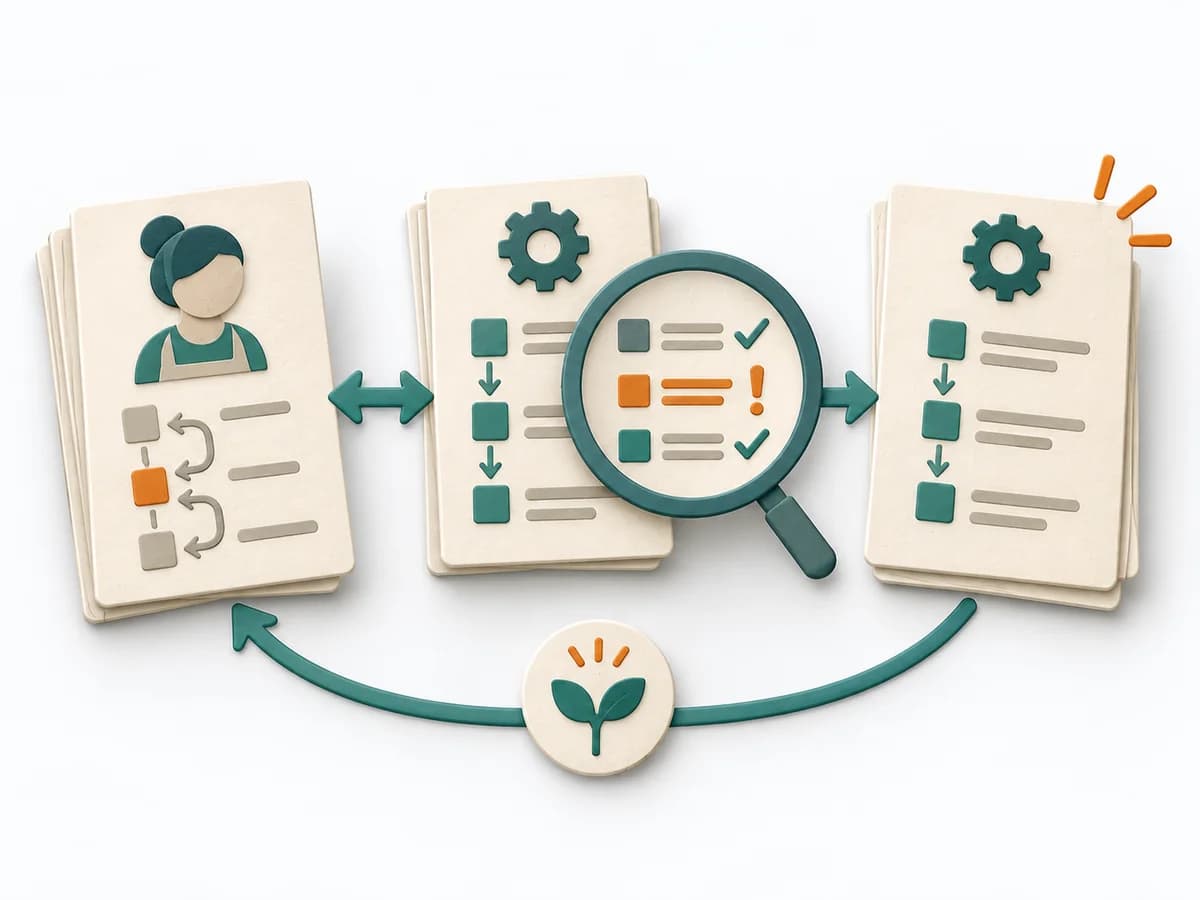 Operations Standard Work Analysis |  UX Research User Interviews | 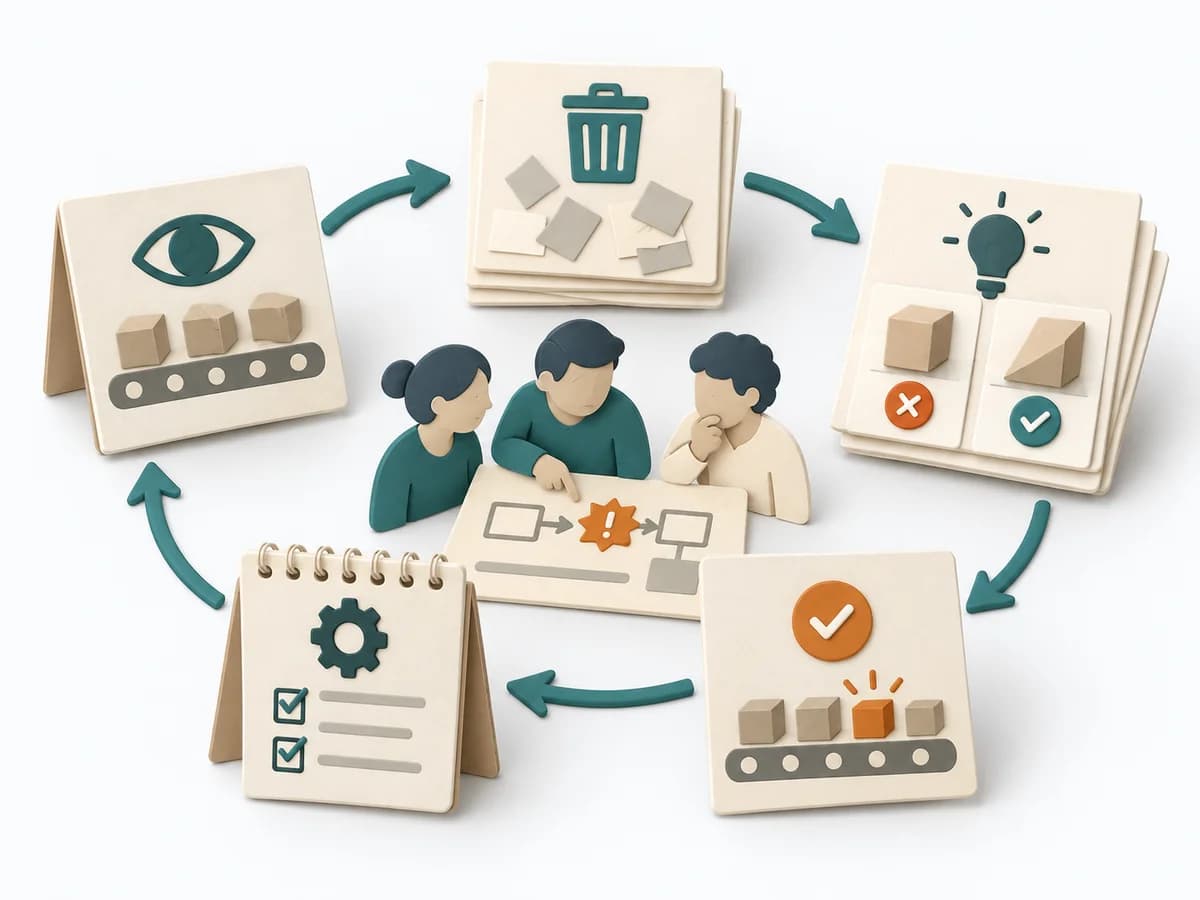 Operations Kaizen Event |  Operations Failure Mode and Effects Analysis |
|---|---|---|---|---|
Purposedifferent | When the same task is done differently depending on the person, the method exposes the reliable core. It creates comparability without unnecessarily choking off needed latitude. | When teams derive needs only from assumptions and real motives are missing, user interviews give direct access to behavior and meaning. Conversations from the target group's everyday life make patterns, tensions, and open questions solidly visible. | For a tightly scoped process segment with noticeable waste, the method bundles shared energy for change. It suits situations that call for fast learning loops and visible adjustments. | For a process, product, or service with noticeable failure risks, the method assesses possible failure modes in advance. It directs attention to combinations of occurrence, effect, and detectability. |
Complexitydifferent | Medium | Low | Medium | High |
Timedifferent | 1-3 h | 30–60 min per interview | 0.5-5 Tage | 2-6 h |
Participantsdifferent | 2-6 | 1 participant per interview | 4-10 | 3-10 |
Formatdifferent | Workshop | Workshop + async | Workshop | Workshop |
Outputdifferent | Standard Work Sheet, Deviation List, Improved Standard, Training Needs | Interview Notes, Themes, Insight Summary | Kaizen Charter, Waste List, Improvement Experiments, Standard Work Update | FMEA Table, Risk Priority, Mitigation Actions |
Tagsno overlap | LeanProcessQuality | QualitativeResearchCustomerDiscovery | LeanContinuous improvementOperations | RiskQualityOperationsRoot cause |