View methods side by side.
Choose up to four methods. Add them using the search and share the comparison by copying its link.
| Criterion | 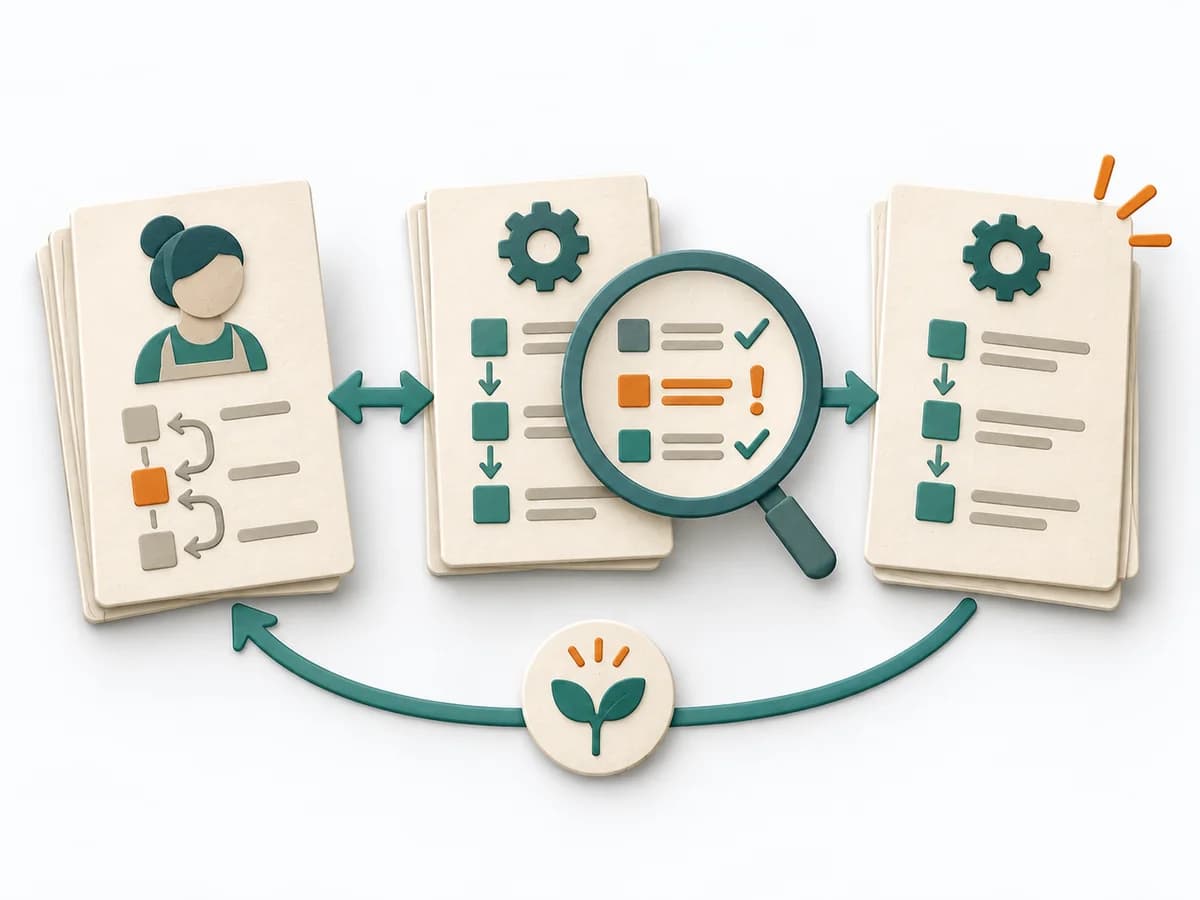 Operations Standard Work Analysis |  Facilitation Stakeholder Mapping |  Facilitation Dot Voting |  Facilitation Power Interest Grid |
|---|---|---|---|---|
Purposedifferent | When the same task is done differently depending on the person, the method exposes the reliable core. It creates comparability without unnecessarily choking off needed latitude. | When an initiative depends on many people, interests, and power dynamics, Stakeholder Mapping systematically orders the environment. It shows who influences, who is affected, and where relationship management or safeguarding matters first. | When a workshop has produced too many options and the group needs to condense quickly, dot voting makes preferences visible in a short time. It bundles individual votes into a solid signal for the next selection. | When many stakeholders compete for attention at once, the Power Interest Grid sorts them by influence and stake. It turns individual contributions into a visible selection. The result is captured as a Power Interest Grid and a stakeholder-specific strategy. |
Complexitydifferent | Medium | Low | Low | Low |
Timedifferent | 1-3 h | 60–90 min | 5-15 min | 30-60 min |
Participantsdifferent | 2-6 | 2-8 | 3-20 | 2-8 |
Formatdifferent | Workshop | Workshop + async | Workshop | Workshop |
Outputdifferent | Standard Work Sheet, Deviation List, Improved Standard, Training Needs | Stakeholder Map, Engagement Plan, Risk Notes | Ranked list, Consensus signal, Shortlist | Power Interest Grid, Strategy per Stakeholder |
Tagsno overlap | LeanProcessQuality | StakeholdersAlignmentFacilitationChange | FacilitationVotingConsensusPrioritization | StakeholdersFacilitationAlignmentPlanning |