View methods side by side.
Choose up to four methods. Add them using the search and share the comparison by copying its link.
| Criterion |  Facilitation Stakeholder Salience Model | 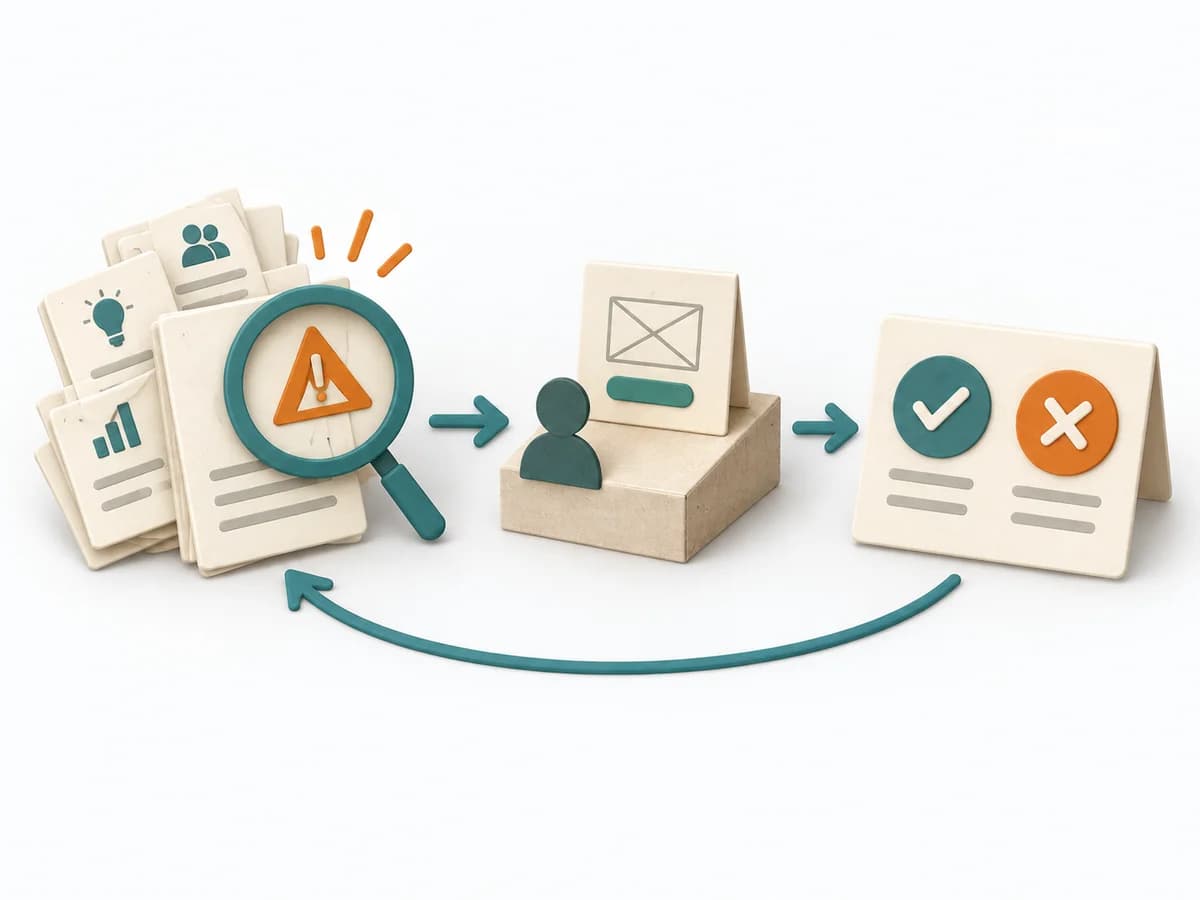 Product Discovery Riskiest Assumption Test |  Product Discovery Learning Card | 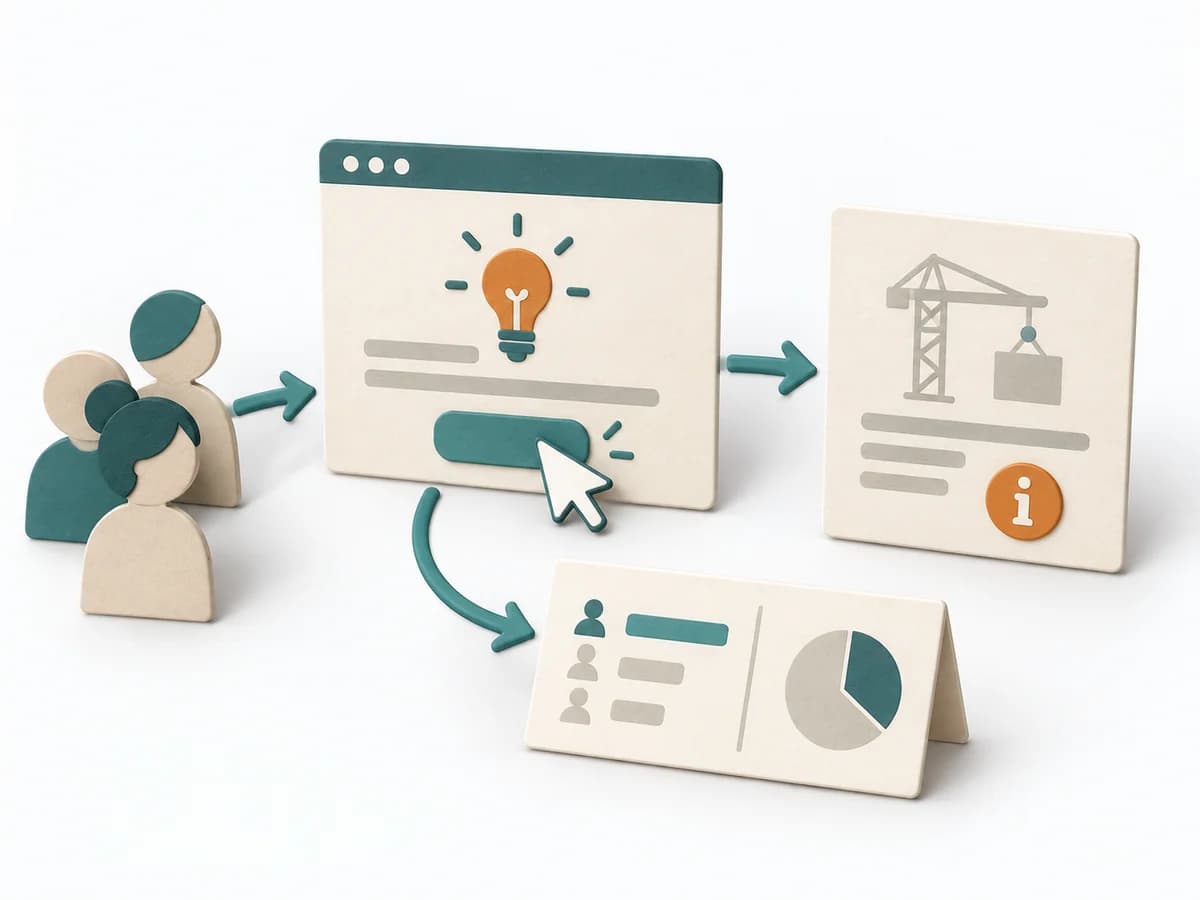 Product Discovery Fake Door Test |
|---|---|---|---|---|
Purposedifferent | When stakeholders appear to matter very differently, the Stakeholder Salience Model rates their actual priority through power, legitimacy, and urgency. It turns individual contributions into a visible selection. The result is captured as a Salience diagram and a class-based strategy. | When an idea hinges on one critical unknown, it prioritizes testing that exact piece of uncertainty first. It separates problem, assumption, solution, and evidence. The result is captured as a prioritized list of assumptions, a test plan, and a result report. | The Learning Card connects traceable test results to a reasoned next action while keeping the limits of the insight visible. | When demand is still unclear, it measures interest in a feature before it is built. It separates real behavior from polite agreement and deliberately keeps build effort small. |
Complexitydifferent | Medium | Medium | Low | Medium |
Timedifferent | 60-90 min | 1-2 Wochen pro Iteration | 25-40 min | 1-5 Tage |
Participantsdifferent | 3-6 | 2-6 | 1-5 | Nutzertraffic |
Formatdifferent | Workshop | Workshop + async | Workshop + async | Async |
Outputdifferent | Salience Diagram, Strategy per Class | Prioritized Assumption List, Test Plan, Results Report | Learning Card with evidence and next action | Click Data, Interest Signal, Learning Decision |
Tagsno overlap | StakeholdersFacilitationAlignmentGovernance | ExperimentsValidationDiscoveryAssumptions | ExperimentsValidationDiscoveryLearning | ValidationExperimentsDemandDiscovery |