View methods side by side.
Choose up to four methods. Add them using the search and share the comparison by copying its link.
| Criterion |  Facilitation Stakeholder Mapping | 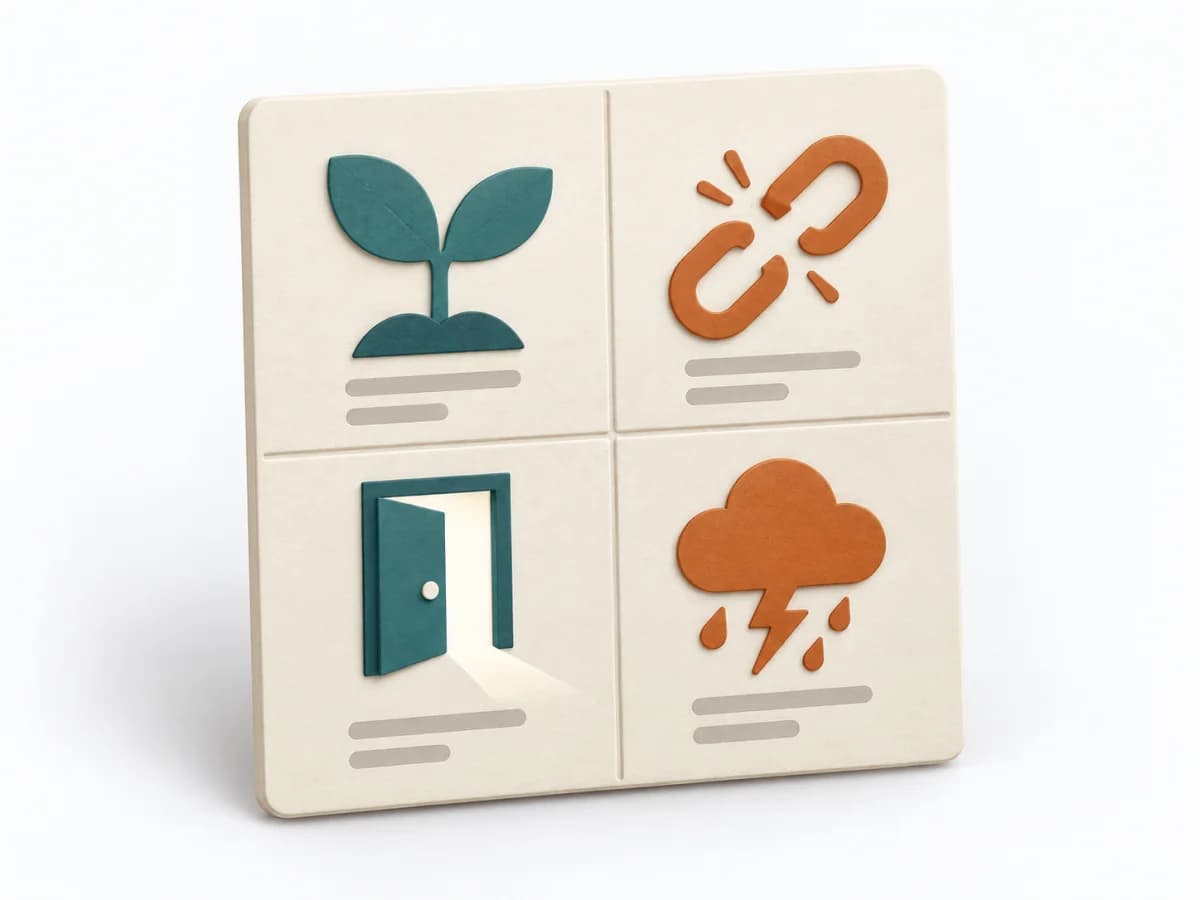 Business Strategy SWOT Analysis | 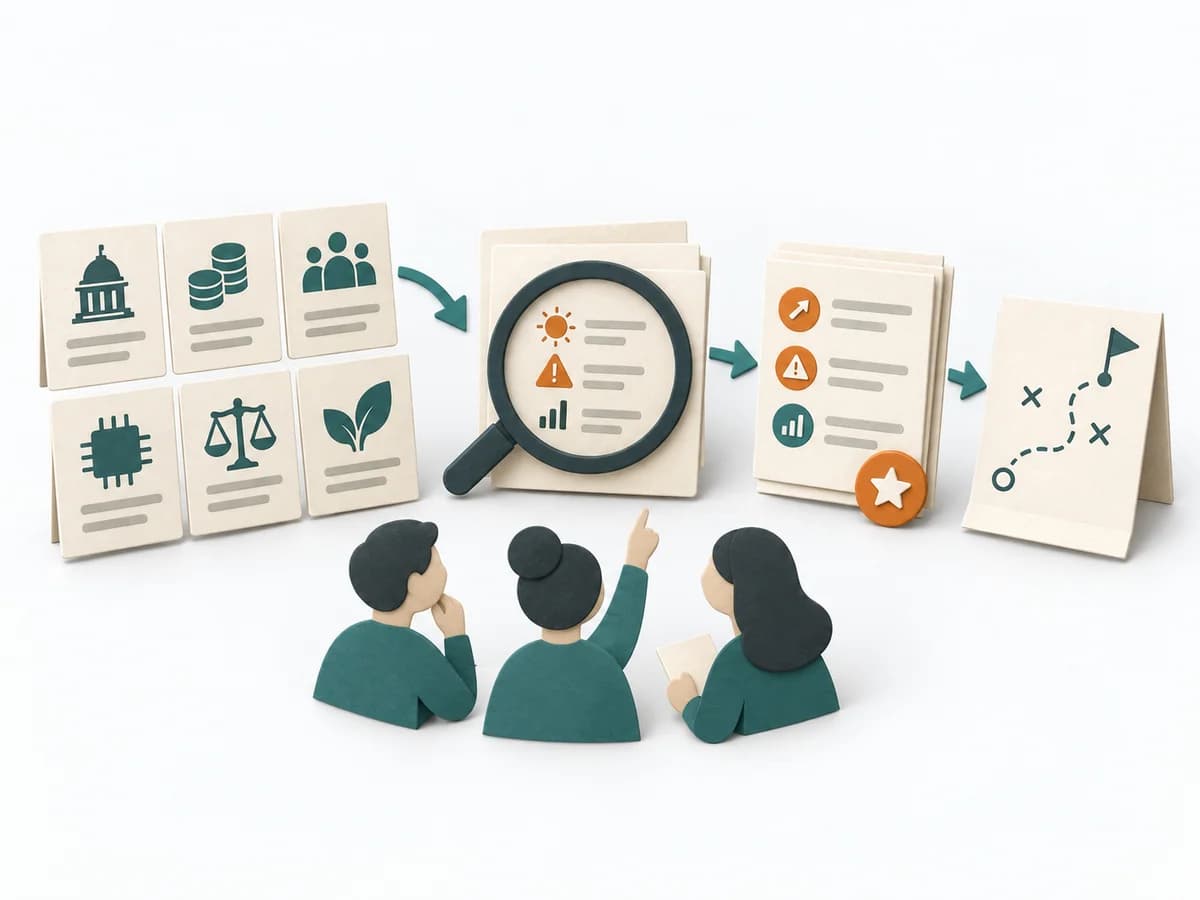 Business Strategy PESTLE Analysis | 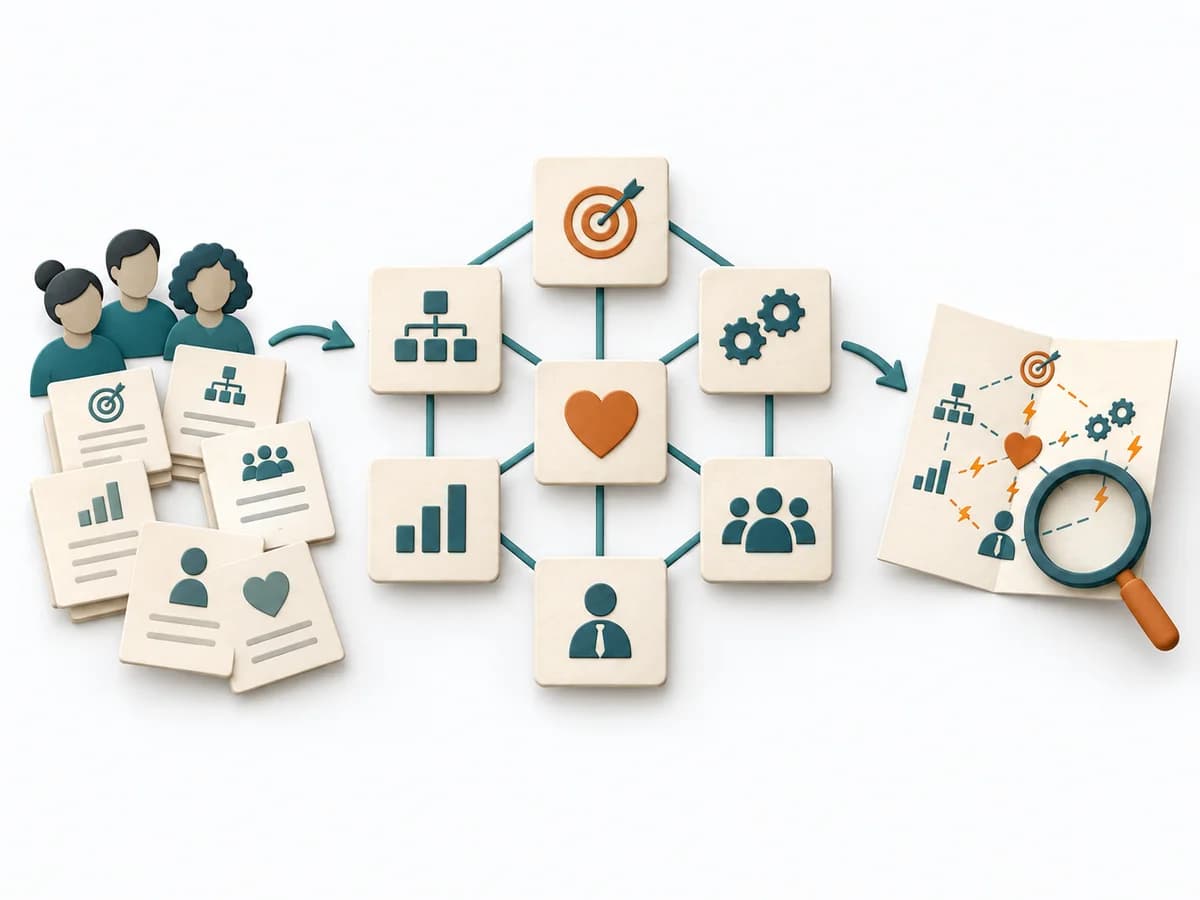 Business Strategy McKinsey 7S |
|---|---|---|---|---|
Purposedifferent | When an initiative depends on many people, interests, and power dynamics, Stakeholder Mapping systematically orders the environment. It shows who influences, who is affected, and where relationship management or safeguarding matters first. | SWOT Analysis arranges strengths, weaknesses, opportunities, and threats into a compact picture of the situation. It keeps internal capabilities and external influences separate before strategic options emerge from them. | PESTLE Analysis makes political, economic, social, technological, legal, and environmental influences visible. The environment of an initiative is thereby read systematically instead of through isolated trends. | McKinsey 7S checks whether Strategy, Structure, Systems, Shared Values, Skills, Style, and Staff fit together. Organizational misalignments become visible across multiple levers as a result. |
Complexitydifferent | Low | Low | Medium | Medium |
Timedifferent | 60–90 min | 30-60 min | 1-3 h | 2-4 h |
Participantsdifferent | 2-8 | 3-12 | 2-10 | 3-12 |
Formatdifferent | Workshop + async | Workshop | Workshop + async | Workshop |
Outputdifferent | Stakeholder Map, Engagement Plan, Risk Notes | SWOT matrix, Strategic options, Action list | PESTLE Map, External Risks, Strategic Questions | 7S Assessment, Alignment Gaps, Change Actions |
Tagsno overlap | StakeholdersAlignmentFacilitationChange | StrategyAnalysisMarketPositioning | StrategyMarketAnalysis | OrganizationStrategyAlignmentChange |