View methods side by side.
Choose up to four methods. Add them using the search and share the comparison by copying its link.
| Criterion |  Facilitation Stakeholder Mapping |  Decision Making Assumption Surfacing | 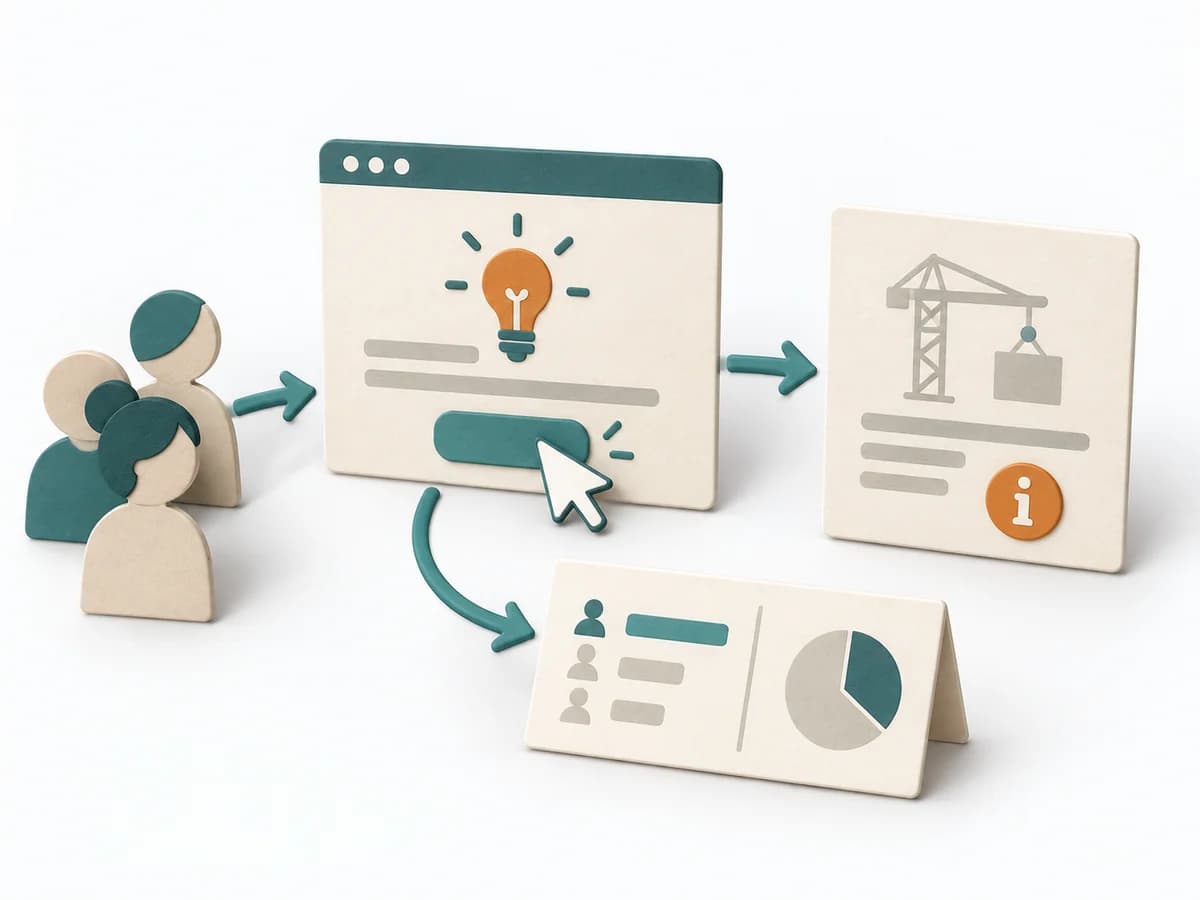 Product Discovery Fake Door Test |  Facilitation Alignment Mapping |
|---|---|---|---|---|
Purposedifferent | When an initiative depends on many people, interests, and power dynamics, Stakeholder Mapping systematically orders the environment. It shows who influences, who is affected, and where relationship management or safeguarding matters first. | Plans often contain assumptions that were never openly stated and remain dangerous precisely because of that. Assumption Surfacing makes these silent premises visible and prioritizes which of them carry the initiative or could sink it. | When demand is still unclear, it measures interest in a feature before it is built. It separates real behavior from polite agreement and deliberately keeps build effort small. | When several people work toward one goal but hold different mental maps, Alignment Mapping makes the discrepancies visible. It arranges goals, assumptions, and priorities so shared direction becomes verifiable. |
Complexitydifferent | Low | Low | Medium | Medium |
Timedifferent | 60–90 min | 45-90 min | 1-5 Tage | 1-2 h |
Participantsdifferent | 2-8 | 2-8 | Nutzertraffic | 4-12 |
Formatdifferent | Workshop + async | Workshop + async | Async | Workshop |
Outputdifferent | Stakeholder Map, Engagement Plan, Risk Notes | Assumption List, Critical Assumptions, Learning Plan | Click Data, Interest Signal, Learning Decision | Alignment Map, Open Issues, Decision Questions |
Tagsno overlap | StakeholdersAlignmentFacilitationChange | AssumptionsRiskDecisionDiscovery | ValidationExperimentsDemandDiscovery | AlignmentStakeholdersStrategyFacilitation |