View methods side by side.
Choose up to four methods. Add them using the search and share the comparison by copying its link.
| Criterion |  Agile Sprint Retrospective |  UX Research Customer Journey Mapping |  Operations Learning Review | 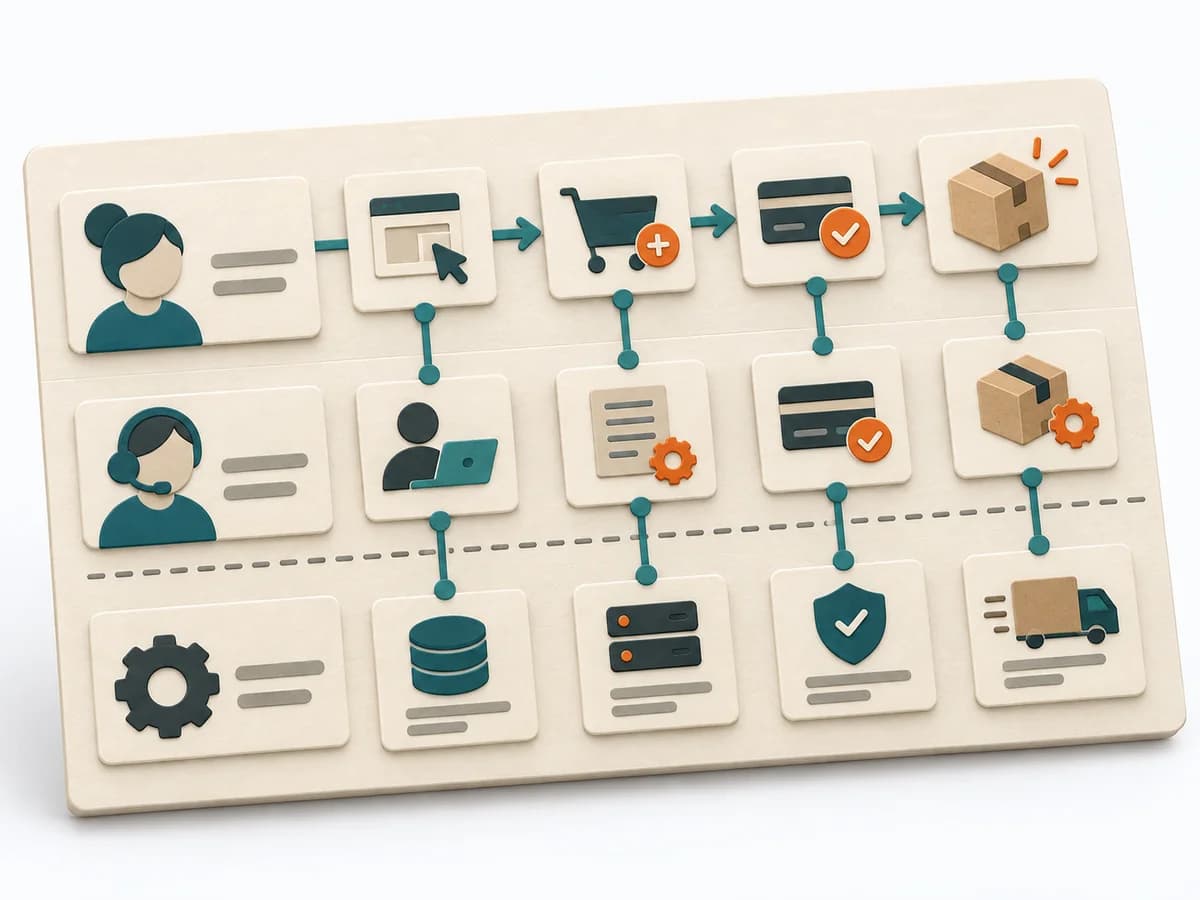 UX Design Service Blueprinting |
|---|---|---|---|---|
Purposedifferent | When a sprint is over and friction shouldn't simply be carried forward, it opens the view onto collaboration and patterns. It creates space to see causes and changes together. | When a user journey falls apart across many touchpoints, customer journey mapping makes the experience visible as a coherent arc. Phases, emotions, and breaks become legible enough to prioritize critical moments deliberately. | After a project phase with mixed results, the method makes learning from the individual case reusable. It connects events, decisions, and systemic conditions into robust insights. | When a service experience is spread across several touchpoints, it brings frontstage and backstage together. It shows where user contact and internal responsibility must fit. |
Complexitydifferent | Low | Medium | Medium | High |
Timedifferent | Up to 3 hours for a one-month Sprint; shorter Sprints are usually shorter | 2-4 h | 1-3 h | 0.5-2 Tage |
Participantsdifferent | Scrum Team | 4-10 | 3-10 | 6-12 |
Formatsame | Workshop | Workshop | Workshop | Workshop |
Outputdifferent | Improvement actions, Team agreements | Journey Map, Pain-point List, Opportunity Backlog | Learning Review Notes, System Factors, Improvement Actions | Service Blueprint, Fail Points, Ownership Map |
Tagsno overlap | RetrospectiveImprovementLearning | JourneyServiceService design | LearningRetrospectiveIncidentOperations | Service designOperationsJourneyBlueprint |