View methods side by side.
Choose up to four methods. Add them using the search and share the comparison by copying its link.
| Criterion | 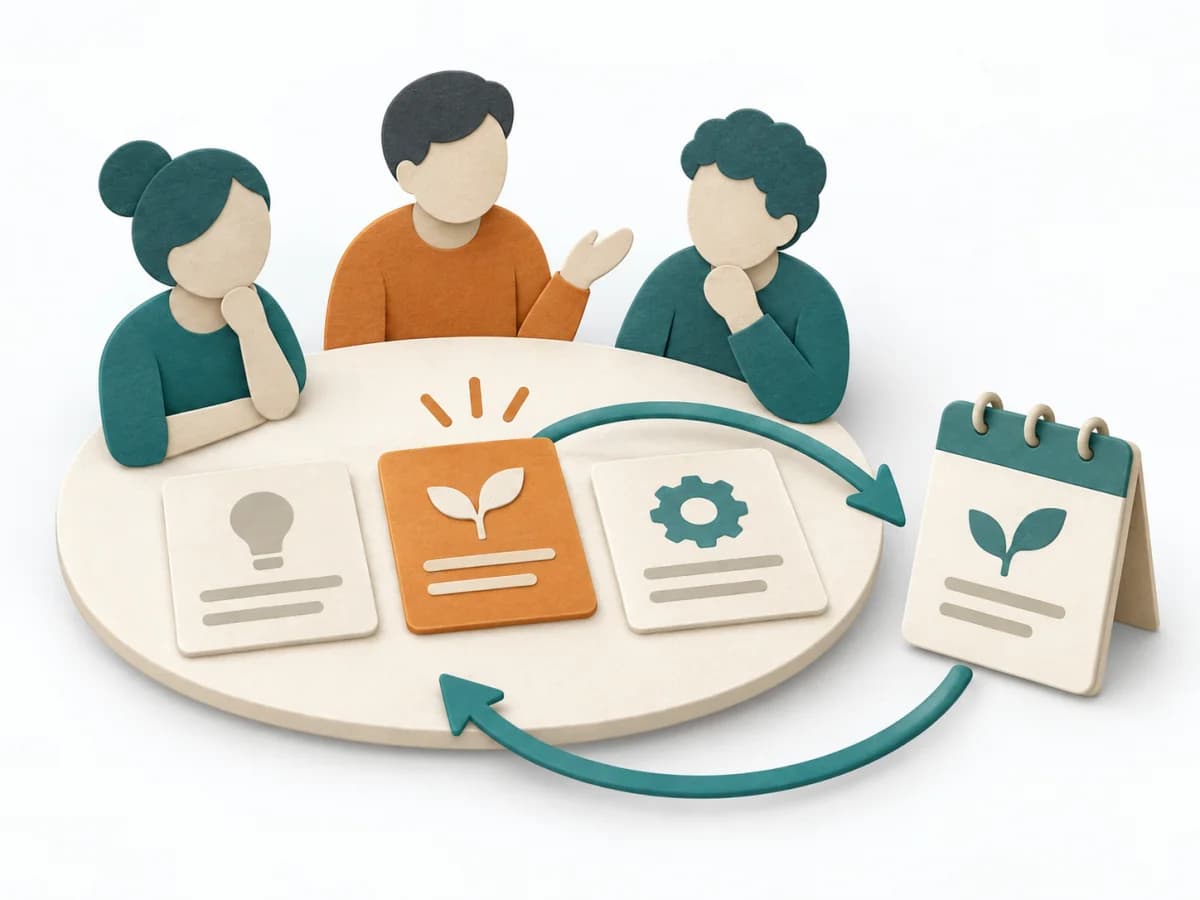 Agile Sprint Retrospective |  Knowledge Modeling Feynman Technique |  Operations After-Action Review | 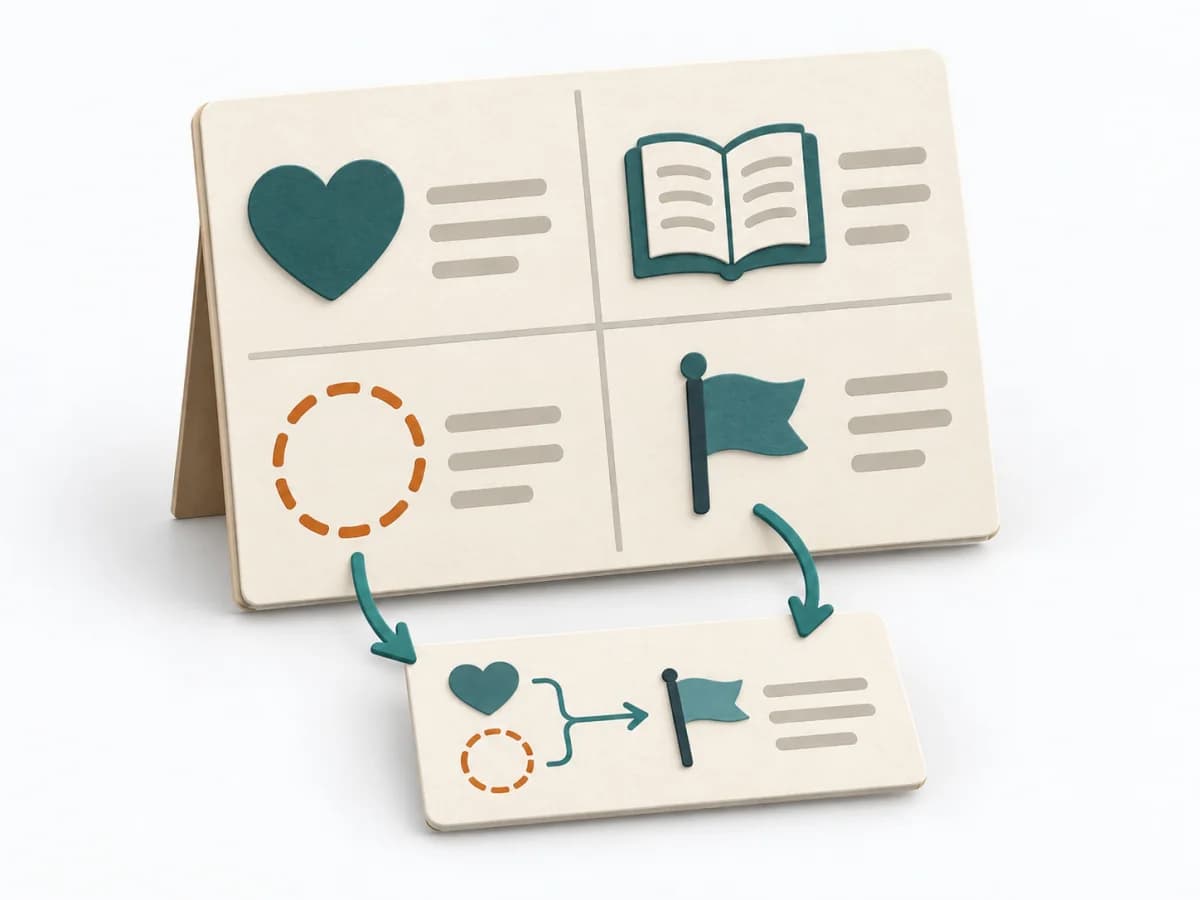 Agile 4Ls Retrospective |
|---|---|---|---|---|
Purposedifferent | When a sprint is over and friction shouldn't simply be carried forward, it opens the view onto collaboration and patterns. It creates space to see causes and changes together. | The Feynman Technique checks understanding by explaining a topic so that it stays easy for others to understand. It makes knowledge gaps visible before they become costly in everyday work. | After missions or project phases with unclear outcomes, the method makes visible what actually happened and what can be learned from it. It separates course, effect, and causes so experience turns into solid improvement. | When a sprint should not only be assessed but also learned from, it captures experience in clear learning categories. It records what worked, what's missing, and what should run differently next time. |
Complexitysame | Low | Low | Low | Low |
Timedifferent | Up to 3 hours for a one-month Sprint; shorter Sprints are usually shorter | 20-60 min | 20-45 min | 45–75 min |
Participantsdifferent | Scrum Team | 1 | 3-12 | Team members involved |
Formatdifferent | Workshop | Async | Workshop + async | Workshop |
Outputdifferent | Improvement actions, Team agreements | Plain-language Explanation, Knowledge Gaps, Study Notes | Lessons learned, Action items, Event summary | 4Ls Board, Learning Themes, Improvement Actions |
Tags1 shared | RetrospectiveImprovementLearning | LearningKnowledgeUnderstanding | LearningOperationsImprovement | RetrospectiveLearningReflectionTeam |