View methods side by side.
Choose up to four methods. Add them using the search and share the comparison by copying its link.
| Criterion |  Agile Sprint Retrospective |  Product Discovery Assumption Mapping | 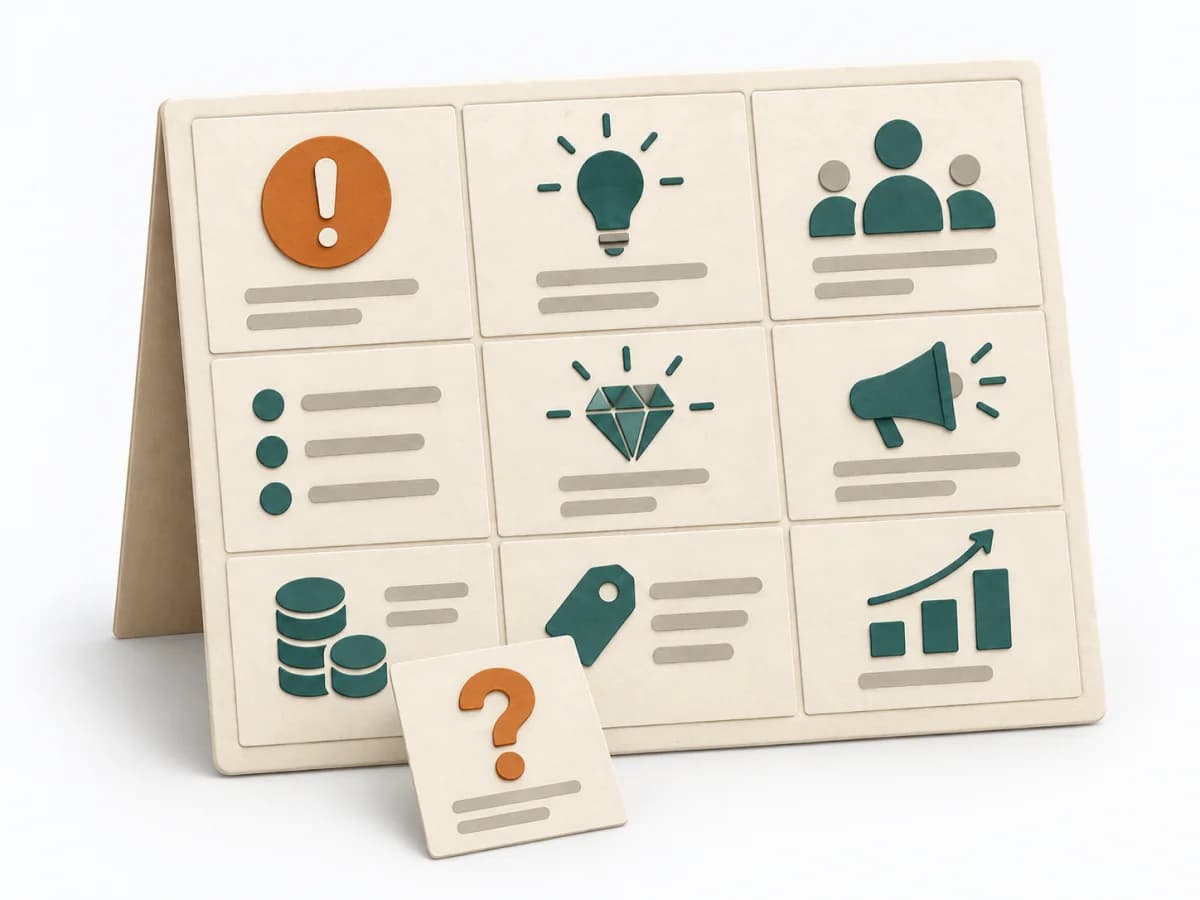 Product Strategy Lean Canvas | 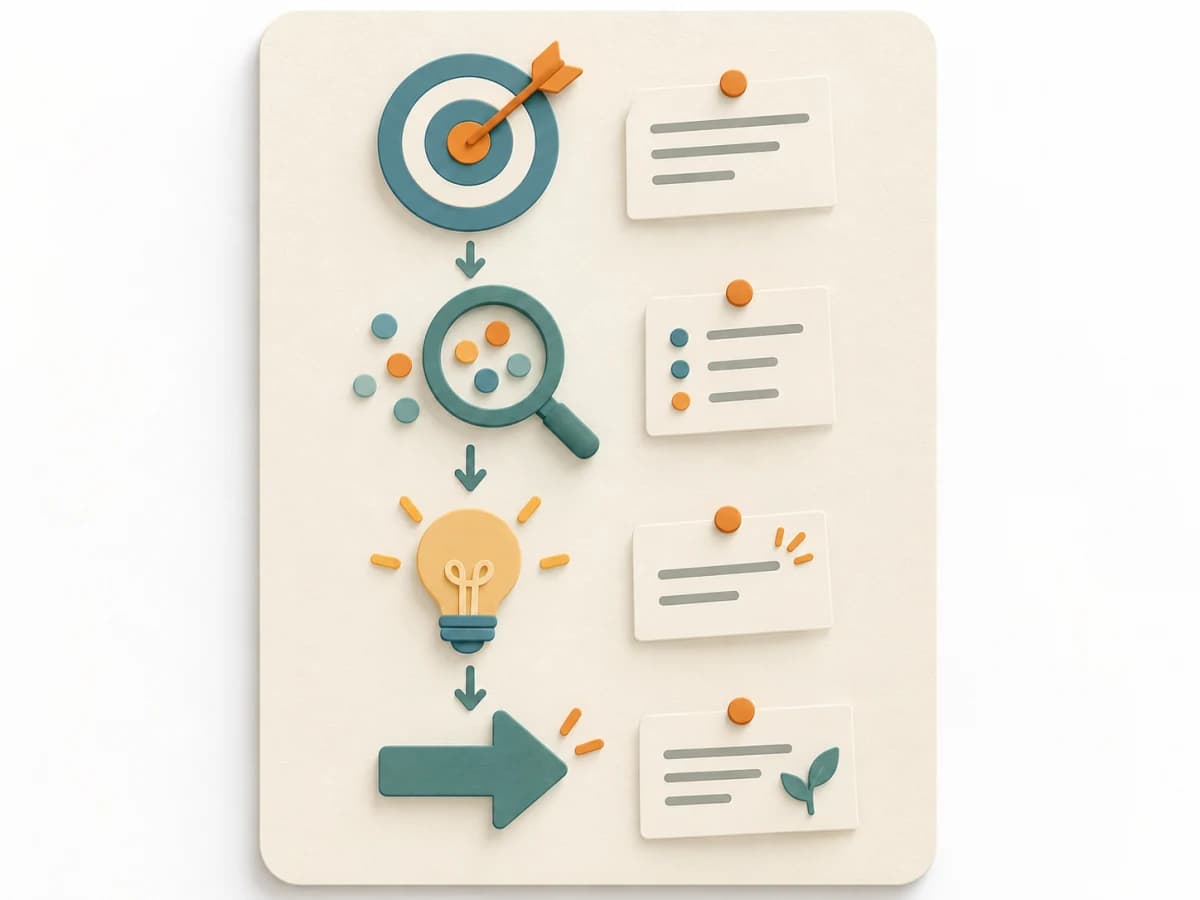 Product Discovery Learning Card |
|---|---|---|---|---|
Purposedifferent | When a sprint is over and friction shouldn't simply be carried forward, it opens the view onto collaboration and patterns. It creates space to see causes and changes together. | When assumptions still sit unordered in the room, it weighs uncertainty against leverage. It makes visible which hypotheses should be checked first. | When an early product bet still has too many open points, it brings target group, problem, and assumptions into a single view. It condenses the idea so core risks become nameable. | The Learning Card connects traceable test results to a reasoned next action while keeping the limits of the insight visible. |
Complexitydifferent | Low | Medium | Medium | Low |
Timedifferent | Up to 3 hours for a one-month Sprint; shorter Sprints are usually shorter | 45-60 min | 45-90 min | 25-40 min |
Participantsdifferent | Scrum Team | 2-8 | 1-6 | 1-5 |
Formatdifferent | Workshop | Workshop + async | Workshop + async | Workshop + async |
Outputdifferent | Improvement actions, Team agreements | Assumption map, Test backlog, Risk ranking | Lean Canvas, Core Assumptions, Experiment Backlog | Learning Card with evidence and next action |
Tagsno overlap | RetrospectiveImprovementLearning | AssumptionsRiskExperimentsValidation | StartupLeanAssumptionsBusiness model | ExperimentsValidationDiscoveryLearning |