View methods side by side.
Choose up to four methods. Add them using the search and share the comparison by copying its link.
| Criterion | 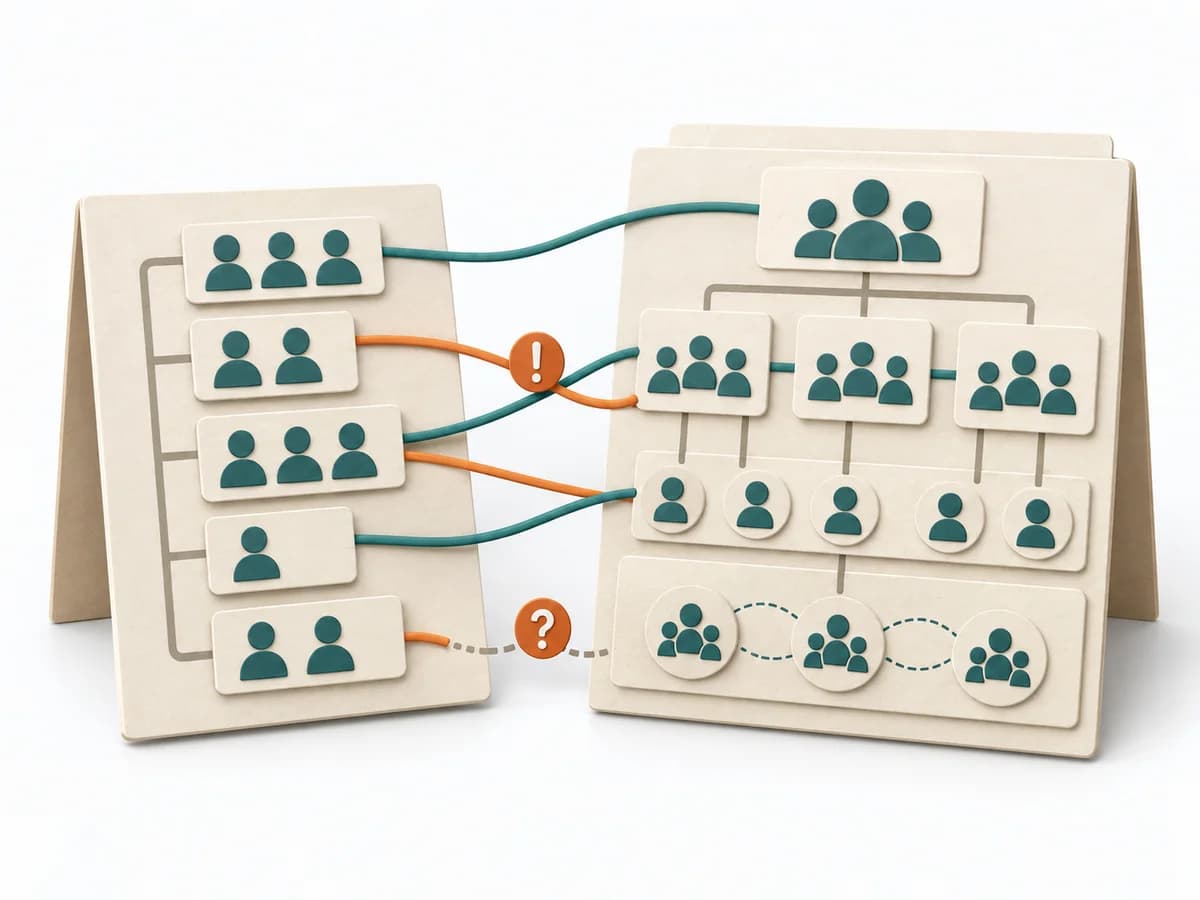 Team Design Spotify Model Mapping |  Operations Kepner-Tregoe |  Operations 5 Whys | 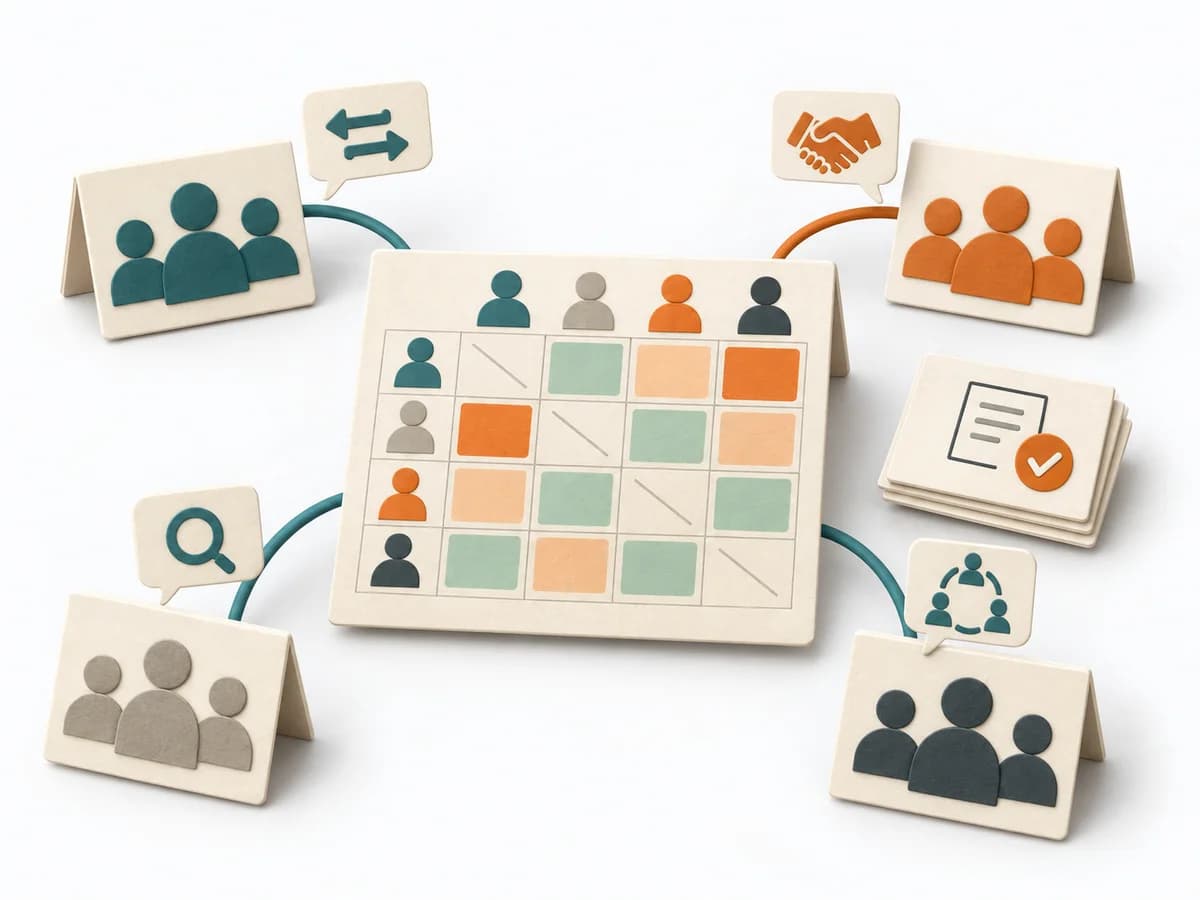 Team Design Team Topologies Interaction Modes |
|---|---|---|---|---|
Purposedifferent | When a team landscape has grown without clear grouping, it maps roles and relationships onto the Spotify model. It clarifies responsibility, interaction, and load between teams. The result is captured as a Spotify model map and action list. | For a disturbance that's hard to pin down, the method cleanly separates problem, cause, and decision. It reduces mixing when symptoms allow several interpretations. | For a single, hard-to-explain deviation, the method exposes the causal chain behind the visible symptom. It keeps the cause open until a controllable condition emerges instead of a mere description. | When several teams collaborate repeatedly, it describes the right interaction mode for each interface between them. It clarifies responsibility, interaction, and load between teams. The result is captured as an interaction heat map and pairwise agreements. |
Complexitydifferent | Medium | High | Low | Medium |
Timedifferent | 90-180 min | 2-8 h | 15-30 min | Half day |
Participantsdifferent | 5-15 | 2-8 | 2-6 | Team-Leads plus Architecture |
Formatdifferent | Workshop | Workshop + async | Workshop | Workshop |
Outputdifferent | Spotify Model Map, Action List | Problem Analysis, Decision Analysis, Risk Plan | Root cause notes, Countermeasures | Interaction Heat Map, Agreements per Pair |
Tagsno overlap | TeamOrganizationAlignmentDiagnosis | Problem solvingRoot causeDecisionOperations | Root causeIncidentLeanProblem solving | TeamAlignmentCollaborationOrganization |