View methods side by side.
Choose up to four methods. Add them using the search and share the comparison by copying its link.
| Criterion | 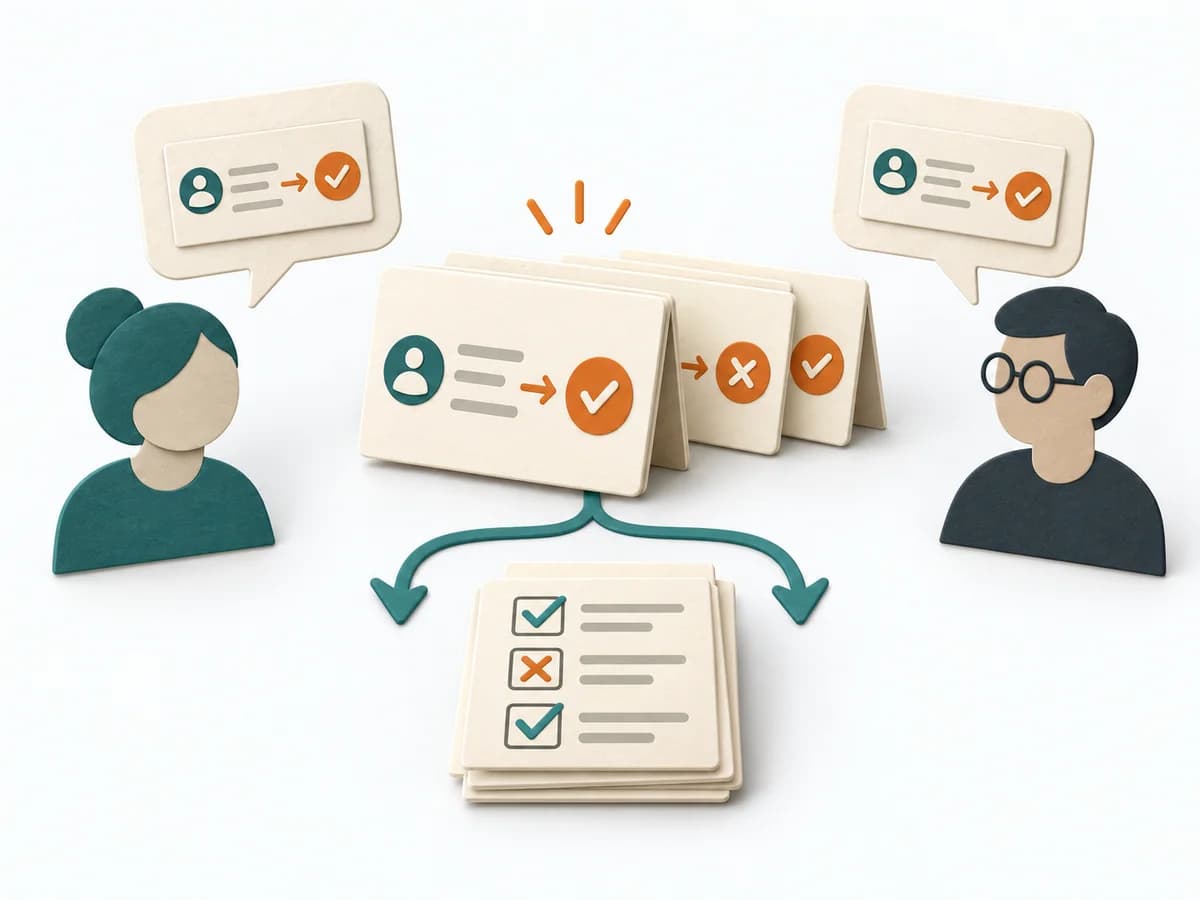 Agile Specification by Example |  Agile Story Points | 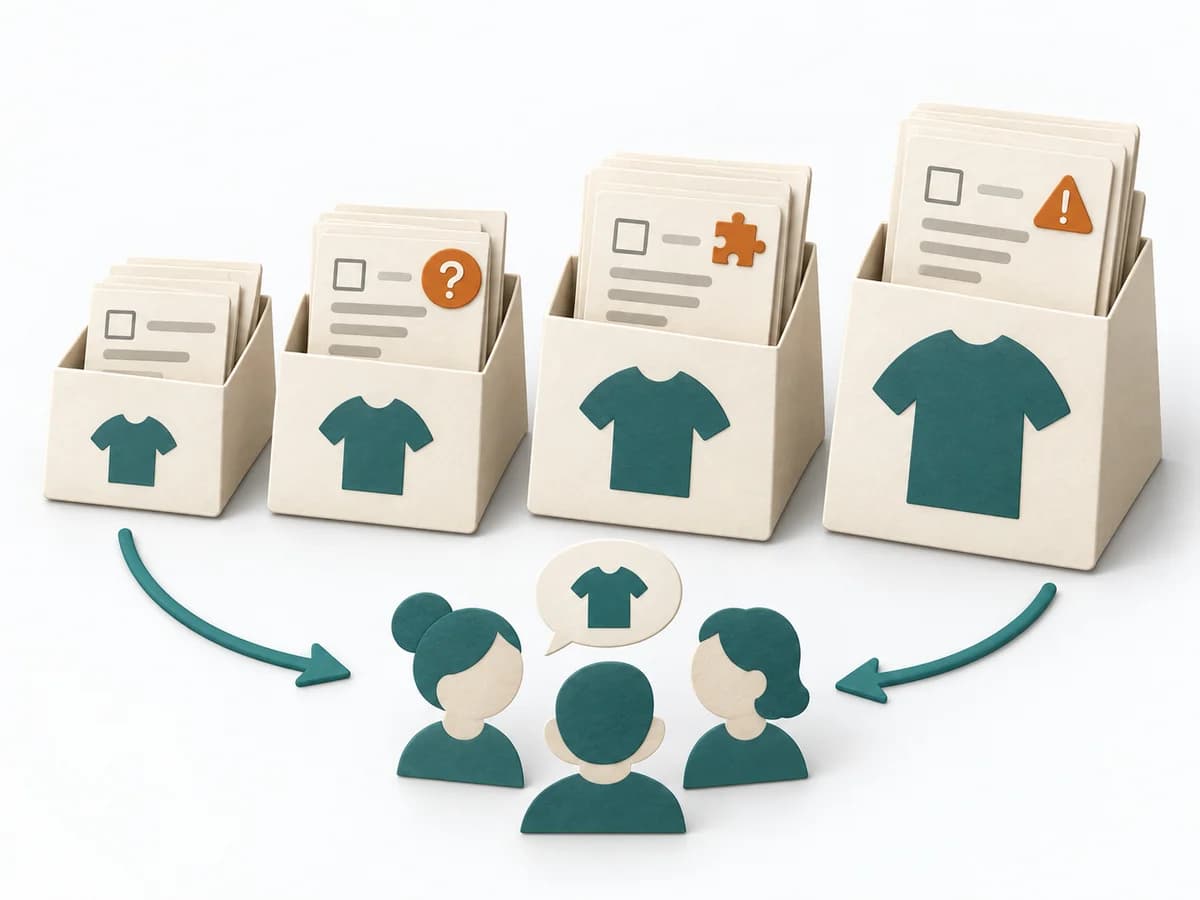 Agile T-Shirt Sizing | 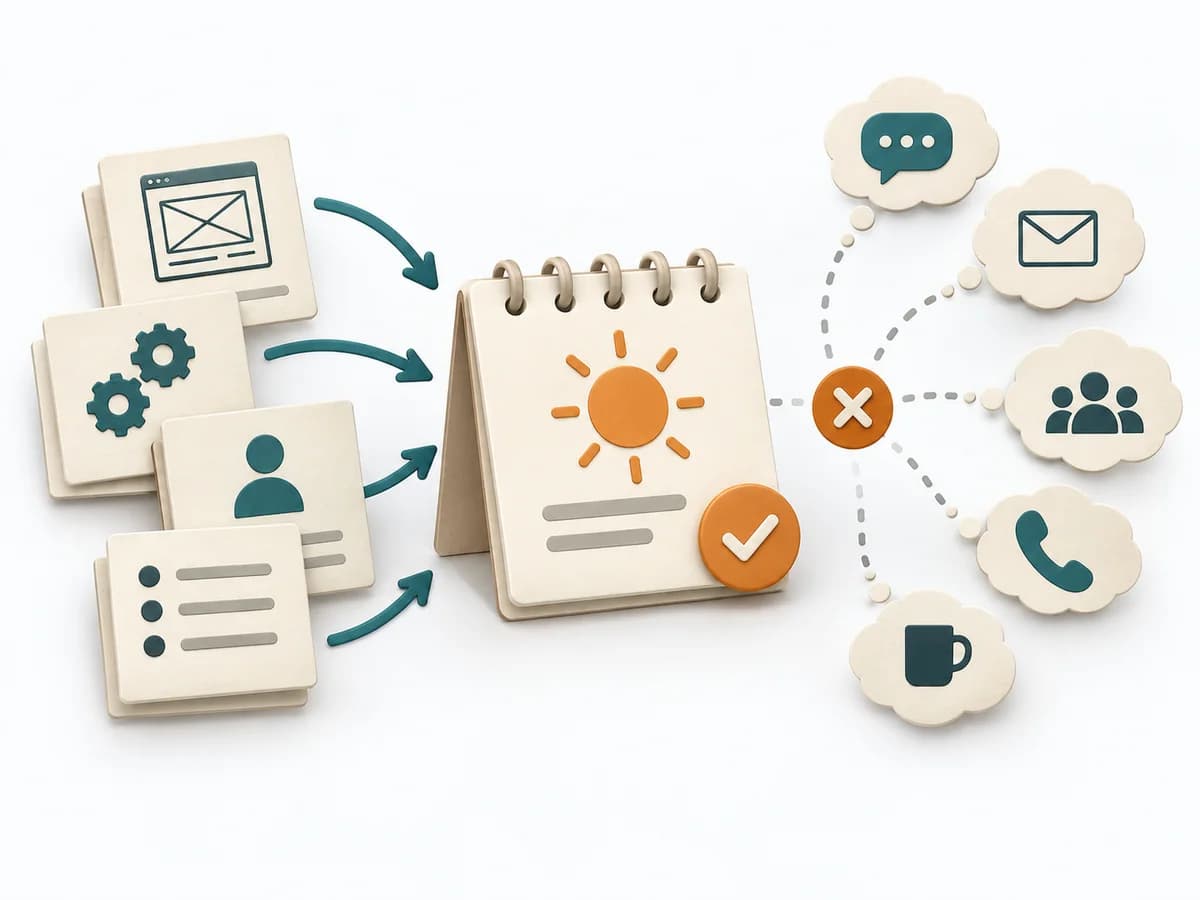 Agile Ideal Days |
|---|---|---|---|---|
Purposedifferent | When business rules need to become precise, it ties language, example, and test together. It sorts work by value, risk, and delivery ability. The result is captured as an Example Table and Acceptance Tests. | When teams want to rate complexity rather than hours, it creates a shared, relative scale. It sorts work by value, risk, and delivery ability. The result is captured as Point Estimates, Reference Stories, and Velocity Data. | When effort only needs to be classified roughly, it makes comparability more important than false precision. It helps sort work quickly into manageable sizes. | When effort needs to be thought of as real working time, it offers a simple common denominator for comparison. It sorts work by value, risk, and delivery ability. The result is captured as Ideal Day Estimates, Assumption Notes, and Capacity Caveats. |
Complexitydifferent | Medium | Medium | Low | Low |
Timedifferent | 60-90 min pro Feature | laufend, 1-5 min je Item | 15-45 min | 15-60 min |
Participantsdifferent | 3-6 | 3-9 | 2-12 | 2-9 |
Formatdifferent | Workshop | Workshop + async | Workshop + async | Workshop + async |
Outputdifferent | Example Table, Acceptance Tests | Point Estimates, Reference Stories, Velocity Data | Size Buckets, Rough Backlog Map, Split Candidates | Ideal Day Estimates, Assumption Notes, Capacity Caveats |
Tags1 shared | AgileRequirementsExamplesBehavior-Driven Development | EstimationAgileMeasurement | EstimationAgileRoadmap | EstimationEffortAgile |