View methods side by side.
Choose up to four methods. Add them using the search and share the comparison by copying its link.
| Criterion |  Agile Specification by Example |  UX Research Empathy Mapping |  Operations 5 Whys | 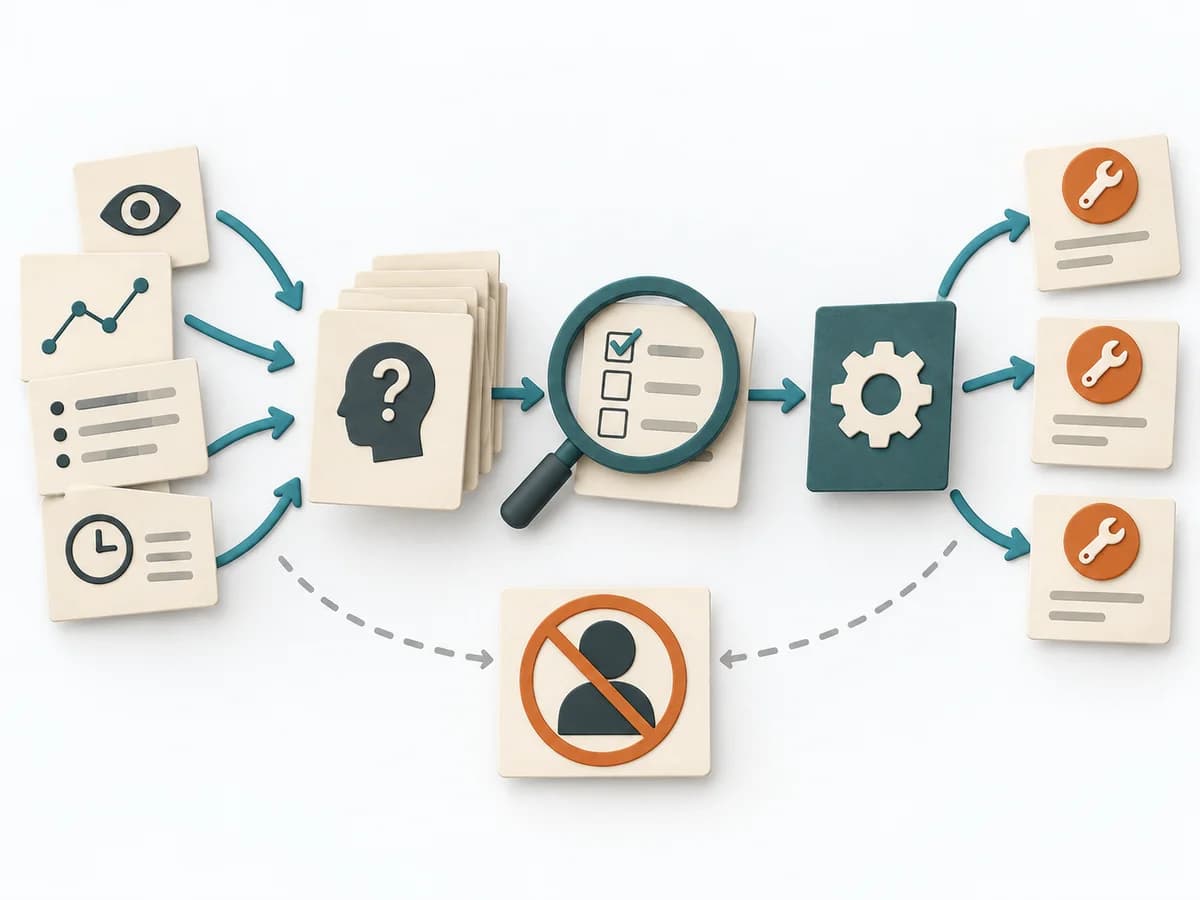 Operations Root Cause Analysis |
|---|---|---|---|---|
Purposedifferent | When business rules need to become precise, it ties language, example, and test together. It sorts work by value, risk, and delivery ability. The result is captured as an Example Table and Acceptance Tests. | When a lot is assumed about a target group but little is seen jointly, empathy mapping makes knowledge and gaps directly comparable. The picture also shows which assumptions hold up and where evidence is missing. | For a single, hard-to-explain deviation, the method exposes the causal chain behind the visible symptom. It keeps the cause open until a controllable condition emerges instead of a mere description. | When a problem keeps recurring and the cause stays unclear, the method exposes the underlying mechanism. It separates symptom, guess, and robust explanation from one another. |
Complexitydifferent | Medium | Low | Low | Medium |
Timedifferent | 60-90 min pro Feature | 30–60 min | 15-30 min | 1-4 h |
Participantsdifferent | 3-6 | 4-8 | 2-6 | 3-8 |
Formatdifferent | Workshop | Workshop | Workshop | Workshop + async |
Outputdifferent | Example Table, Acceptance Tests | Empathy Map, Assumptions List, Research Gaps | Root cause notes, Countermeasures | Problem Statement, Cause Hypotheses, Confirmed Causes, Action Plan |
Tagsno overlap | AgileRequirementsExamplesBehavior-Driven Development | SynthesisQualitativeWorkshop | Root causeIncidentLeanProblem solving | Root causeProblem solvingQualityIncident |