View methods side by side.
Choose up to four methods. Add them using the search and share the comparison by copying its link.
Selected:Specification by ExampleArchitecture Decision RecordArgument MappingAcceptance Criteria Workshop
| Criterion | 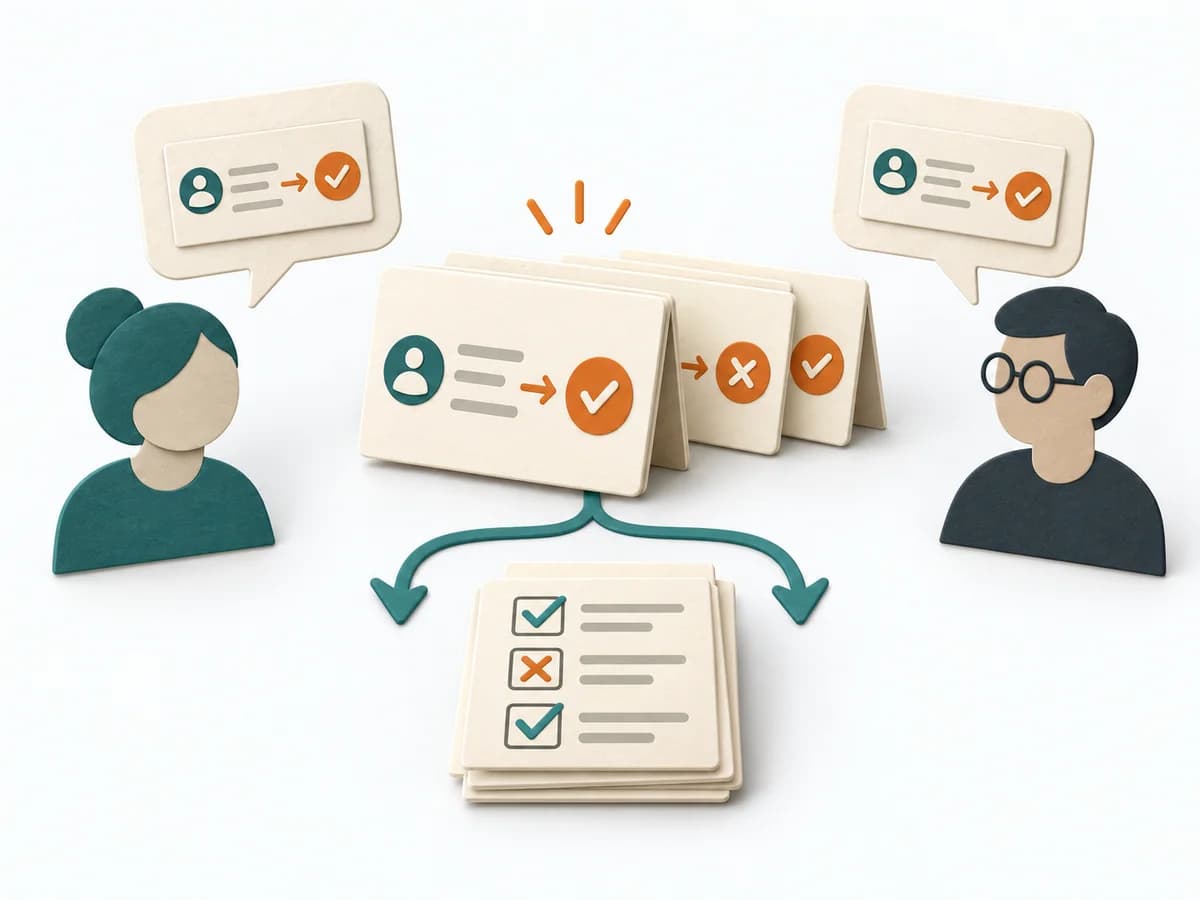 Agile Specification by Example | 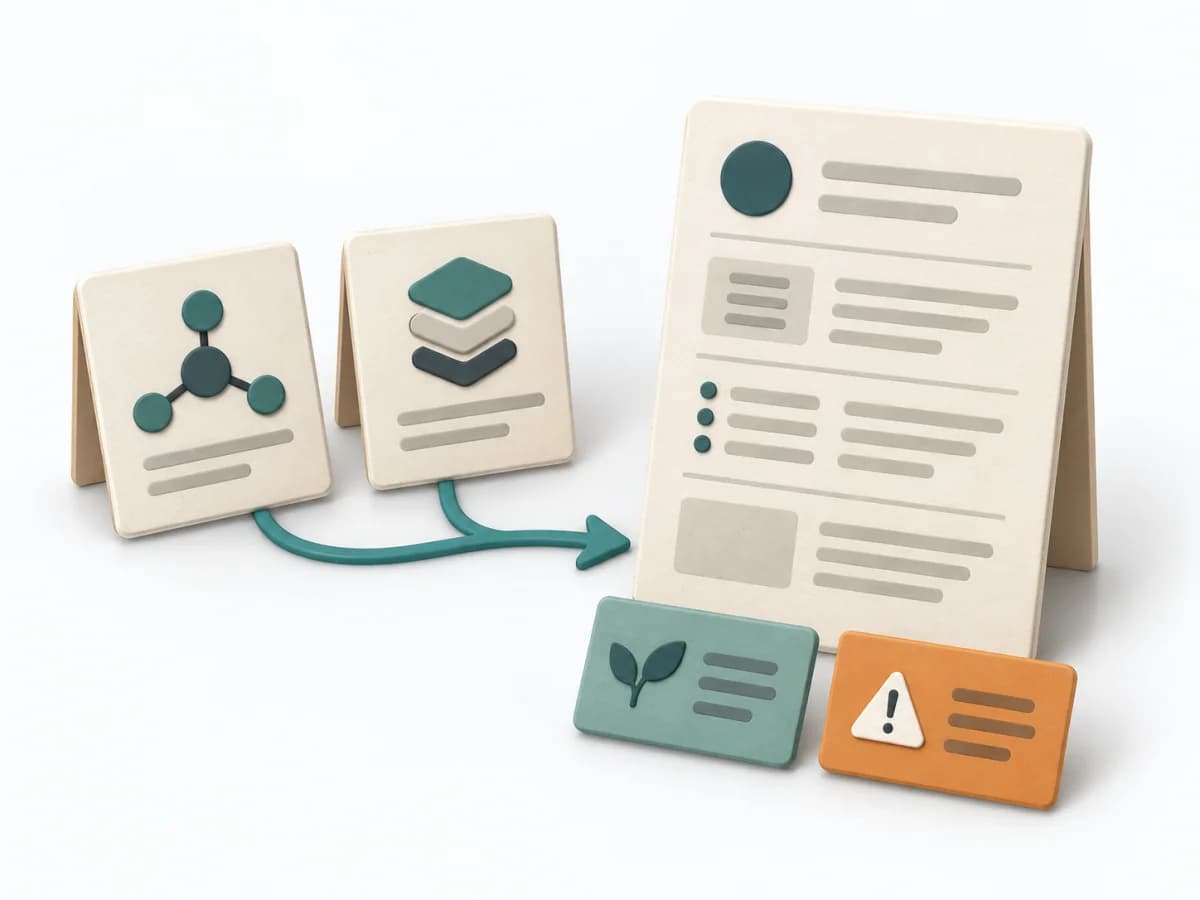 Architecture Architecture Decision Record |  Decision Making Argument Mapping | 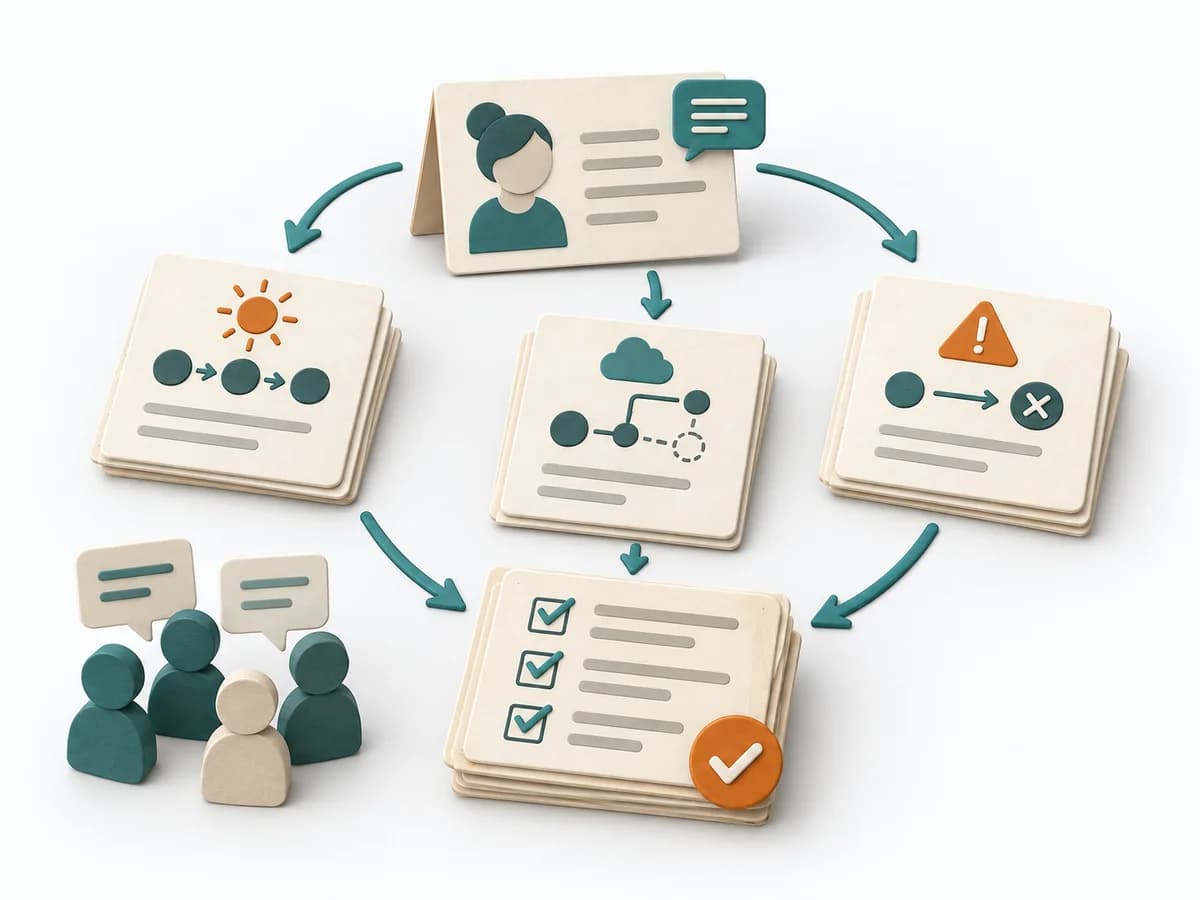 Agile Acceptance Criteria Workshop |
|---|---|---|---|---|
Purposedifferent | When business rules need to become precise, it ties language, example, and test together. It sorts work by value, risk, and delivery ability. The result is captured as an Example Table and Acceptance Tests. | An ADR permanently records an architecture decision with context, trade-offs, and consequence. It creates continuity for later changes because the decision path stays traceable. | When statements, evidence, and counterarguments get mixed up, a debate quickly loses its structure. Argument Mapping breaks a thesis down into its reasoning and makes visible what it really rests on. | When a story needs clear checkpoints before implementation, it sharpens expectation and scope together. It sorts work by value, risk, and delivery ability. The result is captured as Acceptance Criteria and a Story Update. |
Complexitydifferent | Medium | Low | Medium | Low |
Timedifferent | 60-90 min pro Feature | 15-45 min | 1-3 h | 20-40 min pro Story |
Participantsdifferent | 3-6 | 1-3 | 1-8 | 3-6 |
Formatdifferent | Workshop | Async | Workshop + async | Workshop |
Outputdifferent | Example Table, Acceptance Tests | ADR File, Decision Log, Rationale | Argument Map, Evidence Gaps, Decision Rationale | Acceptance Criteria, Story Update |
Tagsno overlap | AgileRequirementsExamplesBehavior-Driven Development | ArchitectureRationaleDocumentationGovernance | SensemakingDecisionRationale | AgileRequirementsRefinementBehavior-Driven Development |