View methods side by side.
Choose up to four methods. Add them using the search and share the comparison by copying its link.
| Criterion | 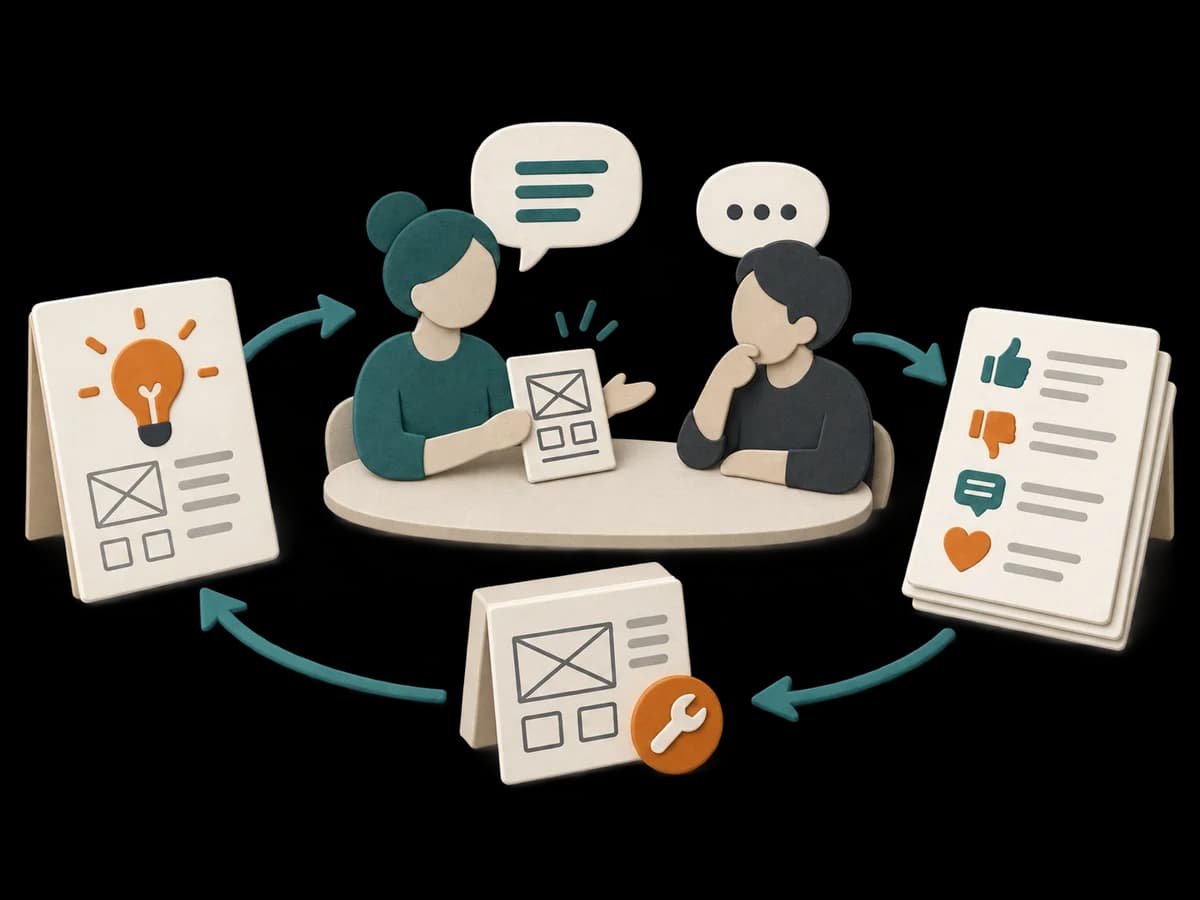 Product Discovery Solution Interview |  UX Research Surveys | 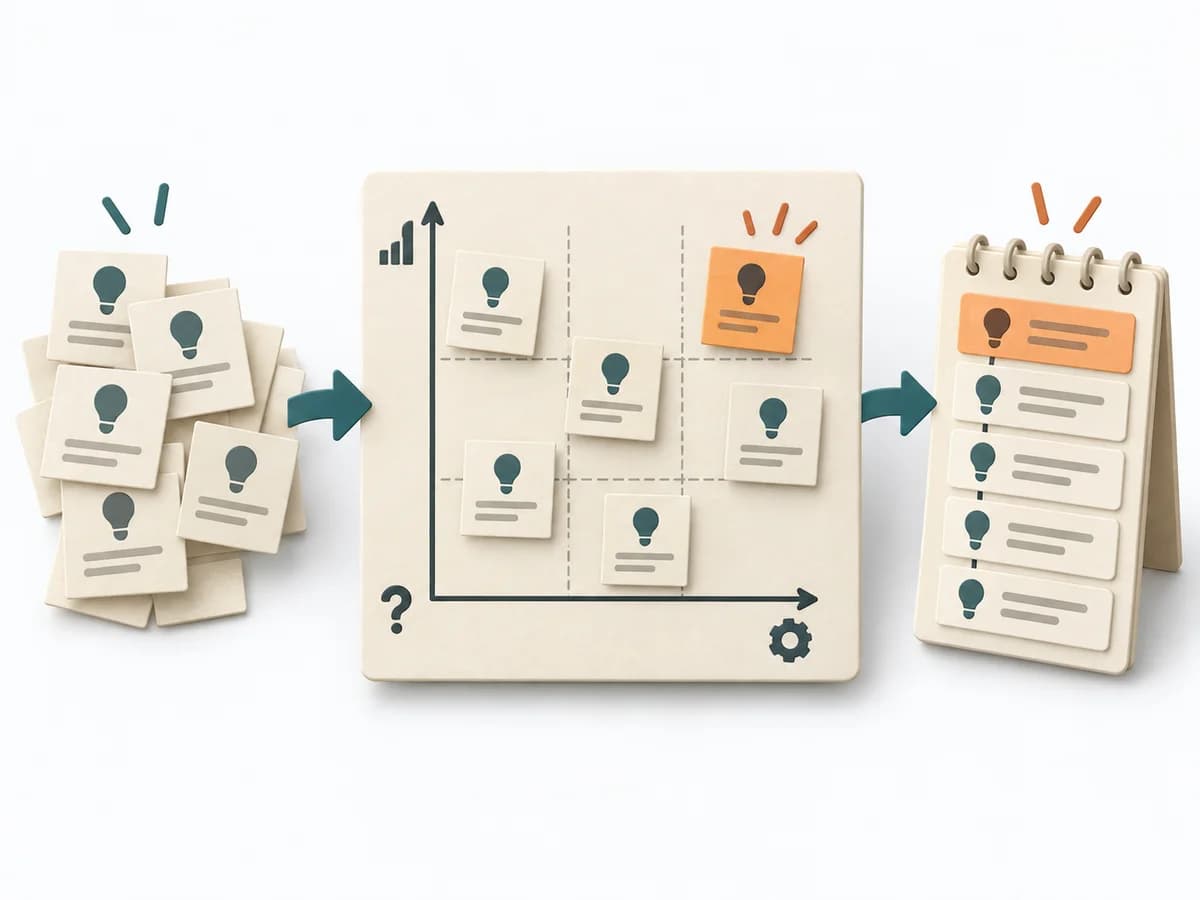 Product Discovery Hypothesis Prioritization Canvas | 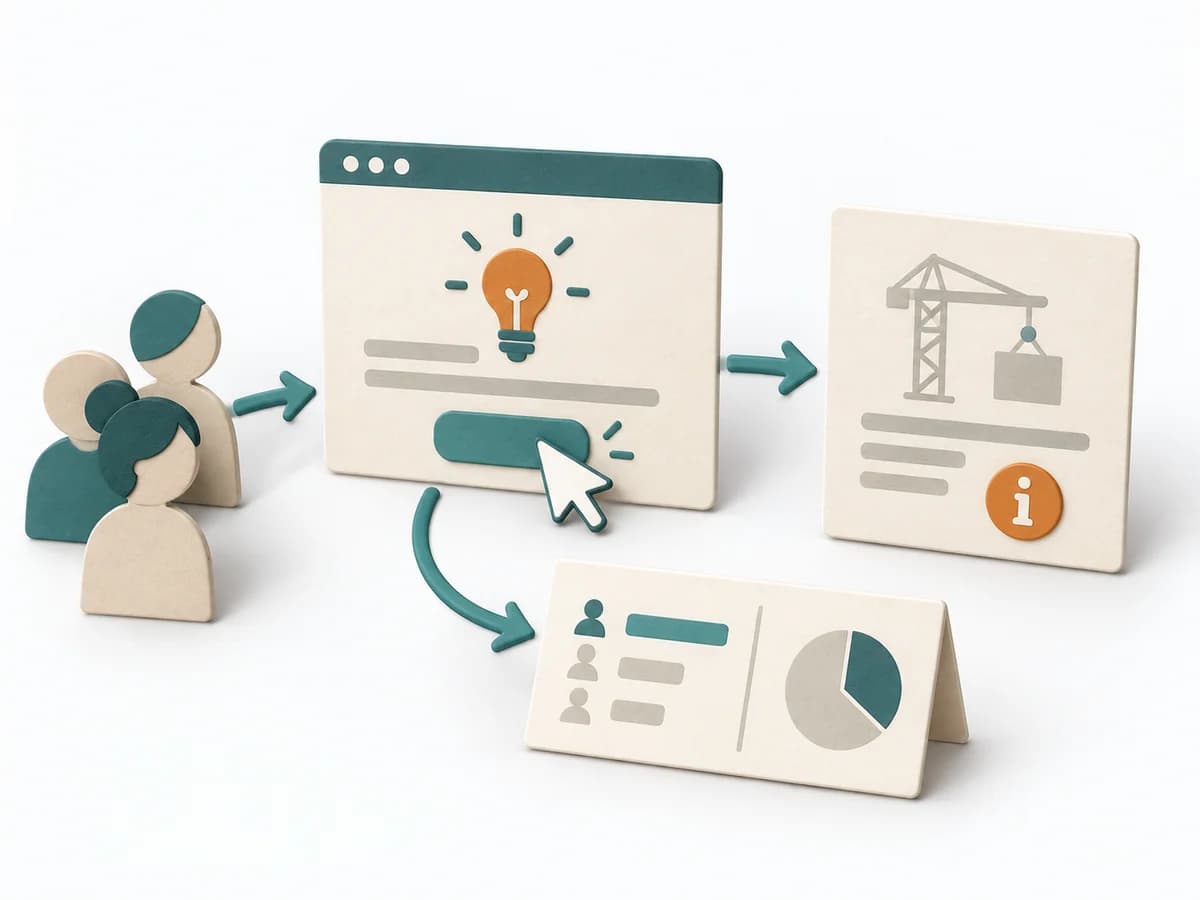 Product Discovery Fake Door Test |
|---|---|---|---|---|
Purposedifferent | When a solution idea is already on the table, it checks how it is understood and evaluated. It looks for resonance, objections, and missing fit early in the conversation. | When a topic needs to be validated broadly and many people can answer the same question, surveys gather structured feedback in a scalable form. Answers become comparable and segmentable instead of remaining merely anecdotal. | When many hypotheses compete for attention, it brings order to their learning sequence and importance. It separates problem, assumption, solution, and evidence. The result is captured as a prioritization canvas and a hypothesis backlog. | When demand is still unclear, it measures interest in a feature before it is built. It separates real behavior from polite agreement and deliberately keeps build effort small. |
Complexitysame | Medium | Medium | Medium | Medium |
Timedifferent | 30-60 min je Interview | 3-14 Tage | 60-90 min | 1-5 Tage |
Participantsdifferent | 5-10 Interviews | 50+ | 3-8 | Nutzertraffic |
Formatdifferent | Workshop + async | Async | Workshop | Async |
Outputdifferent | Solution Feedback, Objection List, Validation Notes | Survey Results, Charts, Segment Insights | Prioritization Canvas, Hypothesis Backlog | Click Data, Interest Signal, Learning Decision |
Tagsno overlap | ValidationInterviewsPrototype | QuantitativeResearchValidation | ExperimentsPrioritizationDiscoveryHypothesis | ValidationExperimentsDemandDiscovery |