View methods side by side.
Choose up to four methods. Add them using the search and share the comparison by copying its link.
| Criterion | 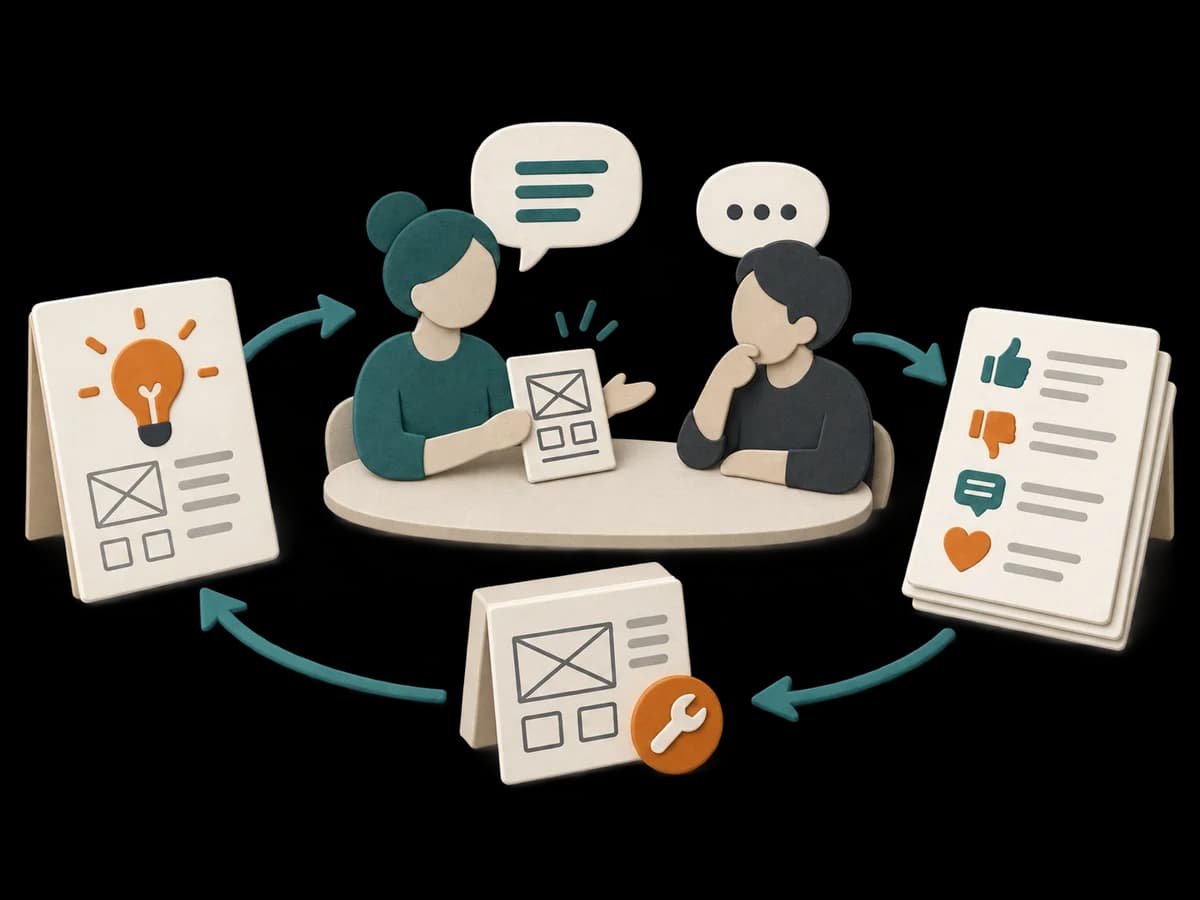 Product Discovery Solution Interview | 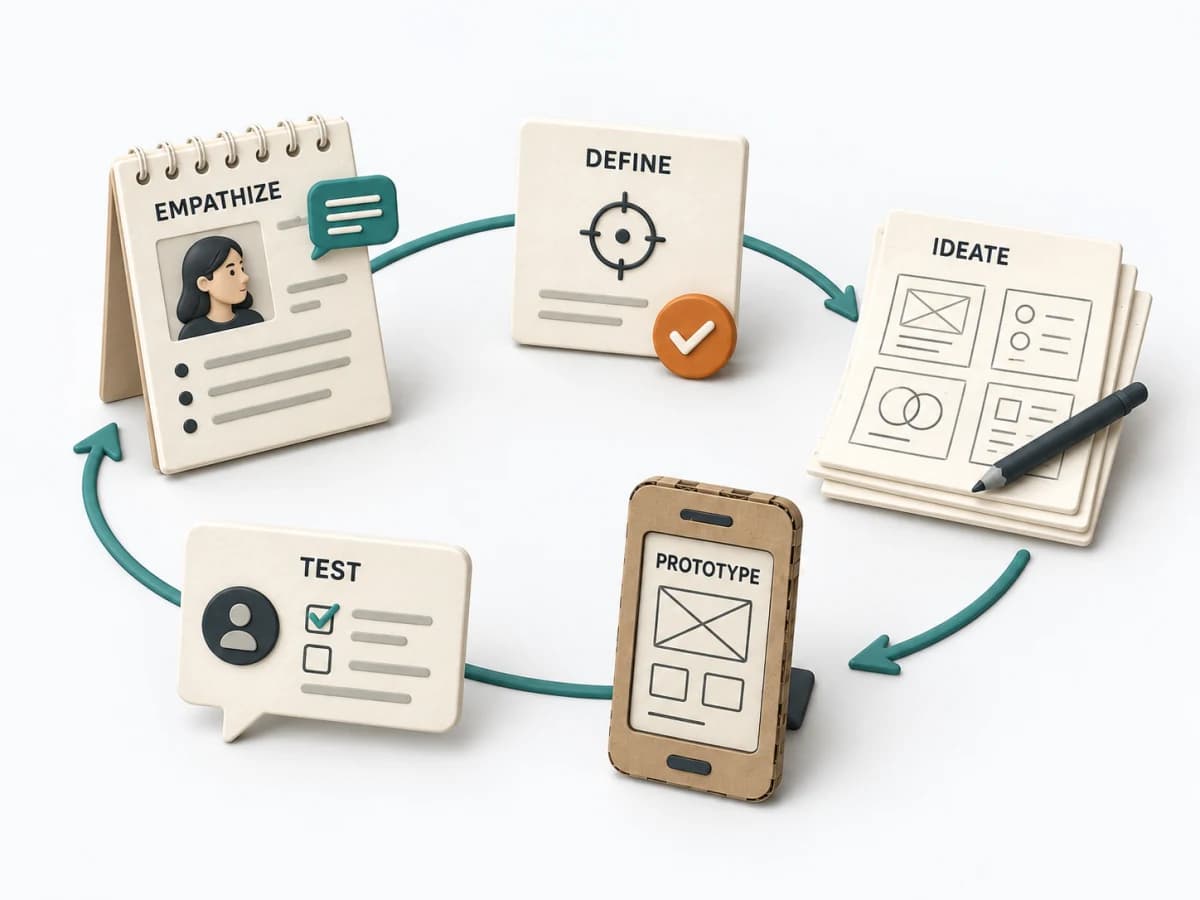 Innovation Design Thinking | 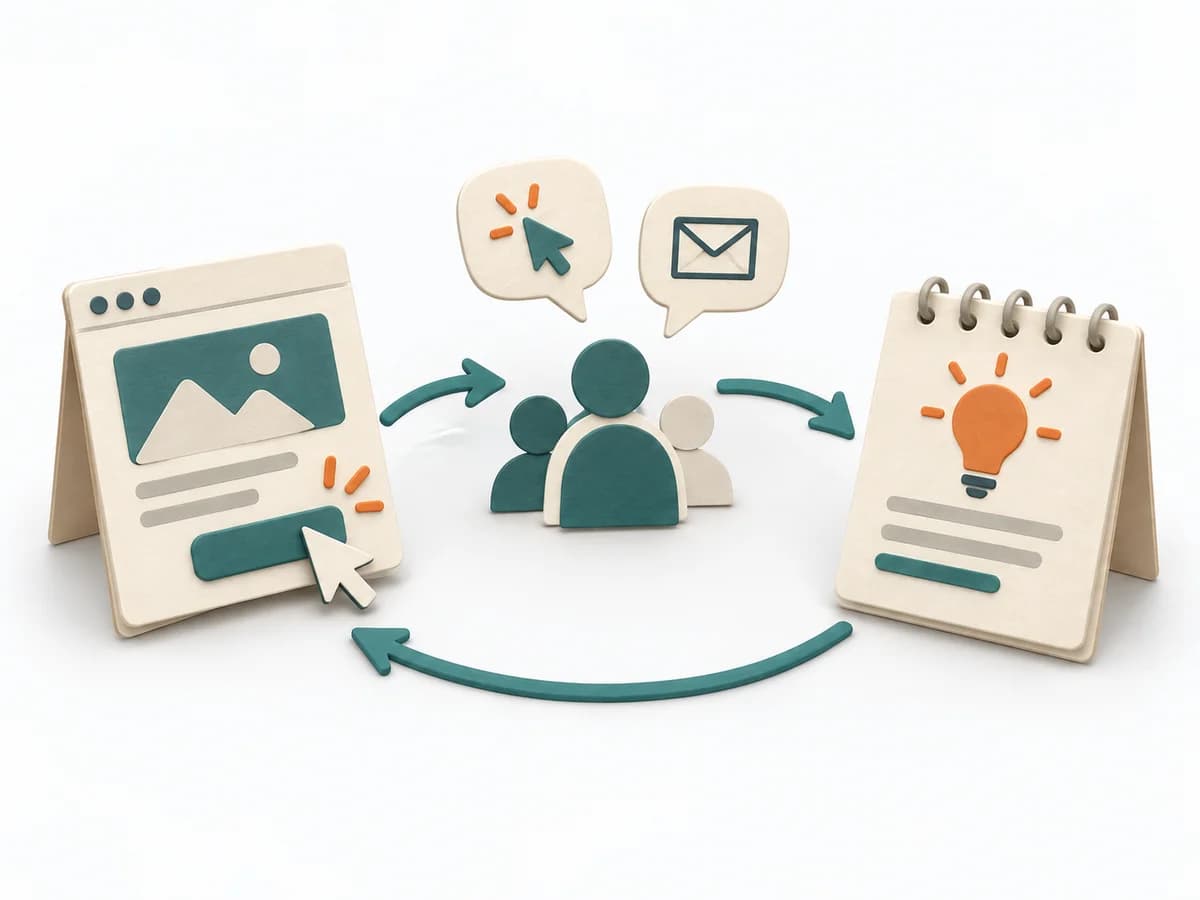 Product Discovery Smoke Test | 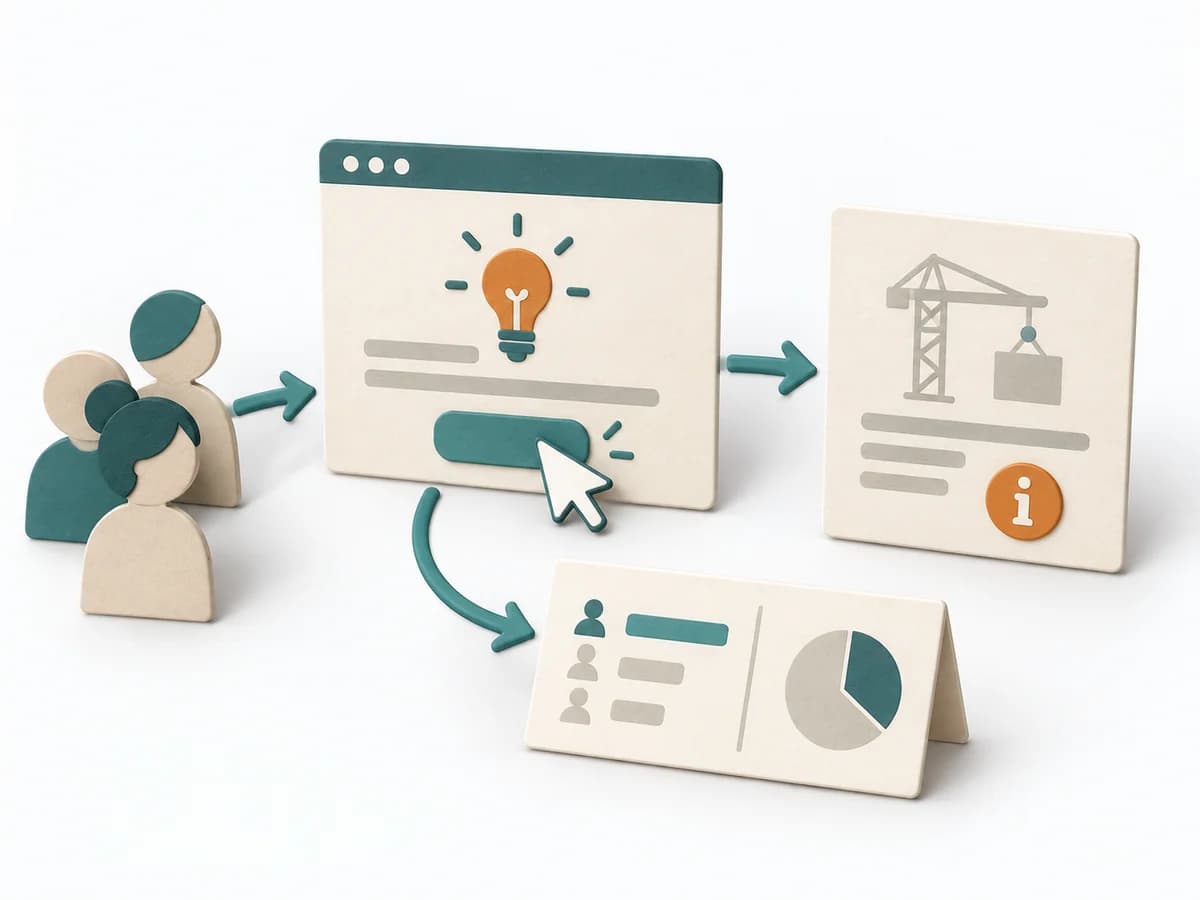 Product Discovery Fake Door Test |
|---|---|---|---|---|
Purposedifferent | When a solution idea is already on the table, it checks how it is understood and evaluated. It looks for resonance, objections, and missing fit early in the conversation. | For complex user problems with an uncertain cause, the method connects observation, interpretation, and experiment into a learning cycle. It keeps the focus on real needs and avoids premature solution language. This produces robust decisions for product and service. | When demand only needs to be roughly verified, it tests interest with minimal effort. It measures whether people would take a next step at all. | When demand is still unclear, it measures interest in a feature before it is built. It separates real behavior from polite agreement and deliberately keeps build effort small. |
Complexitydifferent | Medium | High | Low | Medium |
Timedifferent | 30-60 min je Interview | 1 Tag bis mehrere Wochen | 1-5 Tage | 1-5 Tage |
Participantsdifferent | 5-10 Interviews | 4-10 | Nutzertraffic | Nutzertraffic |
Formatdifferent | Workshop + async | Workshop | Async | Async |
Outputdifferent | Solution Feedback, Objection List, Validation Notes | Problem Statement, Prototype, Test Learnings | Interest Metrics, Conversion Signal, Learning Note | Click Data, Interest Signal, Learning Decision |
Tagsno overlap | ValidationInterviewsPrototype | InnovationPrototypeResearch | ValidationExperimentsDemandGrowth | ValidationExperimentsDemandDiscovery |