View methods side by side.
Choose up to four methods. Add them using the search and share the comparison by copying its link.
| Criterion | 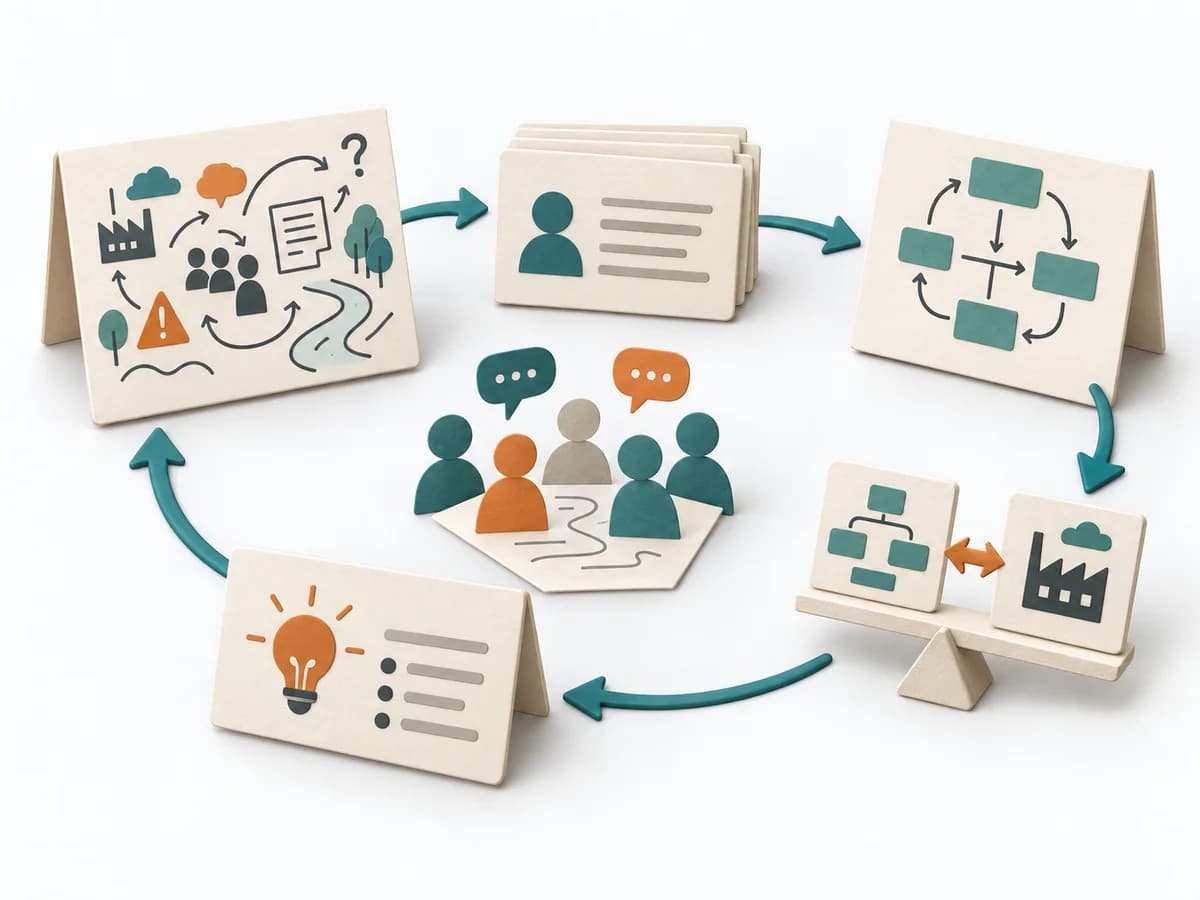 Systems Thinking Soft Systems Methodology |  Facilitation Stakeholder Mapping |  Facilitation Alignment Mapping |  Facilitation Power Interest Grid |
|---|---|---|---|---|
Purposedifferent | Soft Systems Methodology helps explore unclear or politically charged problems systematically. Instead of forcing a quick answer, the method builds a shared understanding of perspectives and room for action. | When an initiative depends on many people, interests, and power dynamics, Stakeholder Mapping systematically orders the environment. It shows who influences, who is affected, and where relationship management or safeguarding matters first. | When several people work toward one goal but hold different mental maps, Alignment Mapping makes the discrepancies visible. It arranges goals, assumptions, and priorities so shared direction becomes verifiable. | When many stakeholders compete for attention at once, the Power Interest Grid sorts them by influence and stake. It turns individual contributions into a visible selection. The result is captured as a Power Interest Grid and a stakeholder-specific strategy. |
Complexitydifferent | High | Low | Medium | Low |
Timedifferent | 0.5-3 Tage | 60–90 min | 1-2 h | 30-60 min |
Participantsdifferent | 5-15 | 2-8 | 4-12 | 2-8 |
Formatdifferent | Workshop | Workshop + async | Workshop | Workshop |
Outputdifferent | Rich Picture, Root Definitions, Conceptual Models, Change Agenda | Stakeholder Map, Engagement Plan, Risk Notes | Alignment Map, Open Issues, Decision Questions | Power Interest Grid, Strategy per Stakeholder |
Tagsno overlap | Soft systemsComplexitySensemakingSystems thinking | StakeholdersAlignmentFacilitationChange | AlignmentStakeholdersStrategyFacilitation | StakeholdersFacilitationAlignmentPlanning |