View methods side by side.
Choose up to four methods. Add them using the search and share the comparison by copying its link.
Selected:Soft Systems MethodologySAAM (Software Architecture Analysis Method)Future Reality TreeATAM (Architecture Tradeoff Analysis Method)
| Criterion | 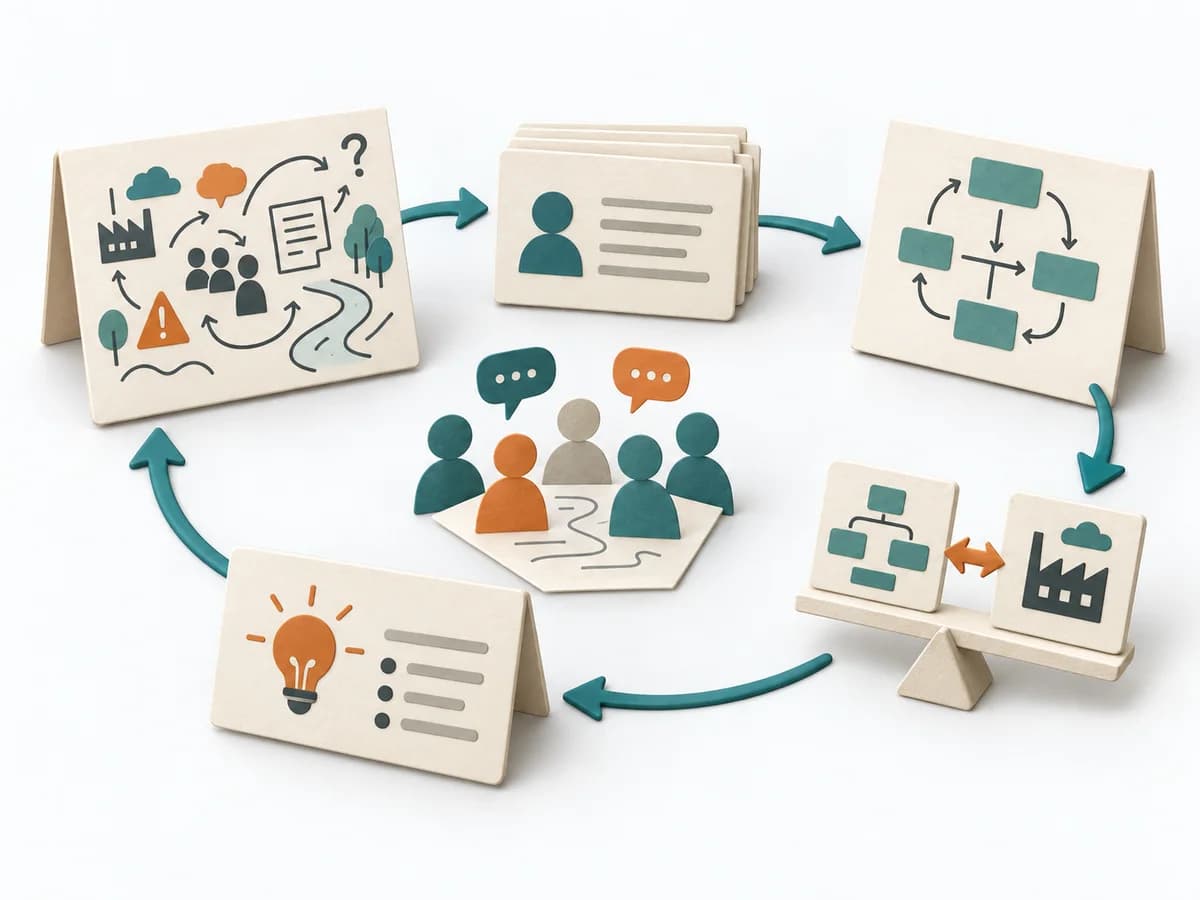 Systems Thinking Soft Systems Methodology |  Architecture SAAM (Software Architecture Analysis Method) | 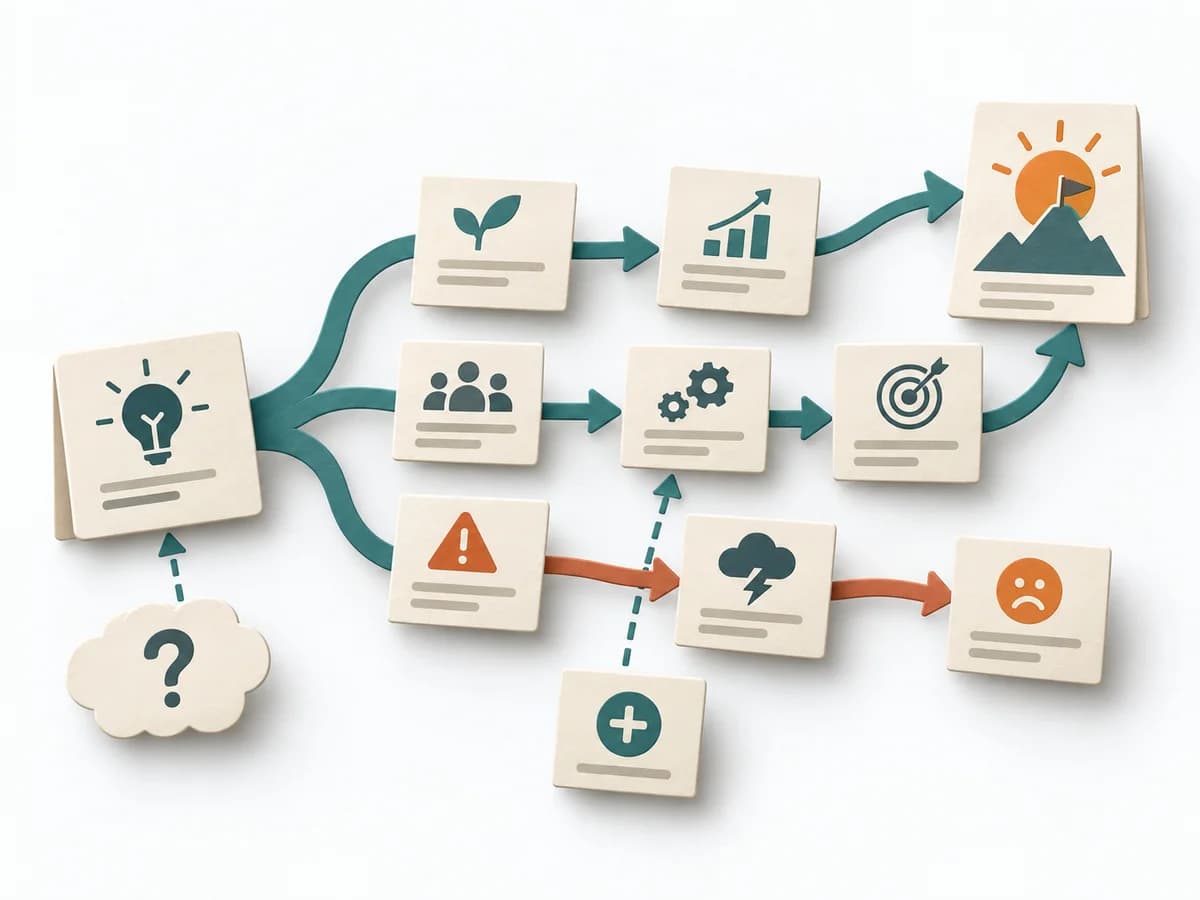 Systems Thinking Future Reality Tree |  Architecture ATAM (Architecture Tradeoff Analysis Method) |
|---|---|---|---|---|
Purposedifferent | Soft Systems Methodology helps explore unclear or politically charged problems systematically. Instead of forcing a quick answer, the method builds a shared understanding of perspectives and room for action. | SAAM helps teams judge an architecture’s suitability for selected tasks and changes. It is particularly useful for examining modifiability and comparing architecture alternatives with clear reasoning. | A Future Reality Tree shows how desired actions are meant to lead to a better system state. The method checks whether a path of change holds together logically before time flows into implementation. | ATAM helps teams weigh architecture decisions when quality goals compete. The team considers business goals, stakeholder expectations, and technical decisions together. The evaluation shows which risks need further investigation. |
Complexitysame | High | High | High | High |
Timedifferent | 0.5-3 Tage | Preparation, scenario analysis, and findings review; effort depends on scope | 2-4 h | Several meetings plus preparation and analysis; total effort depends on scope |
Participantsdifferent | 5-15 | Architecture experts and stakeholders for scenarios and weighting | 3-8 | Evaluation team, architects, and relevant stakeholders |
Formatdifferent | Workshop | Workshop + async | Workshop | Workshop + async |
Outputdifferent | Rich Picture, Root Definitions, Conceptual Models, Change Agenda | Domain functions mapped to components and connections, Quality attributes and evaluation criteria, Typical tasks and their effects on the architecture, Reasoned evaluation or comparison of alternatives | Future Reality Tree, Negative Branches, Assumption List, Improved Injections | Prioritized quality scenarios in a utility tree, Architecture risks with reasoning and assumptions, Sensitivity and trade-off points, Findings report with open investigations |
Tagsno overlap | Soft systemsComplexitySensemakingSystems thinking | ArchitectureChangeAnalysisComparisonQuality | Theory of ConstraintsSystems thinkingChange | ArchitectureQualityRiskTradeoffsStakeholders |