View methods side by side.
Choose up to four methods. Add them using the search and share the comparison by copying its link.
| Criterion |  Systems Thinking Soft Systems Methodology |  Systems Thinking Polarity Mapping | 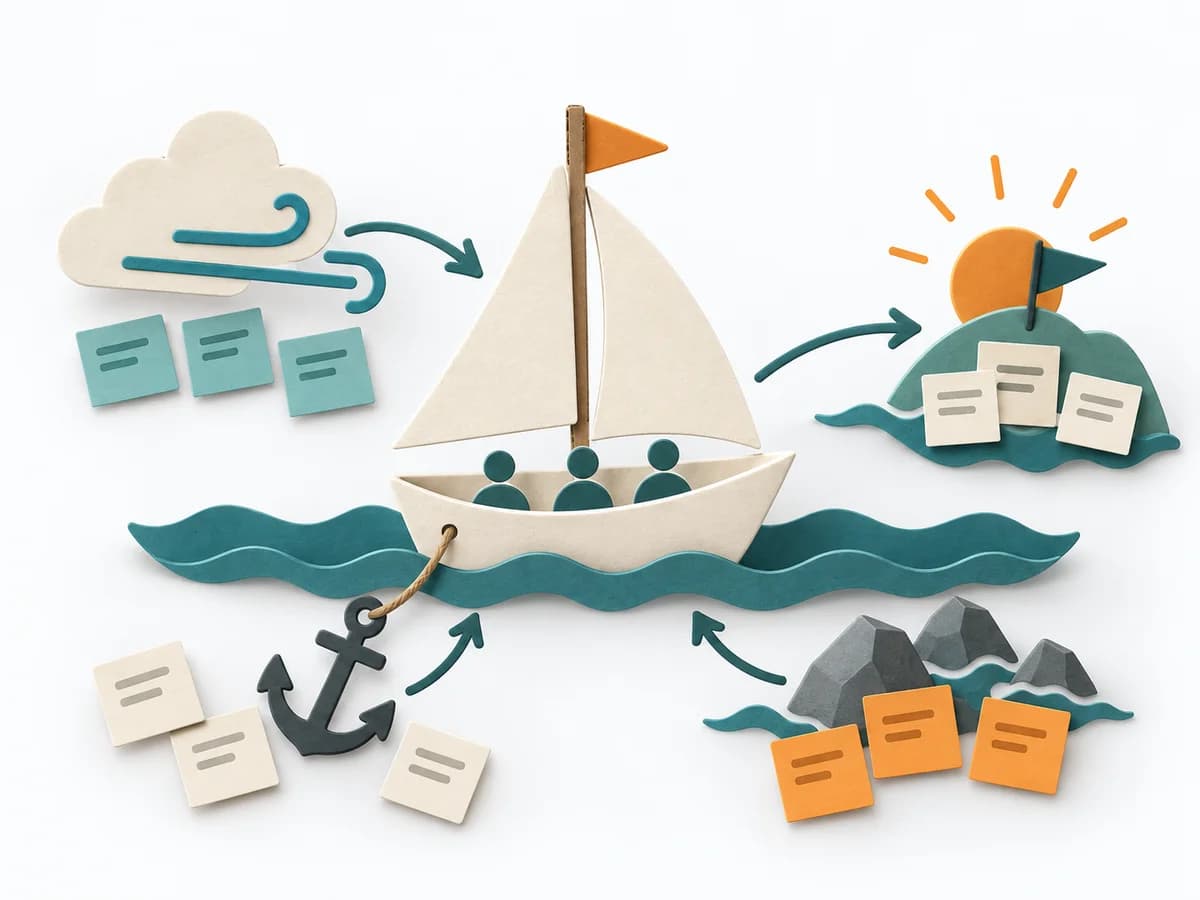 Agile Sailboat Retrospective | 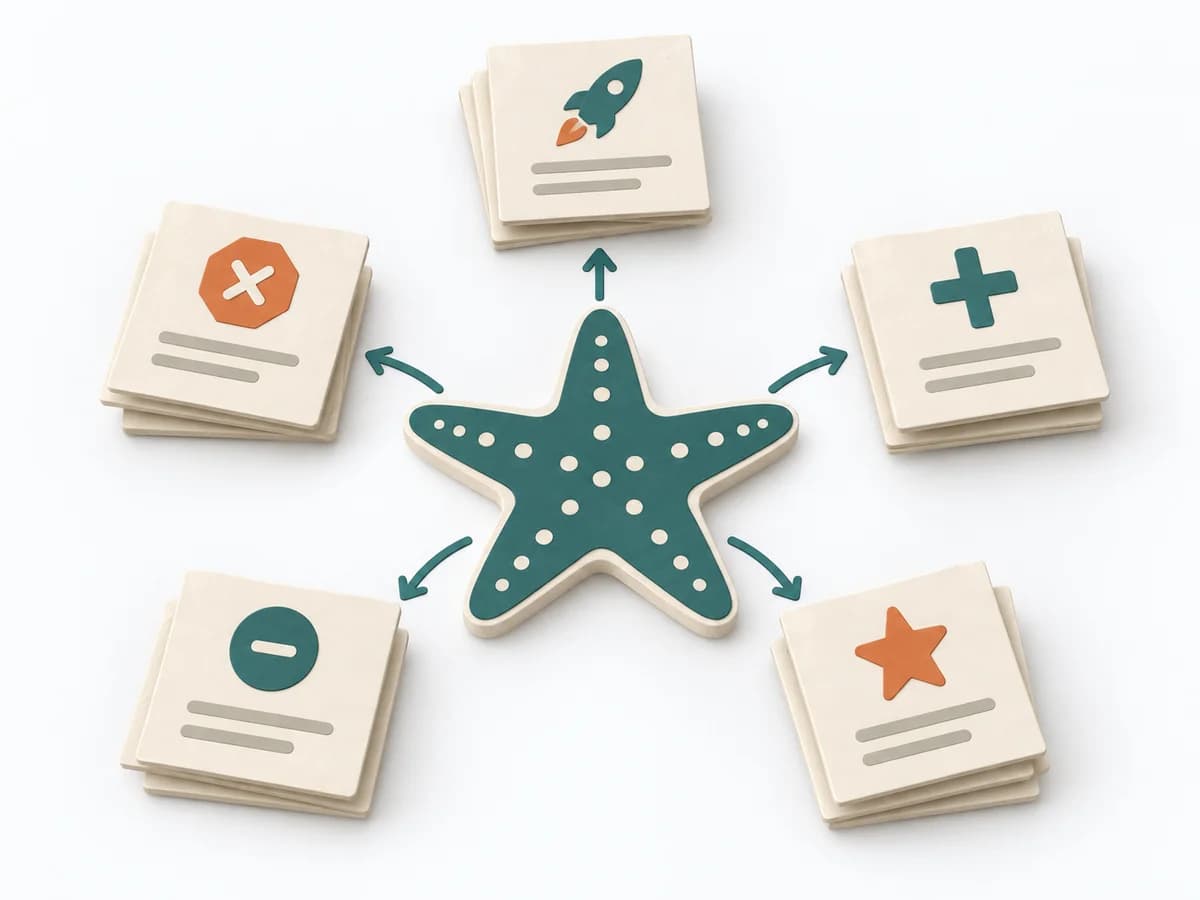 Agile Starfish Retrospective |
|---|---|---|---|---|
Purposedifferent | Soft Systems Methodology helps explore unclear or politically charged problems systematically. Instead of forcing a quick answer, the method builds a shared understanding of perspectives and room for action. | Polarity Mapping makes tensions between two opposing poles tangible, such as standardization and adaptation or control and autonomy. The method guards against making apparent either-or decisions prematurely. | When a team wants to read momentum, brakes, and risks together, it offers an easily understandable picture of the situation. It makes drive, obstacles, and headwind visible in the same picture. | When improvement options need to be sorted more finely than just start and stop, it brings observations into clear kinds of action. This makes visible what should be done more, less, newly, or continued. |
Complexitydifferent | High | Medium | Low | Low |
Timedifferent | 0.5-3 Tage | 1-2 h | 45-90 min | 45-90 min |
Participantsdifferent | 5-15 | 3-12 | 4-12 | 4-12 |
Formatsame | Workshop | Workshop | Workshop | Workshop |
Outputdifferent | Rich Picture, Root Definitions, Conceptual Models, Change Agenda | Polarity Map, Warning Signs, Balance Actions | Sailboat Board, Risks, Improvement Actions | Starfish Board, Practice Changes, Experiments |
Tagsno overlap | Soft systemsComplexitySensemakingSystems thinking | Systems thinkingTradeoffsLeadership | RetrospectiveTeamImprovement | RetrospectiveImprovementExperimentsTeam |