View methods side by side.
Choose up to four methods. Add them using the search and share the comparison by copying its link.
| Criterion | 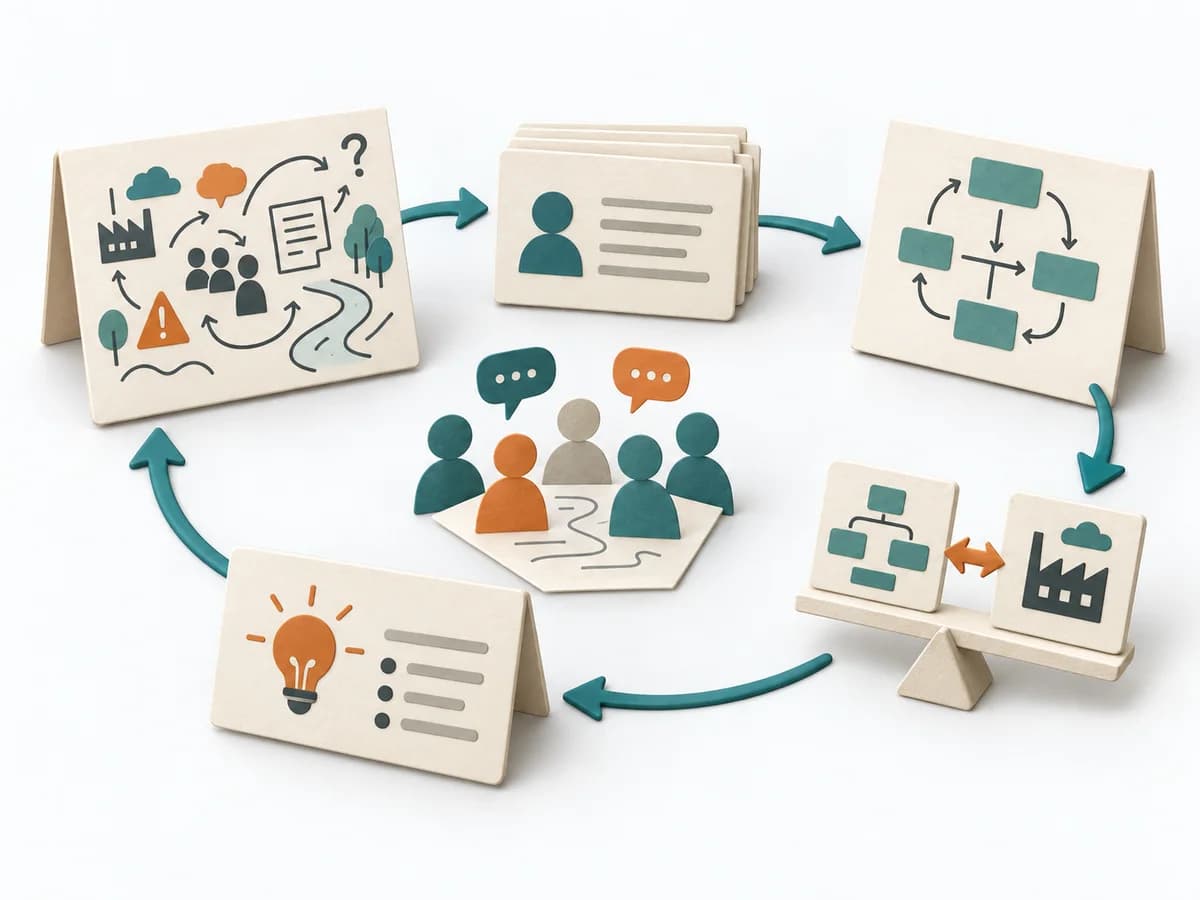 Systems Thinking Soft Systems Methodology |  Knowledge Modeling Knowledge Mapping |  Facilitation Question Burst |  Decision Making Red Teaming |
|---|---|---|---|---|
Purposedifferent | Soft Systems Methodology helps explore unclear or politically charged problems systematically. Instead of forcing a quick answer, the method builds a shared understanding of perspectives and room for action. | Knowledge Mapping makes knowledge, gaps, and transfer paths visible across a field. It fits when expertise should not just exist but also be findable and transferable. | When a problem gets covered up too quickly with answers, Question Burst puts the better question at the center. The format opens the thinking space before the group commits to an interpretation. | For strategic decisions with high reach, agreement and gut feeling are often not enough. Red teaming brings deliberate opposition into the situation and tests where a plan breaks under real counterarguments. |
Complexitydifferent | High | Medium | Low | High |
Timedifferent | 0.5-3 Tage | 1-3 h | 15-30 min | 1-4 h |
Participantsdifferent | 5-15 | 3-12 | 2-8 | 3-8 |
Formatsame | Workshop | Workshop | Workshop | Workshop |
Outputdifferent | Rich Picture, Root Definitions, Conceptual Models, Change Agenda | Knowledge Map, Critical Knowledge Areas, Transfer Plan | Question List, Reframed Challenge, Learning Prompts | Challenge Findings, Risk Register, Mitigation Plan |
Tagsno overlap | Soft systemsComplexitySensemakingSystems thinking | KnowledgeMappingRisk | QuestionsReframingFacilitationSensemaking | RiskDecisionSensemaking |