View methods side by side.
Choose up to four methods. Add them using the search and share the comparison by copying its link.
| Criterion |  Systems Thinking Soft Systems Methodology |  Knowledge Modeling Concept Mapping |  Decision Making Force Field Analysis | 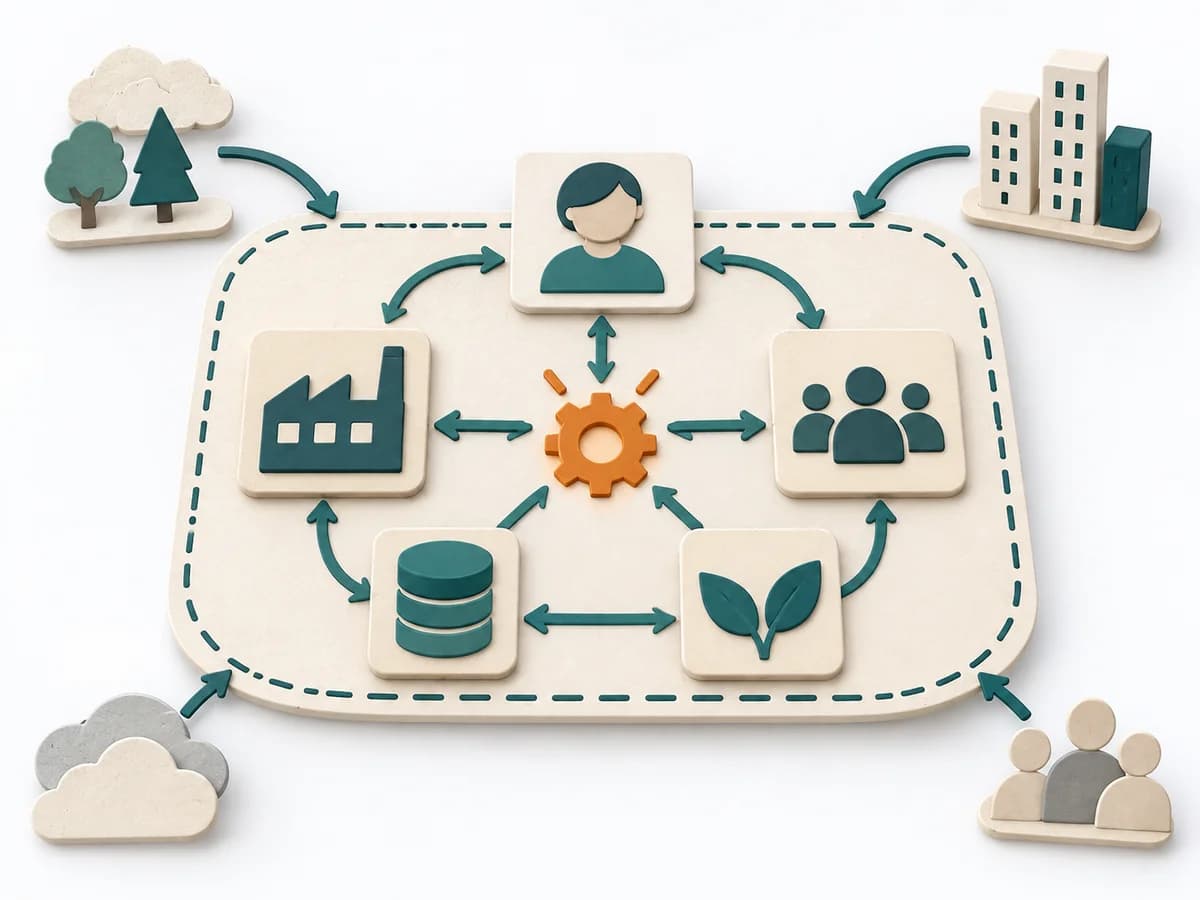 Systems Thinking Systems Mapping |
|---|---|---|---|---|
Purposedifferent | Soft Systems Methodology helps explore unclear or politically charged problems systematically. Instead of forcing a quick answer, the method builds a shared understanding of perspectives and room for action. | Concept Mapping arranges terms and relationships in a network that makes subject-matter connections tangible. It fits when a topic needs to be understood structurally rather than linearly. | In change initiatives, supporting and restraining forces sit at the table at the same time. Force Field Analysis makes these tensions explicit and shows where change can be pushed forward by strengthening or relieving. | Systems Mapping arranges elements, relationships, and boundaries so a complex field becomes legible at a glance. The overview stabilizes the overall picture before detail work or steering begins. |
Complexitydifferent | High | Medium | Low | Medium |
Timedifferent | 0.5-3 Tage | 1-2 h | 45-90 min | 1-3 h |
Participantsdifferent | 5-15 | 1-8 | 3-12 | 3-12 |
Formatdifferent | Workshop | Workshop + async | Workshop | Workshop + async |
Outputdifferent | Rich Picture, Root Definitions, Conceptual Models, Change Agenda | Concept Map, Relationship Labels, Knowledge Gaps | Force Field Map, Change Levers, Risk Notes | System Map, Dependencies, Leverage Points |
Tagsno overlap | Soft systemsComplexitySensemakingSystems thinking | KnowledgeConceptsMappingSensemaking | ChangeDecisionStrategy | Systems thinkingMappingBoundariesChange |