View methods side by side.
Choose up to four methods. Add them using the search and share the comparison by copying its link.
| Criterion |  Systems Thinking Soft Systems Methodology |  Operations Change Analysis |  Systems Thinking Iceberg Model | 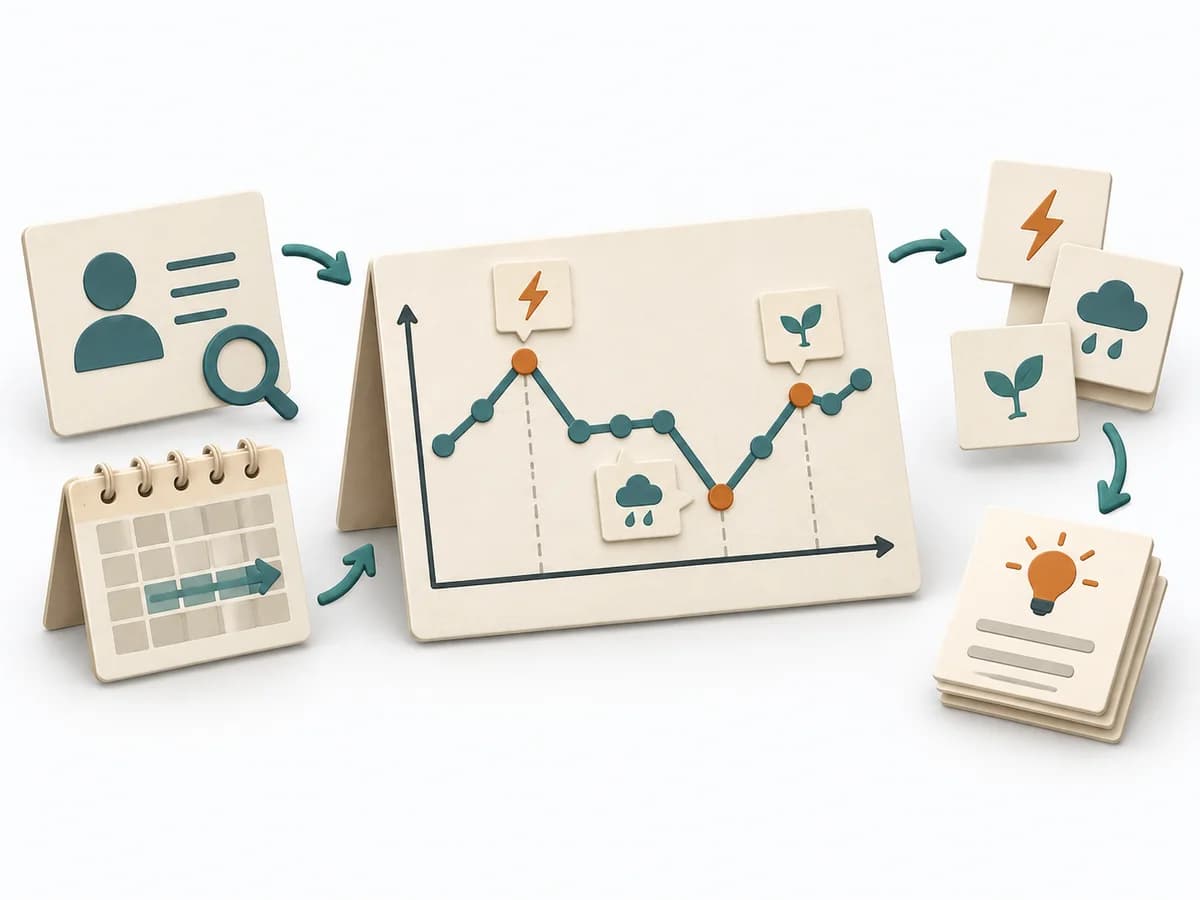 Systems Thinking Behavior Over Time Graph |
|---|---|---|---|---|
Purposedifferent | Soft Systems Methodology helps explore unclear or politically charged problems systematically. Instead of forcing a quick answer, the method builds a shared understanding of perspectives and room for action. | For a deviation after a change, the method isolates the influence of the altered condition. It narrows down which differences are relevant and which are just accompanying noise. | The Iceberg Model separates visible events from patterns, structures, and mental models. This turns a single observation into a deeper understanding of why a problem keeps recurring. | A Behavior Over Time Graph shows how a metric or observation develops over time. The method makes trends, breaks, and recurring patterns visible that get lost in snapshots. |
Complexitydifferent | High | Medium | Low | Low |
Timedifferent | 0.5-3 Tage | 45-120 min | 30-60 min | 20-45 min |
Participantsdifferent | 5-15 | 2-6 | 2-10 | 1-10 |
Formatdifferent | Workshop | Workshop + async | Workshop + async | Workshop + async |
Outputdifferent | Rich Picture, Root Definitions, Conceptual Models, Change Agenda | Change Matrix, Cause Hypotheses, Validation Questions, Action List | Iceberg Worksheet, Pattern Notes, Intervention Ideas | Behavior Over Time Graph, Trend Hypotheses, Key Events |
Tagsno overlap | Soft systemsComplexitySensemakingSystems thinking | ChangeRoot causeTroubleshootingComparison | Systems thinkingRoot causePatterns | Systems thinkingPatternsDynamics |