View methods side by side.
Choose up to four methods. Add them using the search and share the comparison by copying its link.
Selected:Soft Systems MethodologyATAM (Architecture Tradeoff Analysis Method)Stakeholder MappingSAAM (Software Architecture Analysis Method)
| Criterion | 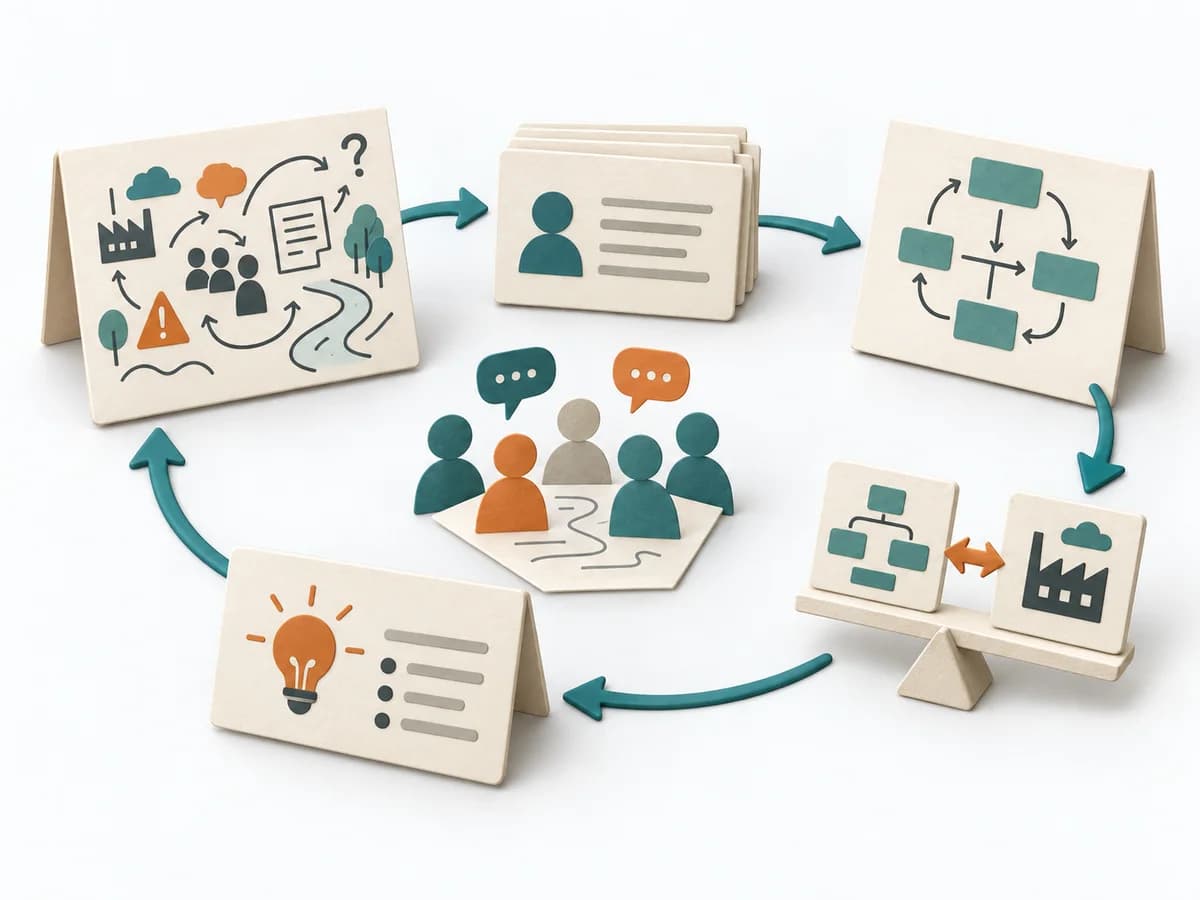 Systems Thinking Soft Systems Methodology |  Architecture ATAM (Architecture Tradeoff Analysis Method) |  Facilitation Stakeholder Mapping |  Architecture SAAM (Software Architecture Analysis Method) |
|---|---|---|---|---|
Purposedifferent | Soft Systems Methodology helps explore unclear or politically charged problems systematically. Instead of forcing a quick answer, the method builds a shared understanding of perspectives and room for action. | ATAM helps teams weigh architecture decisions when quality goals compete. The team considers business goals, stakeholder expectations, and technical decisions together. The evaluation shows which risks need further investigation. | When an initiative depends on many people, interests, and power dynamics, Stakeholder Mapping systematically orders the environment. It shows who influences, who is affected, and where relationship management or safeguarding matters first. | SAAM helps teams judge an architecture’s suitability for selected tasks and changes. It is particularly useful for examining modifiability and comparing architecture alternatives with clear reasoning. |
Complexitydifferent | High | High | Low | High |
Timedifferent | 0.5-3 Tage | Several meetings plus preparation and analysis; total effort depends on scope | 60–90 min | Preparation, scenario analysis, and findings review; effort depends on scope |
Participantsdifferent | 5-15 | Evaluation team, architects, and relevant stakeholders | 2-8 | Architecture experts and stakeholders for scenarios and weighting |
Formatdifferent | Workshop | Workshop + async | Workshop + async | Workshop + async |
Outputdifferent | Rich Picture, Root Definitions, Conceptual Models, Change Agenda | Prioritized quality scenarios in a utility tree, Architecture risks with reasoning and assumptions, Sensitivity and trade-off points, Findings report with open investigations | Stakeholder Map, Engagement Plan, Risk Notes | Domain functions mapped to components and connections, Quality attributes and evaluation criteria, Typical tasks and their effects on the architecture, Reasoned evaluation or comparison of alternatives |
Tagsno overlap | Soft systemsComplexitySensemakingSystems thinking | ArchitectureQualityRiskTradeoffsStakeholders | StakeholdersAlignmentFacilitationChange | ArchitectureChangeAnalysisComparisonQuality |